
Sometimes a room has the right sofa, the right wall color, and still feels a little flat. In many Sarasota County homes, the issue is not the décor, it is the missing layer between the surfaces. Plain wall-to-floor transitions, thin casing around doors, underdefined dining areas, and blank feature walls can make even a nicely furnished room feel unfinished.
That is where trim changes the read of a space. The right detail can sharpen the line where the floor meets the wall, give an opening more presence, frame a focal point, or make a tall wall feel intentionally designed instead of empty. It is less about making every room ornate and more about adding structure where the architecture feels too quiet.
For coastal trim design, scale matters. Bright natural light, open layouts, tile or luxury vinyl floors, and breezy interiors often look best with trim that feels crisp and polished without becoming heavy. The custom trim ideas Sarasota County homeowners tend to respond to are the ones that add definition while still keeping rooms relaxed, light, and livable.
Ahead are 10 home trim ideas Florida homeowners can use as a visual starting point, from simple whole-home upgrades to more statement-making details, along with where each one works best and what kind of finished look it creates.
1. Taller Baseboards and 2. Upgraded Door and Window Casing
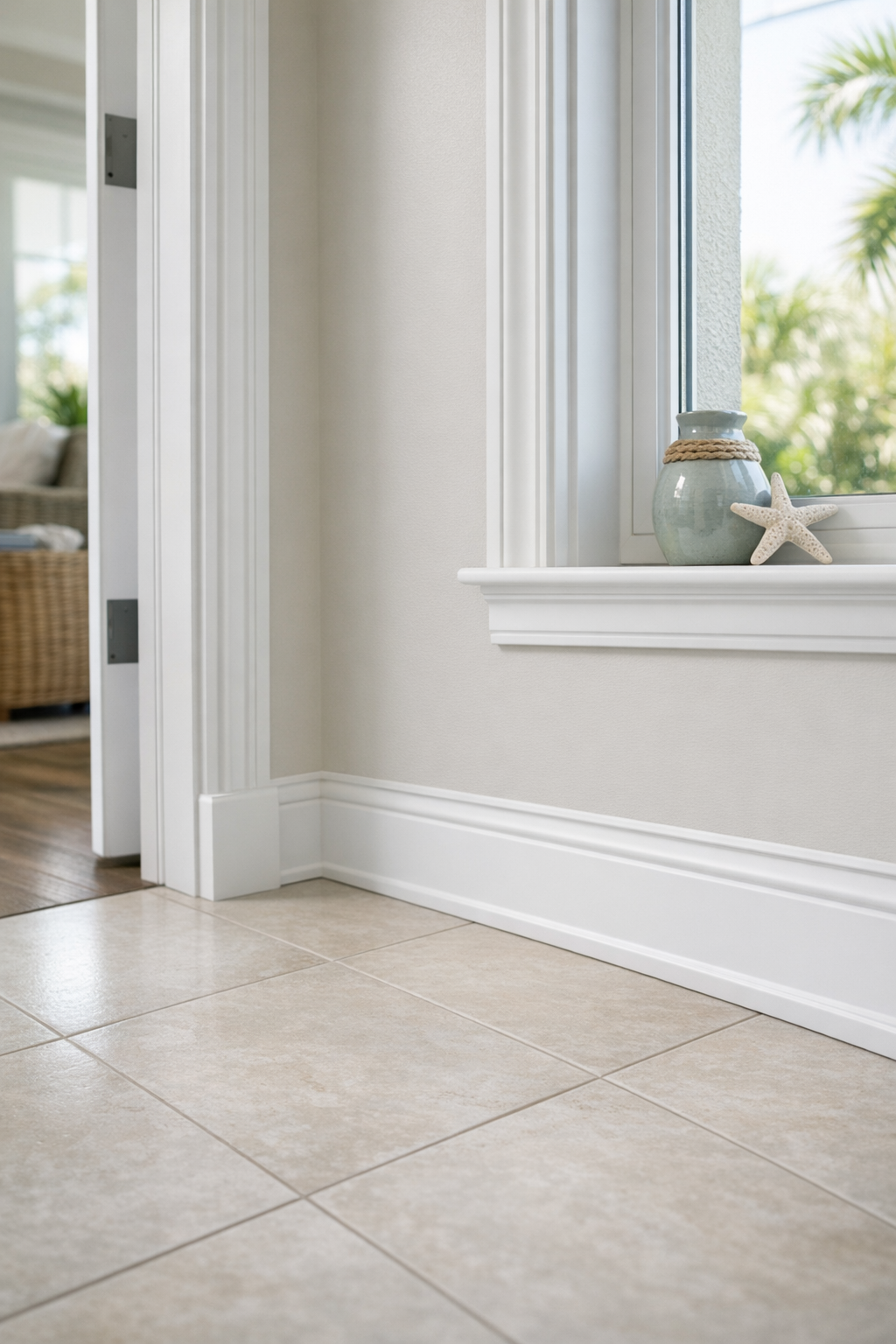
1. Taller Baseboards
Start at the floor line. Taller baseboards replace the thin builder-style strips that can look skimpy next to tile or luxury vinyl with a more substantial band of trim, so the wall does not seem to fall straight into the flooring. In living rooms, hallways, bedrooms, and larger open spaces, this kind of baseboard upgrade gives the room a cleaner "finished edge" without asking for a full feature wall.
The key is proportion. A taller profile should feel related to the ceiling height and room scale: too short can disappear, while too heavy can make a bright coastal room feel weighed down. For many Sarasota interiors, a simple flat, eased, or lightly stepped baseboard keeps the look crisp and polished rather than ornate.
2. Upgraded Door and Window Casing
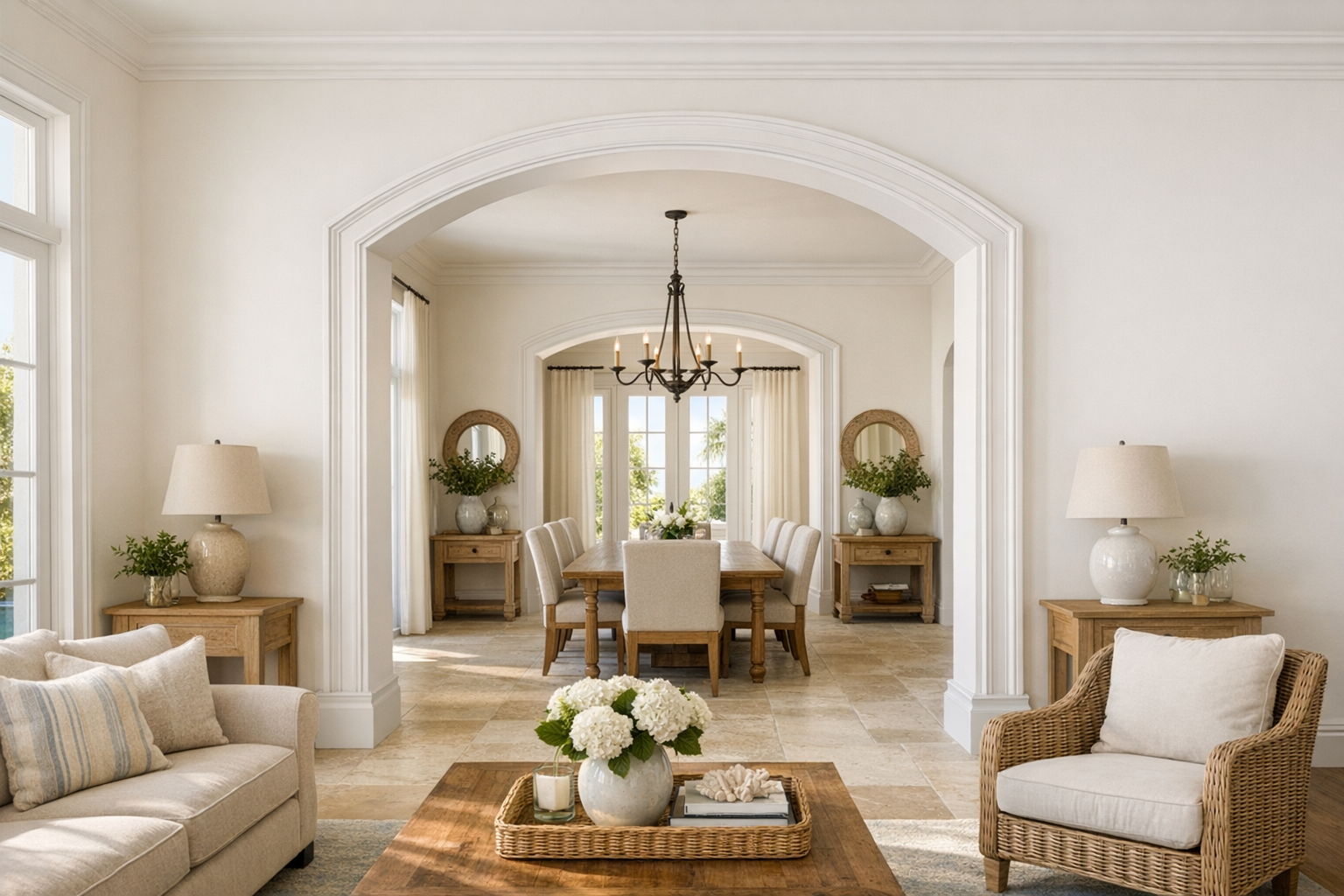
Door and window casing is the trim that frames the edges of openings. When it is narrow or almost flush with the wall, doors, windows, and pass-throughs can read as basic cutouts; when the casing is wider and more intentional, those same openings look framed, balanced, and part of the room's architecture.
This is especially useful in open entries, long hallways, bedroom doors, and rooms with simple walls that need definition but not a decorative wall treatment. A clean casing upgrade can also make cased openings between a foyer, dining area, and living room feel more deliberate, which helps an open-plan home feel connected without every space blending together.
3. Coastal Crown Moulding and 4. Tray Ceiling Trim
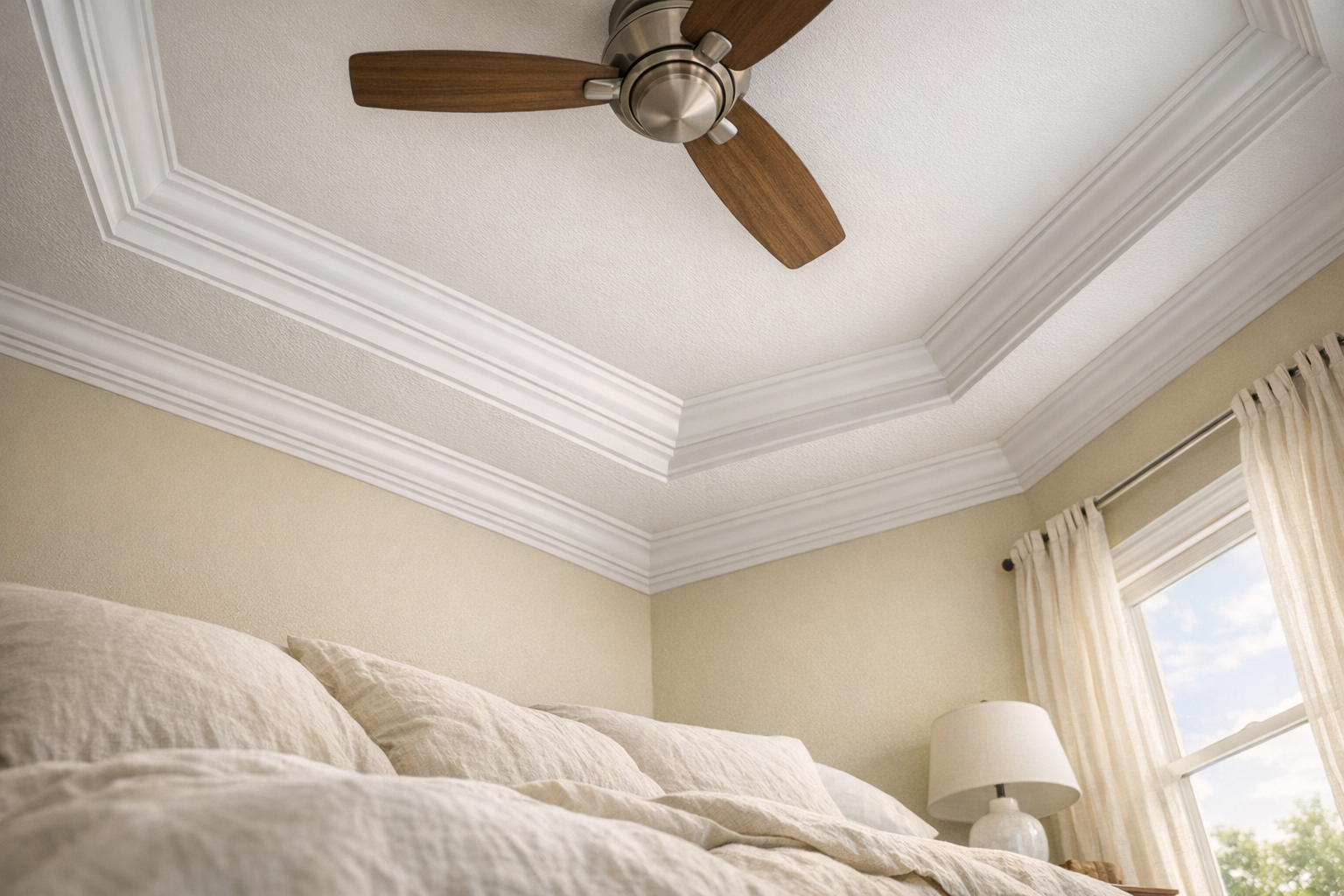
3. Coastal Crown Moulding
Crown moulding works at the opposite end of the wall from baseboards: it softens the line where the wall meets the ceiling, so a room feels finished from top to bottom. The best crown moulding ideas for Sarasota-area homes usually lean clean rather than ornate: a simple cove, a small stepped profile, or a lightly built-up crown that adds shadow without looking heavy.
Think of this as coastal trim design with restraint. In a primary bedroom, living room, dining room, foyer, or tall great room, crown can make high walls feel more intentional, especially when painted the same soft white as the ceiling or trim package. The weak signal is a thick, highly carved profile in a low or minimal room; the stronger choice is a proportionate profile that frames the ceiling without stealing attention from the windows, light, and furnishings.
4. Tray Ceiling Trim
Tray ceiling trim is for rooms that already have a recessed or raised ceiling shape but still look like plain drywall overhead. Adding trim around the outer edge, inside the tray, or along both levels outlines the architecture, turning the ceiling from a blank recess into a deliberate design feature.
This works especially well in primary bedrooms, dining rooms, foyers, and high-ceiling living spaces where the ceiling is visible from more than one angle. A single border keeps the look simple; layered trim adds more formality; a painted inner band can make the tray feel deeper without adding clutter. The takeaway: if the ceiling shape is already there, tray ceiling trim helps it look planned instead of leftover.
5. Board and Batten Walls and 6. Dining Room Wainscoting
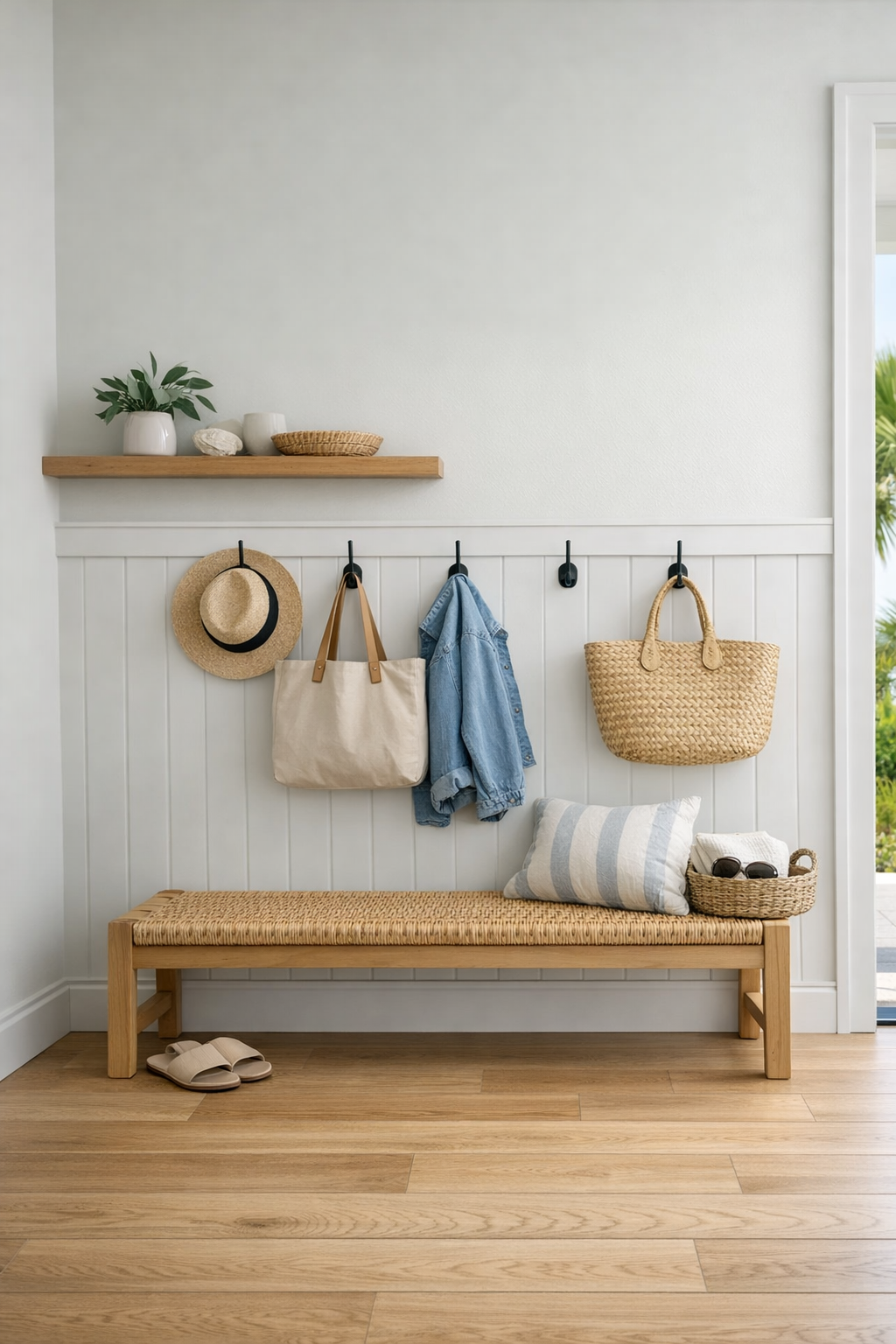
5. Board and Batten Walls
On the walls themselves, vertical rhythm can do a lot of visual heavy lifting. Board and batten walls use narrow vertical battens over a flat wall surface, either full-height or partial-height, to make the wall feel taller, cleaner, and more organized. They are especially easy to picture in an entry, hallway, bedroom, stair wall, or mudroom-style drop zone where a plain stretch of drywall needs shape but not a busy pattern.
The look can lean casual coastal or more tailored depending on spacing, height, and paint color. Wider spacing feels calmer and more modern; tighter spacing feels more cottage-like. In bright Sarasota County interiors, soft white, pale greige, muted blue, or warm neutral paint can keep the treatment light instead of heavy. A good layout lines up thoughtfully with outlets, switches, windows, bench hooks, and ceiling height, so the battens look planned rather than squeezed in.
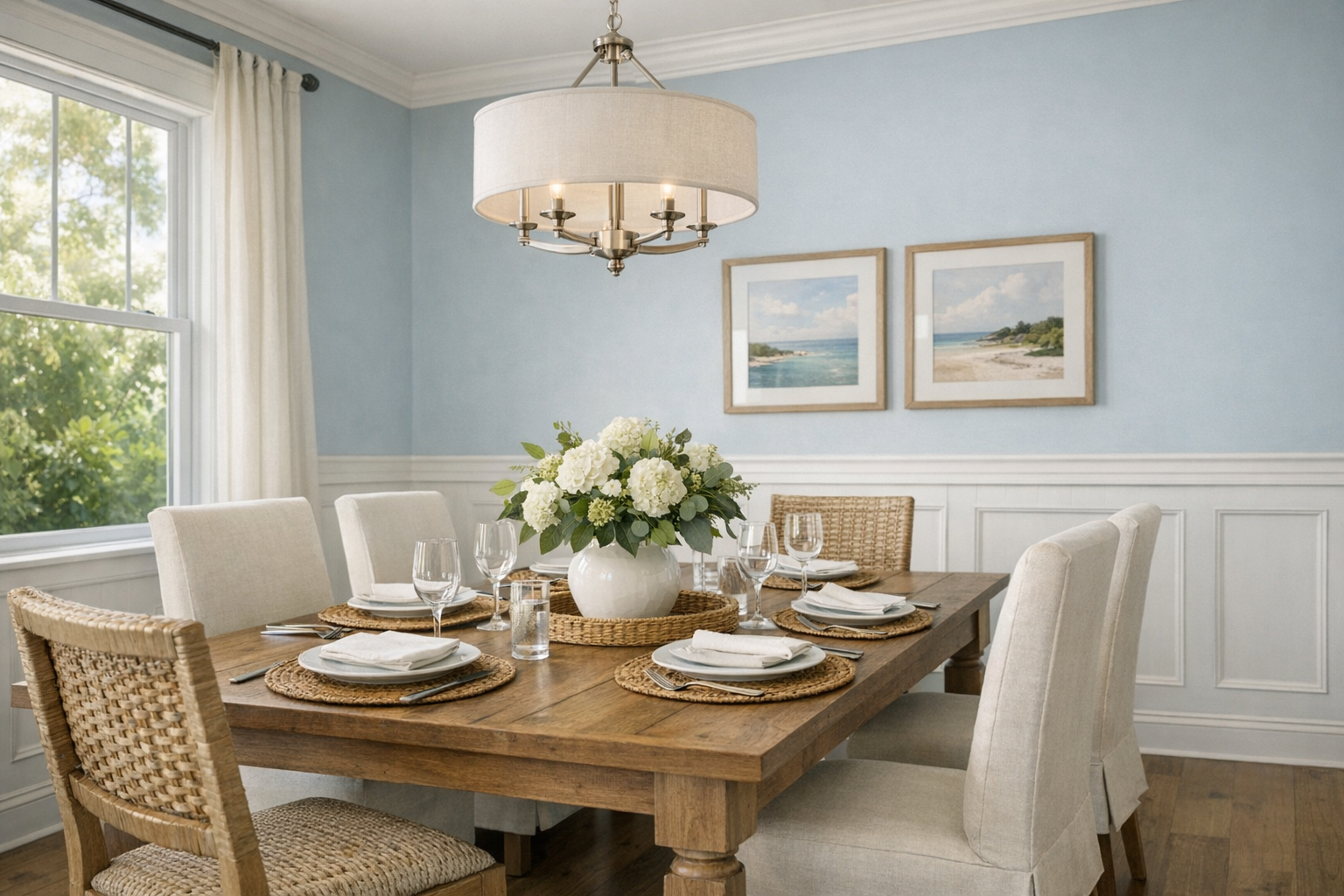
6. Dining Room Wainscoting
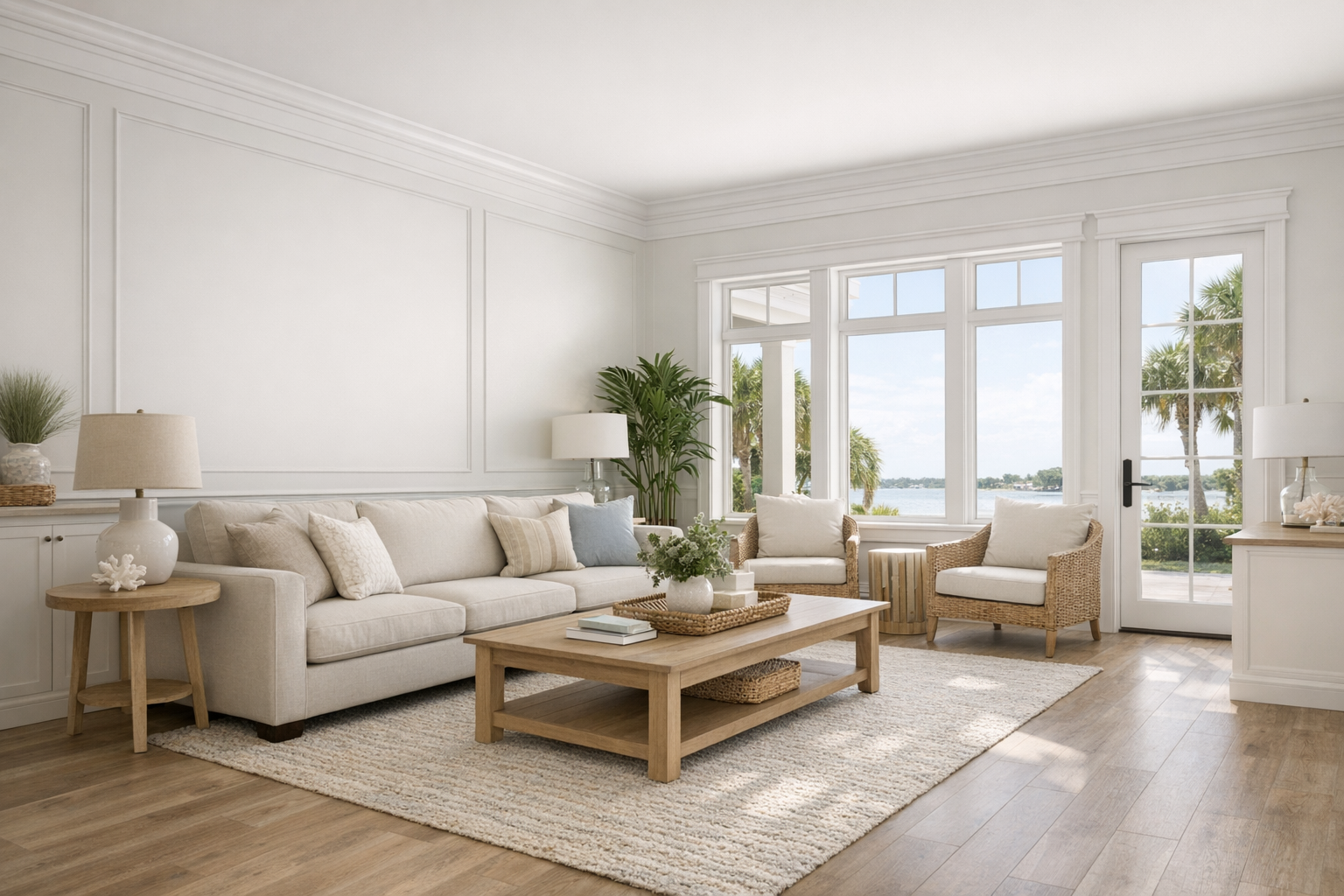
Wainscoting is related to board and batten, but it is not quite the same thing. Where board and batten emphasizes vertical strips, wainscoting usually creates a finished lower-wall panel system, often capped with a chair rail or top rail. That lower-wall emphasis gives dining rooms, foyers, powder rooms, and formal sitting areas a more classic, tailored edge without covering the entire wall.
For dining room wainscoting ideas, think about the mood you want before choosing the profile. Flat recessed panels feel crisp and transitional; raised or layered panels feel more formal; a simple chair rail with clean panel moulding can bridge casual coastal furniture and a dressier entertaining space. The strongest versions respect the room's proportions: the top edge should relate comfortably to table height, window sills, art placement, and nearby openings, so the lower wall looks intentionally framed rather than chopped in half.
7. Picture Frame Moulding and 8. Feature Wall Trim
7. Picture Frame Moulding
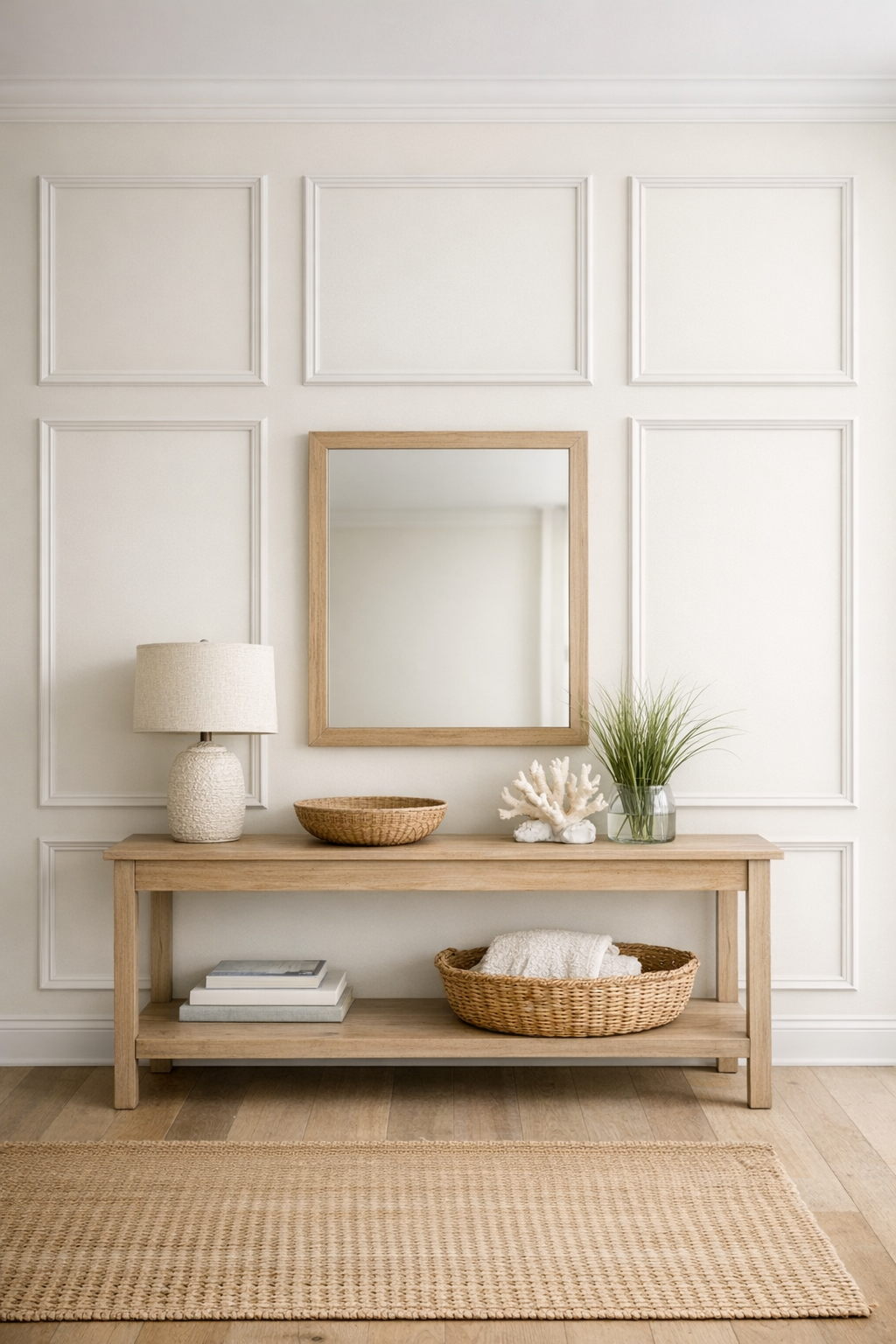
For rooms that need detail in the broad, blank middle of the wall, picture frame moulding is the more classic choice. It uses rectangular wall frames, sometimes called shadow boxes, applied directly to the drywall in an evenly spaced pattern. The effect is symmetrical and tailored, so it works especially well when you want a dining room, stair landing, hallway, foyer, or living room to feel more dressed without adding shelves, cabinetry, or a full wall of millwork.
The key is restraint. Larger rectangles with generous breathing room feel refined; too many small boxes can make a wall look busy, especially in bright coastal interiors where every shadow line is visible. Painted the same color as the wall, the moulding reads as subtle architecture. Painted in a soft contrast, it becomes more decorative and formal. Among custom trim ideas Sarasota County homeowners might request, this is a good fit when the room already has traditional furniture, framed art, or a chandelier and just needs the wall treatment to catch up.
8. Feature Wall Trim
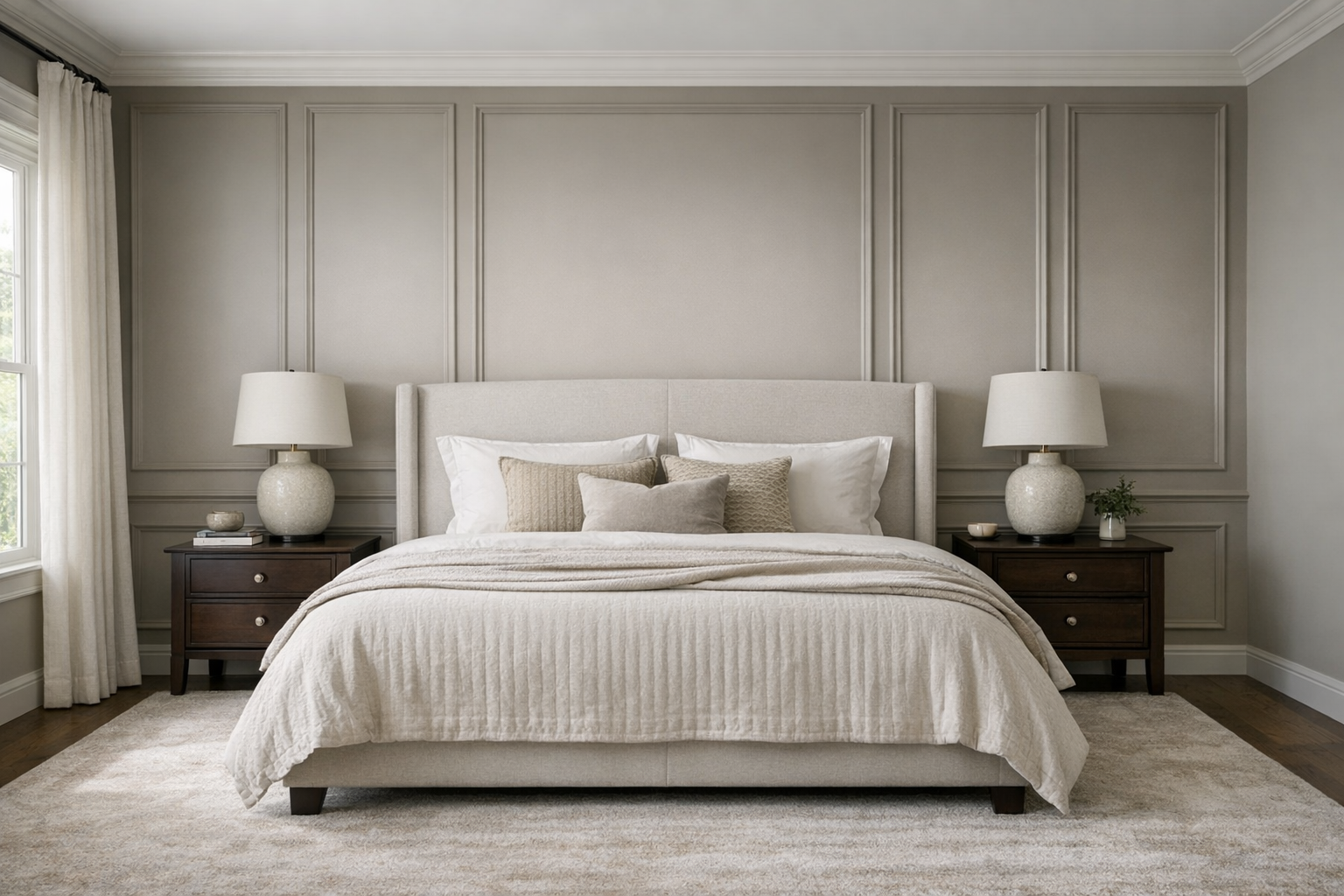
Feature wall trim is the broader, more flexible cousin. Instead of repeating classic rectangles around the room, it usually focuses on one important wall: behind a bed, sofa, TV, entry console, or dining bench. The design might be a clean grid, vertical slats, large framed panels, or a geometric layout. That makes it easier to steer the room modern, coastal, or transitional depending on the spacing, profile, and paint color.
A strong feature wall has a clear reason for being there. Behind a primary bedroom headboard, vertical or framed trim can make the bed wall feel intentional even with simple bedding. On a TV wall, wider panels can organize the screen instead of letting it float on drywall. In an open-plan living area, though, avoid stacking too many focal points in view at once; if the kitchen island, dining light, and great-room wall are all competing, a quieter layout will usually feel more polished than a loud pattern.
9. Fireplace Surround Trim and 10. Coffered or Beam Ceiling Details
9. Fireplace Surround Trim
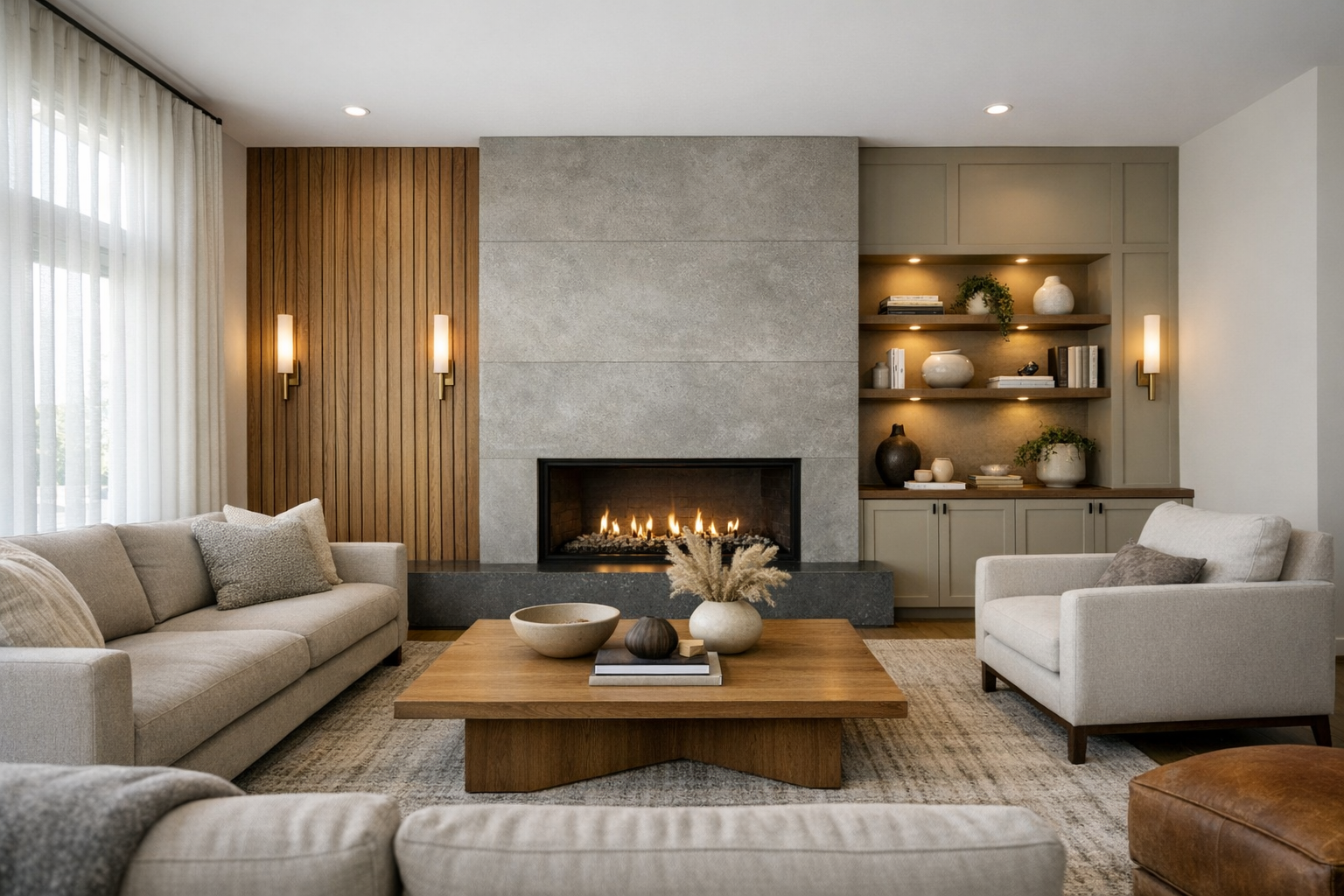
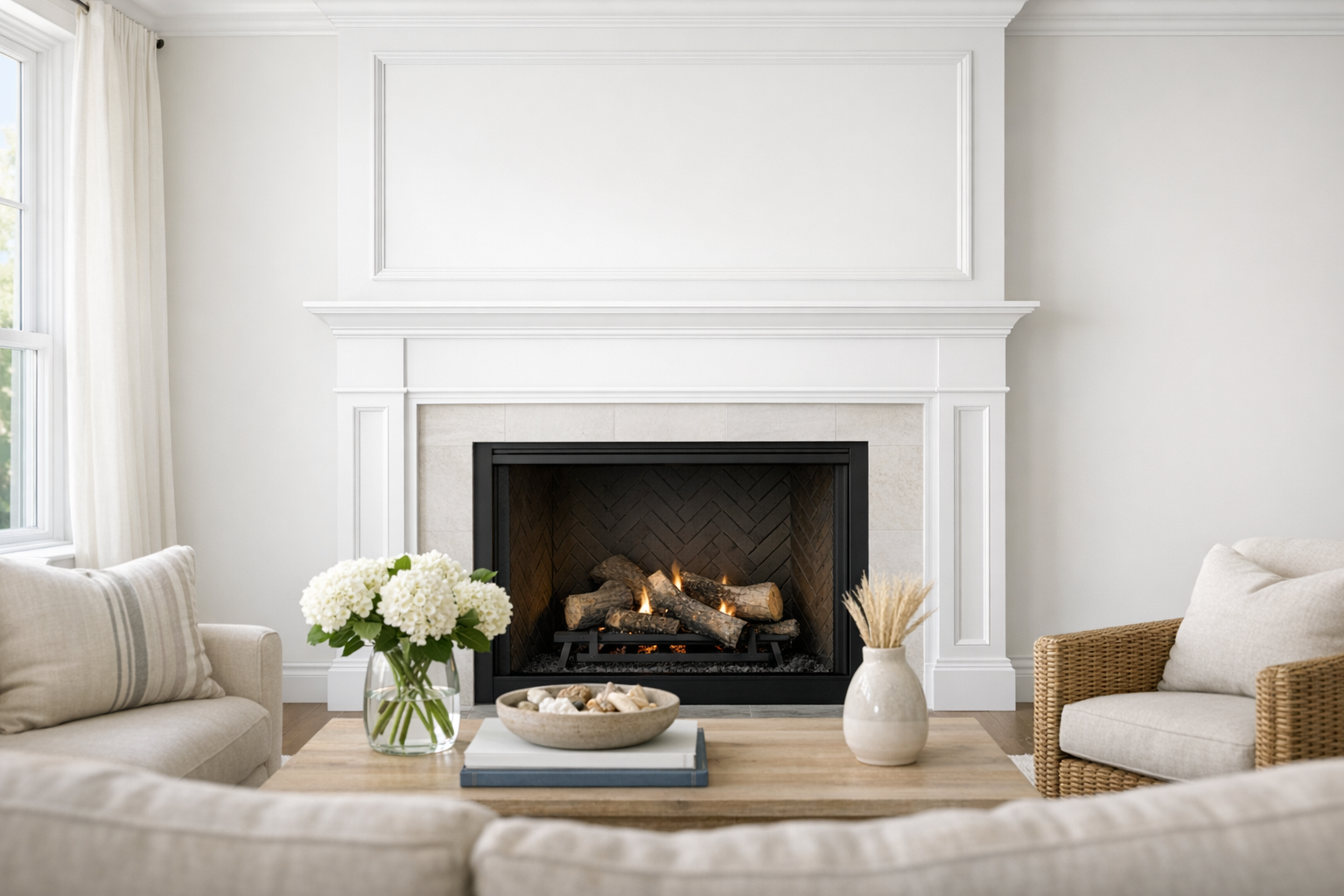
A plain fireplace wall can look like an appliance dropped into drywall; fireplace surround trim helps it read as part of the room's architecture. This might mean a simple mantel shelf with clean side casing, a built-up surround that frames the firebox, or panel moulding above the mantel to give the wall a taller, more anchored presence.
The style can shift quite a bit depending on the profile. Flat stock trim feels crisp and transitional, a slightly layered mantel feels more traditional, and tall vertical panels can make a great-room fireplace feel more intentional without adding a full built-in. In Sarasota's bright coastal interiors, the best version usually leaves breathing room around the fireplace instead of covering the whole wall with heavy detail.
10. Coffered or Beam Ceiling Details
For larger rooms where the ceiling feels like a big blank plane, a coffered ceiling or simple ceiling beams can organize the space from above. Boxed beams create a grid with recessed panels, shallow coffers give a softer version of that tailored look, and straight beams can visually separate a living area, dining area, or sitting zone in an open-concept plan.
The main takeaway is scale. In a high-ceiling great room, wider boxed beams may feel balanced; in a dining room or primary suite, a shallower coffered ceiling detail may give the room definition without lowering the mood. For coastal-style homes, lighter paint colors, cleaner profiles, and generous spacing keep ceiling beams feeling airy rather than heavy, which is especially important when natural light makes every line more visible.
How to Choose the Right Custom Trim Idea for Your Room
If you are deciding where to begin, start with the problem you notice most. When the whole home feels a little plain, foundational trim usually comes first: taller baseboards and upgraded casing sharpen the everyday edges around floors, doors, and windows, so multiple rooms feel more complete without adding a decorative pattern to every wall.
When one room lacks focus, wall trim is the better lane. Board and batten brings vertical order, wainscoting gives the lower wall a tailored finish, and picture frame moulding creates a more classic, symmetrical look. If the issue is a blank bedroom, dining room, hallway, or TV wall, these treatments give the eye somewhere to land.
For tall ceilings or open-plan rooms, look upward instead. Crown, tray trim, coffers, or beams can make a large ceiling feel designed rather than empty, but the scale matters: clean profiles, lighter finishes, and balanced spacing tend to suit bright coastal trim design better than heavy, ornate inspiration photos.
The best custom trim ideas for Sarasota County homes should feel like they belong to the room's proportions, light, and style. Choose the detail that solves your room's specific weakness, then keep the final design clean enough to work with coastal, transitional, or relaxed Florida interiors.