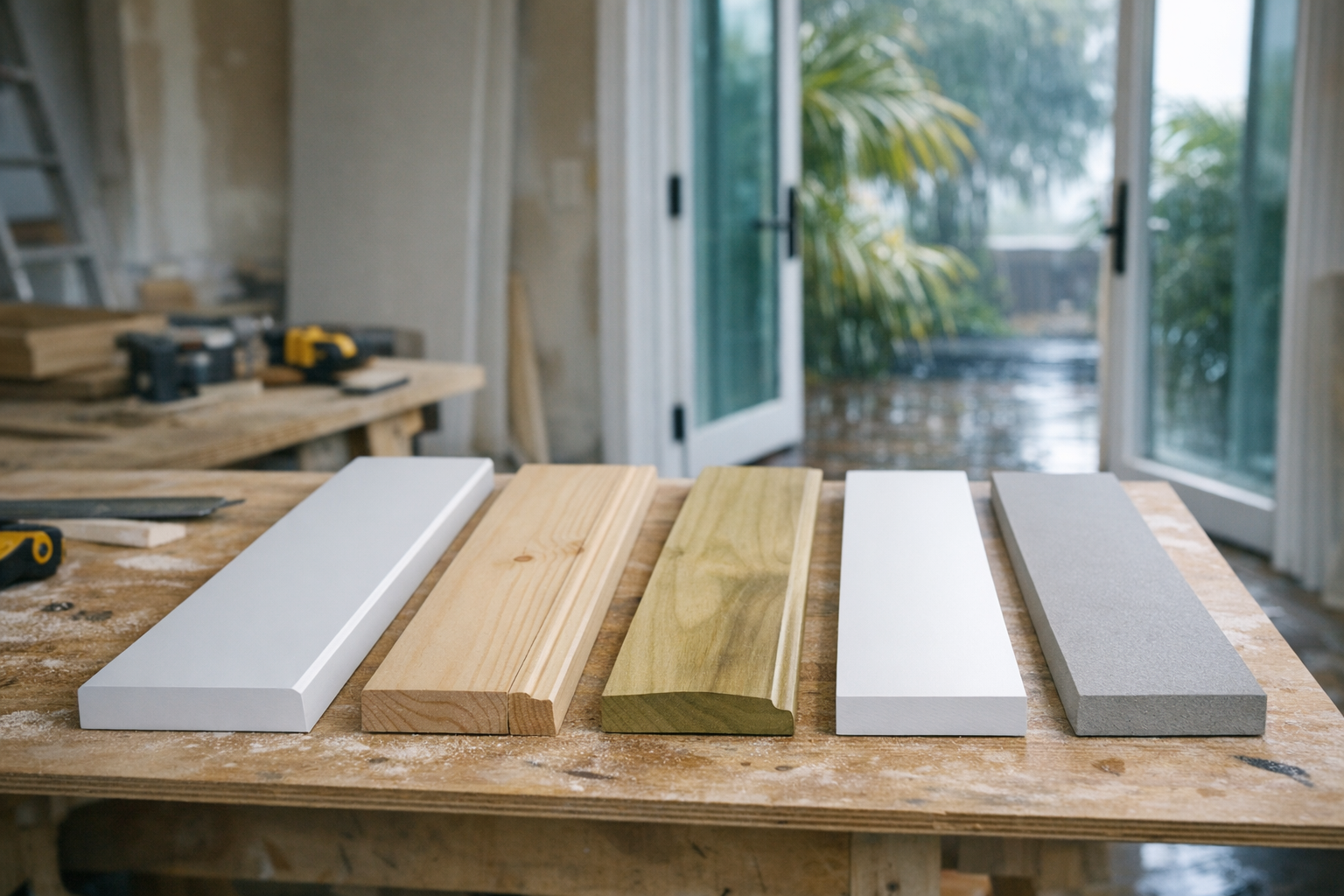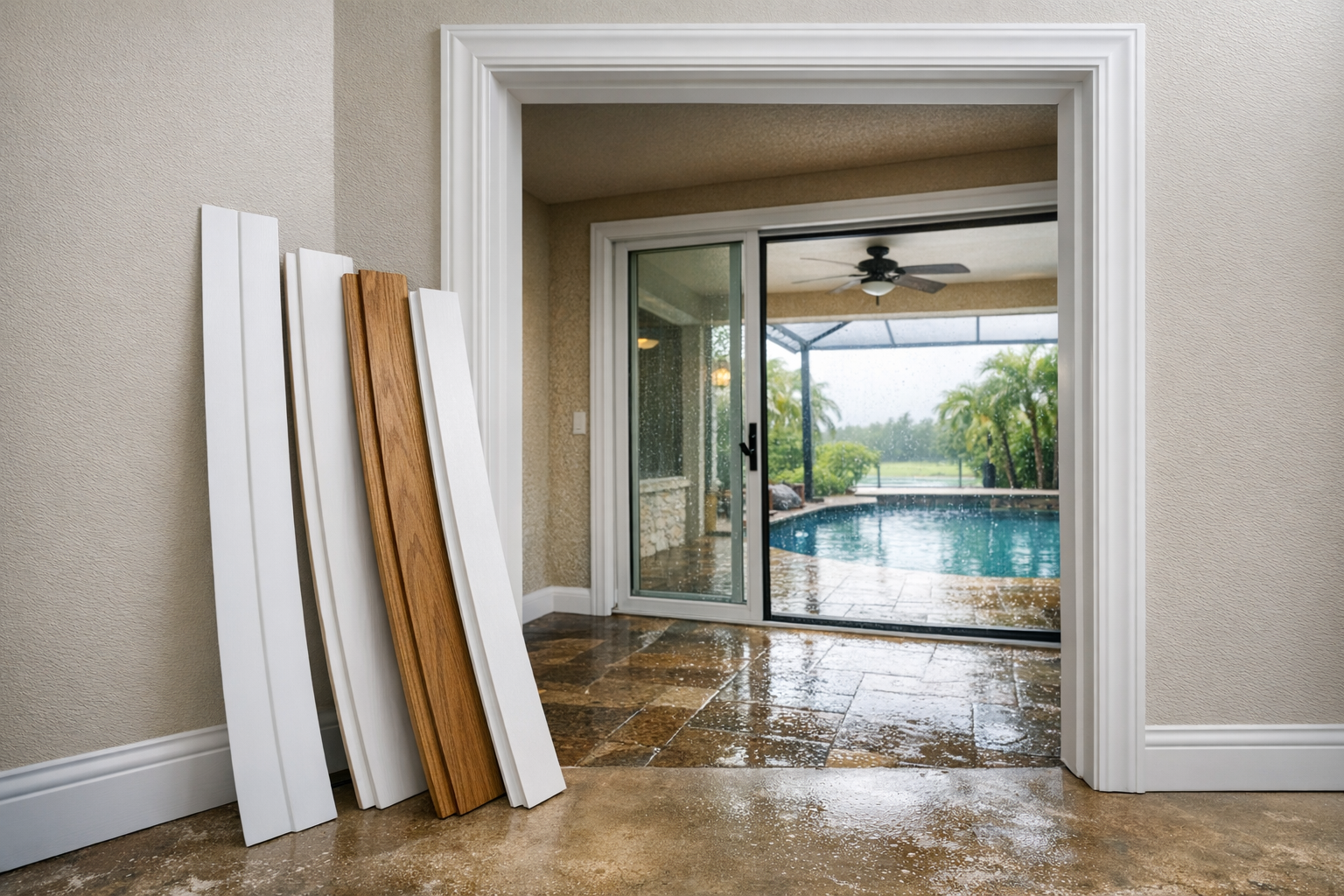

Before you pick a bright white, a warm walnut tone, or a soft natural finish, the bigger question is what the trim is made to become. The paint-grade trim vs stain-grade trim decision comes before color because the finished result depends on the substrate, visible grain, joint quality, filler use, and prep, not just the coating applied at the end.
Paint-grade trim is selected with the expectation that paint will cover the surface. That means the goal is a smooth, uniform architectural line where the wood or composite underneath visually disappears. Stain-grade trim works differently: the material itself remains part of the design, so grain pattern, color consistency, seams, and small defects are much harder to hide.
This matters across the interior trim materials homeowners notice every day: baseboards along tile or wood floors, door casing, window trim, crown moulding, and built-up trim details. A painted baseboard can often look clean and intentional when joints are filled and sanded well. A stained casing, by contrast, needs the pieces to look like they belong together before finish is applied, because stain tends to emphasize what paint can visually soften.
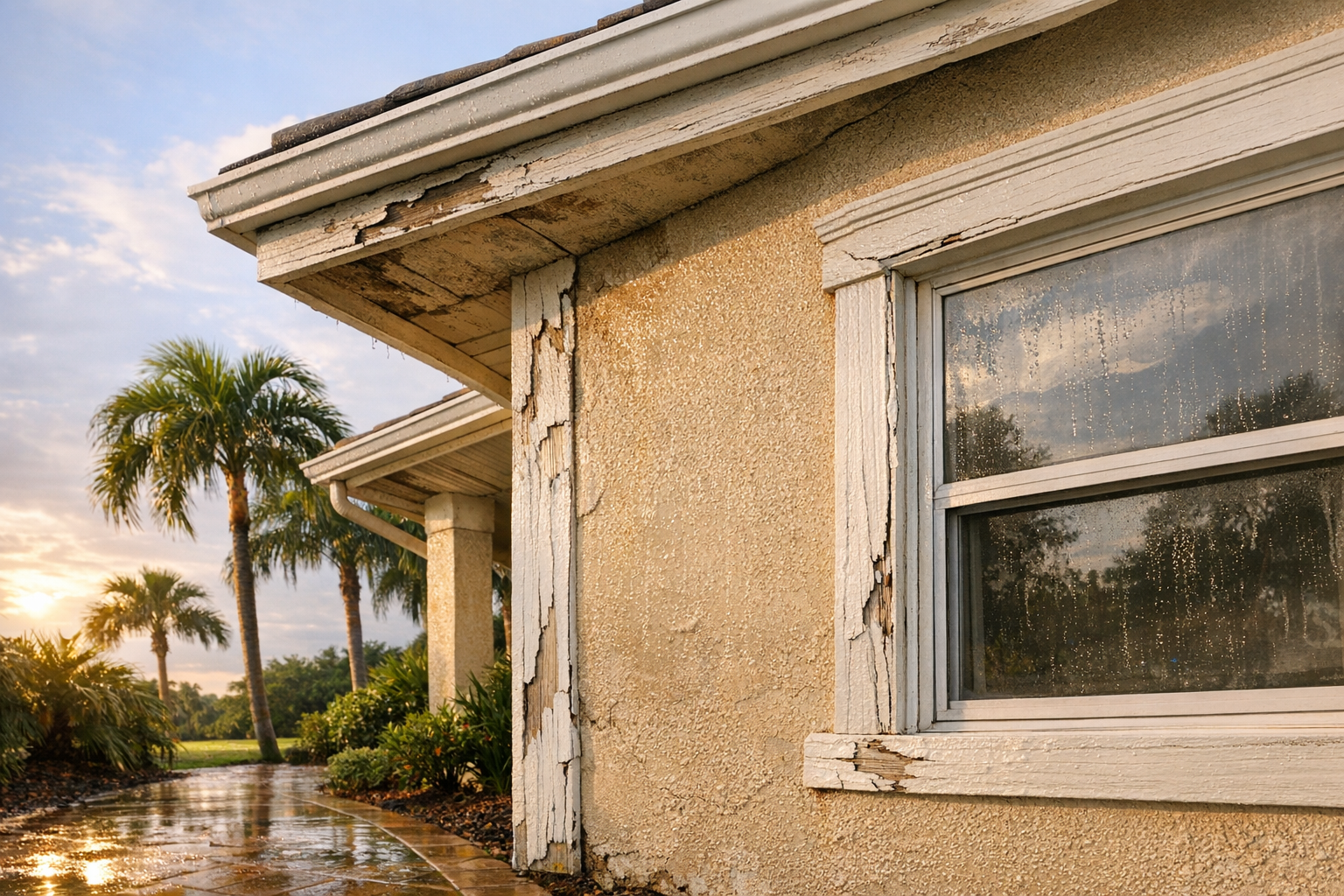
Florida adds another layer to the decision. Humidity and finishing conditions can affect how trim looks and performs over time, especially where interior air conditioning meets damp outdoor air at entries, windows, and frequently used rooms. The practical takeaway is simple: choose the material for the finish you actually want, then let the trim finishing plan support that choice, not the other way around.
What Paint-Grade Trim Really Means
A useful way to think about paint-grade trim is this: the finished surface is meant to be judged by the paint job, not by the natural character of the material underneath. The trim is selected so primer and paint can create a clean, consistent appearance across baseboards, casing, crown, and other interior profiles.
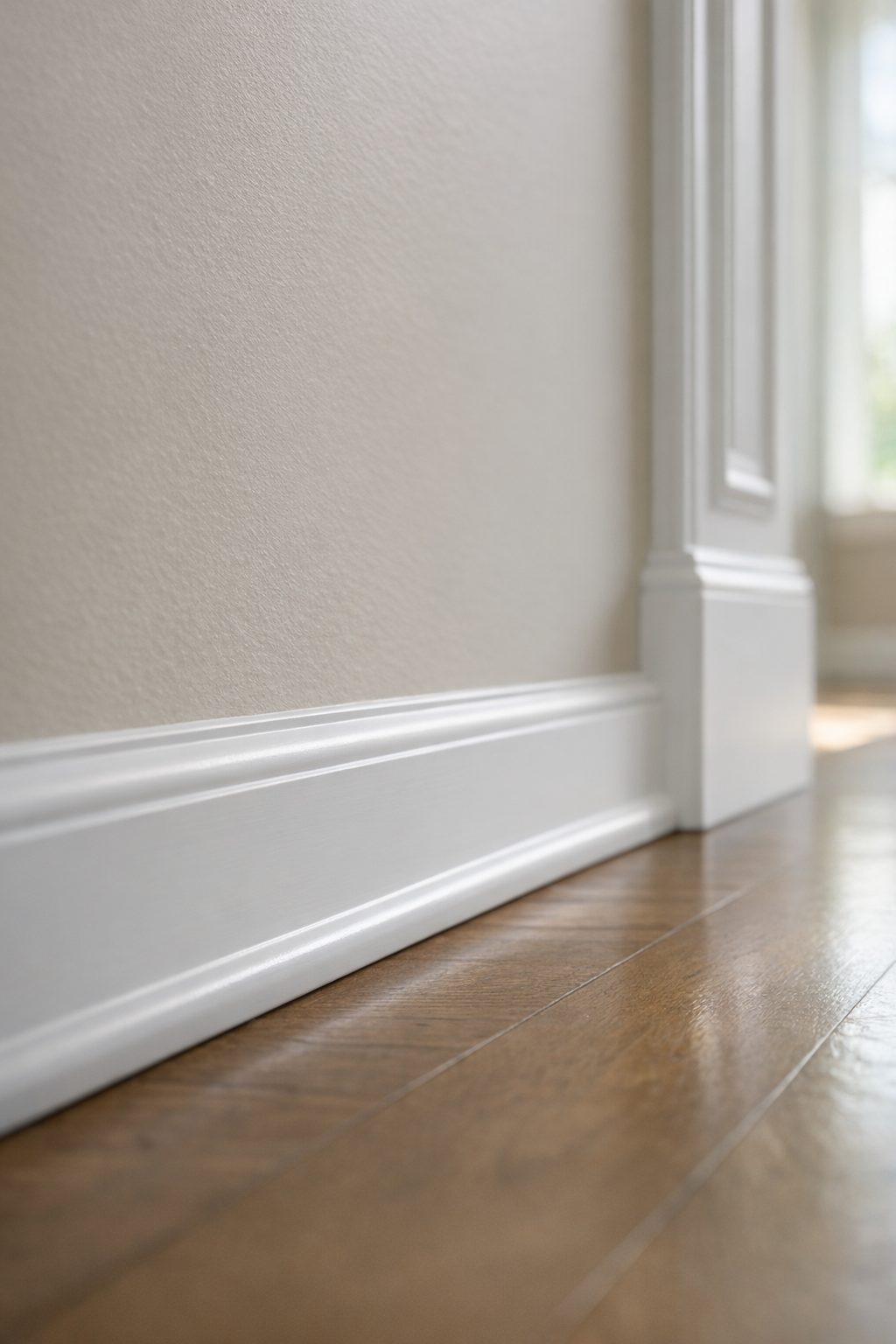
That is why visible grain, natural color variation, and perfectly matched boards matter less here than they would with a stained finish. Paint can visually unify pieces that would not look attractive under stain, and it can soften the appearance of filled nail holes, seams, and minor color differences when the prep and coating are done well.
Common paint-suitable choices may include smooth composite products, finger-jointed pine, poplar, or other materials selected for a painted surface rather than exposed grain. The practical difference is that each substrate affects how crisp the profile looks, how seams behave, and how much prep is needed before the final coat. A smooth, well-milled piece of paint grade moulding can look refined; a poorly milled or poorly prepped piece can still look rough after paint.
That last point is important for homeowners comparing painted interior trim options: "paint-grade" does not automatically mean cheap or low quality. Quality depends on the substrate, the sharpness of the moulding profile, the joint work, the surface preparation, the primer, and the smoothness of the final enamel or paint finish. Tight corners, clean caulk lines, filled fastener holes, and an even sheen are usually better signals than the label alone.
For many Florida homes, paint-grade trim is the smart choice when the goal is a crisp, uniform interior with bright baseboards, clean door casing, or built-up trim details that blend into the overall architecture. The key is choosing material and finish quality that can hold that clean look in real living conditions, not simply choosing the least expensive board that can accept paint.
What Stain-Grade Trim Really Means
Stain-grade trim flips the priority: the surface is meant to be seen, not covered. Instead of using paint to create one uniform color, stain-grade trim is selected so the natural wood character remains part of the finished look, with the stain changing the tone while the grain, board variation, and joinery stay visible.
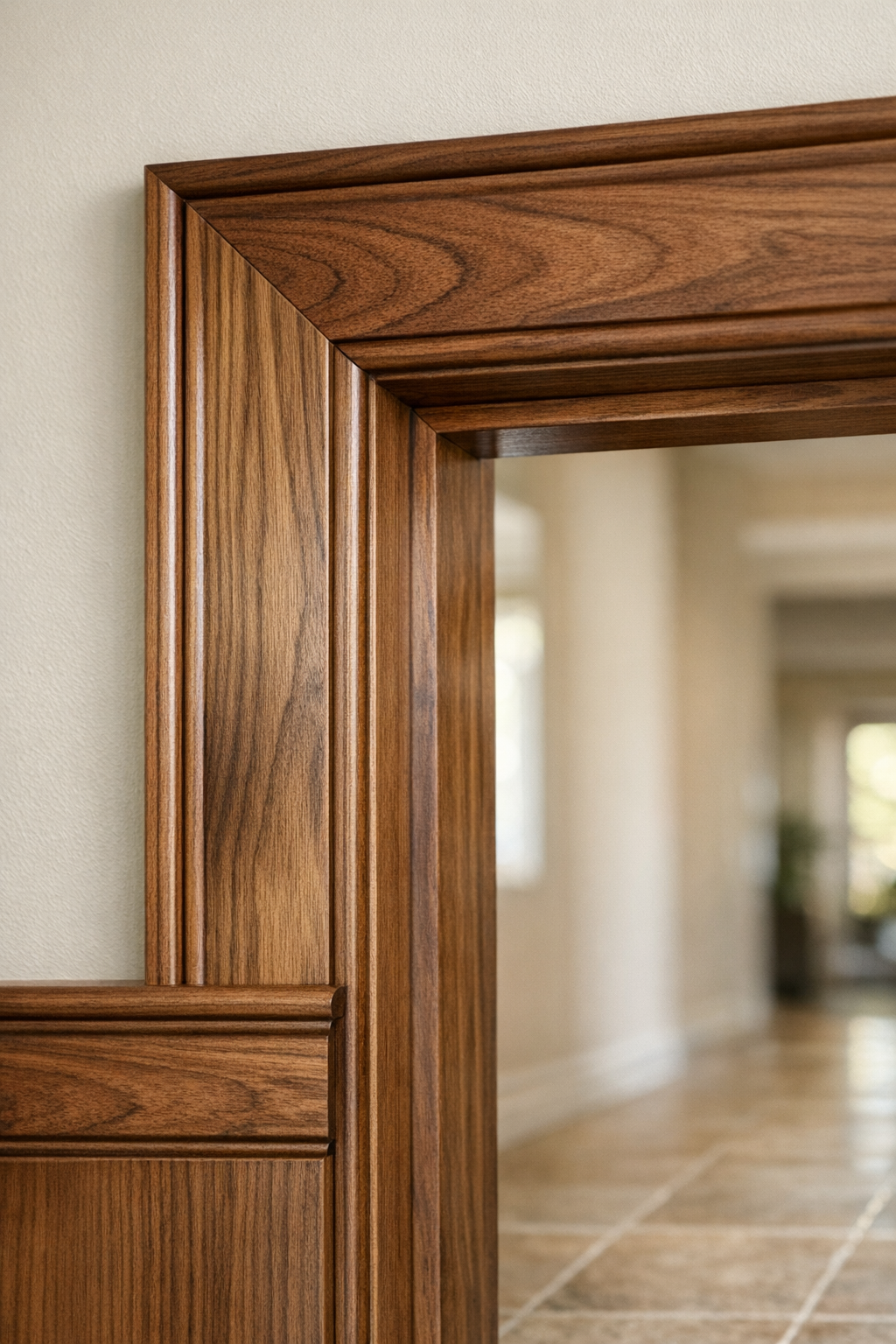
That visibility changes the standard for the material. Boards need to be chosen more selectively because color shifts, grain direction, knots, mineral streaks, and end joints can stand out once the finish is on. With stain grade moulding, the question is not only "Is this piece structurally usable?" but also "Will this piece look intentional next to the pieces around it?"
Cleaner installation matters more, too. Painted trim can visually soften small filled nail holes, seams, and minor material differences when the prep is strong; stained wood trim is less forgiving because filler, miters, scarf joints, and casing-to-jamb transitions remain easier to notice. A good stained installation looks selected and composed. A weak one may look patchy, with mismatched boards, obvious filler spots, uneven stain absorption, or joints that draw the eye.
For Florida homeowners, this is where finish expectations and local conditions meet. Because humidity and finishing conditions can affect how interior trim looks over time, stain-grade work benefits from careful material selection and a level of finish planning that matches the visibility of the final surface. The takeaway is not that stain is automatically better; it is that stain asks more from the wood, the milling, and the installation because there is much less to hide behind.
How Each Option Looks Once Installed
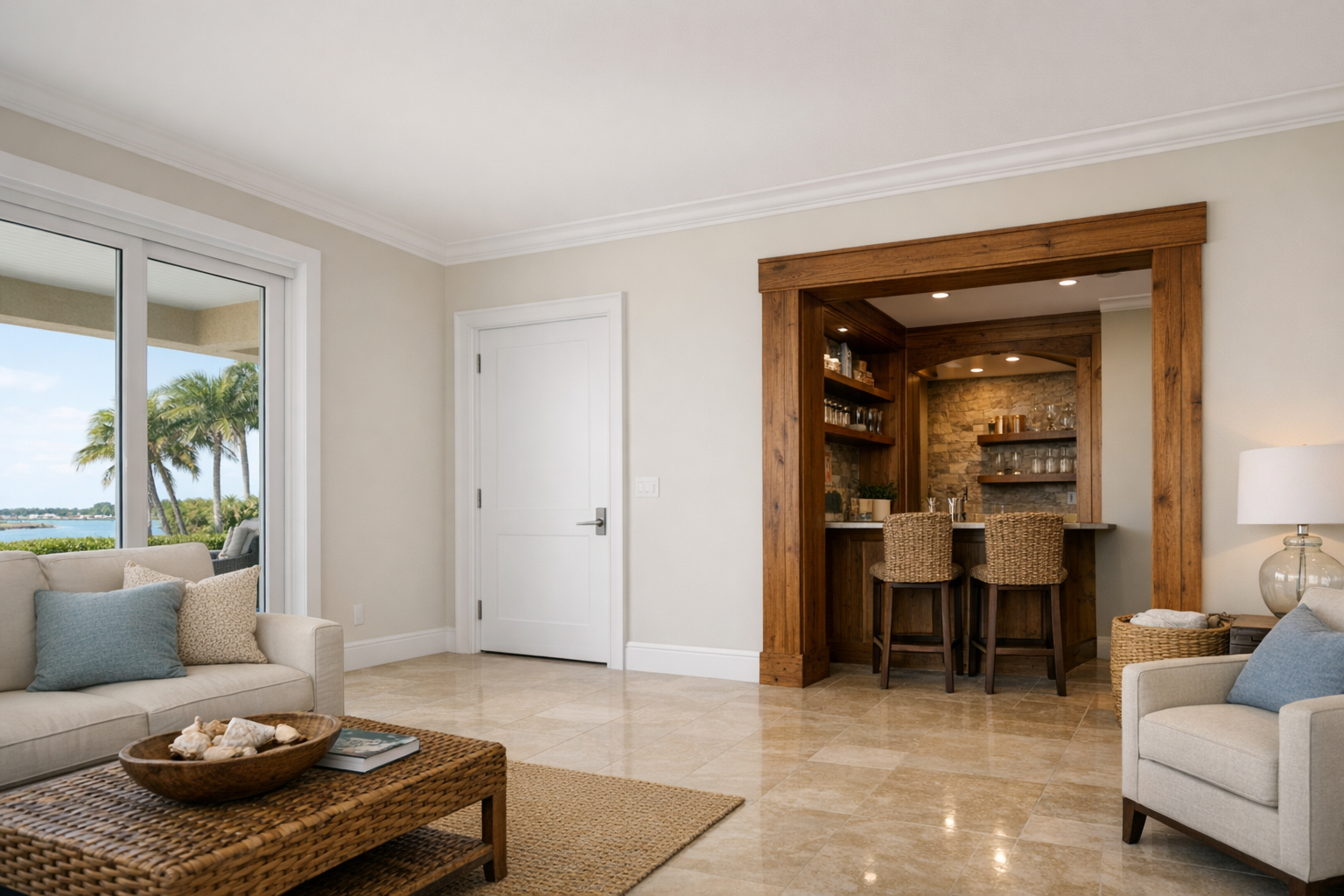
On a long run of baseboards, paint makes the profile read as one smooth line; stain makes each board's grain part of the composition. The installed difference is less "light color versus dark color" and more "uniform surface versus visible wood." Paint creates a continuous architectural line, while stain keeps the eye on the individual boards, grain movement, and joinery.
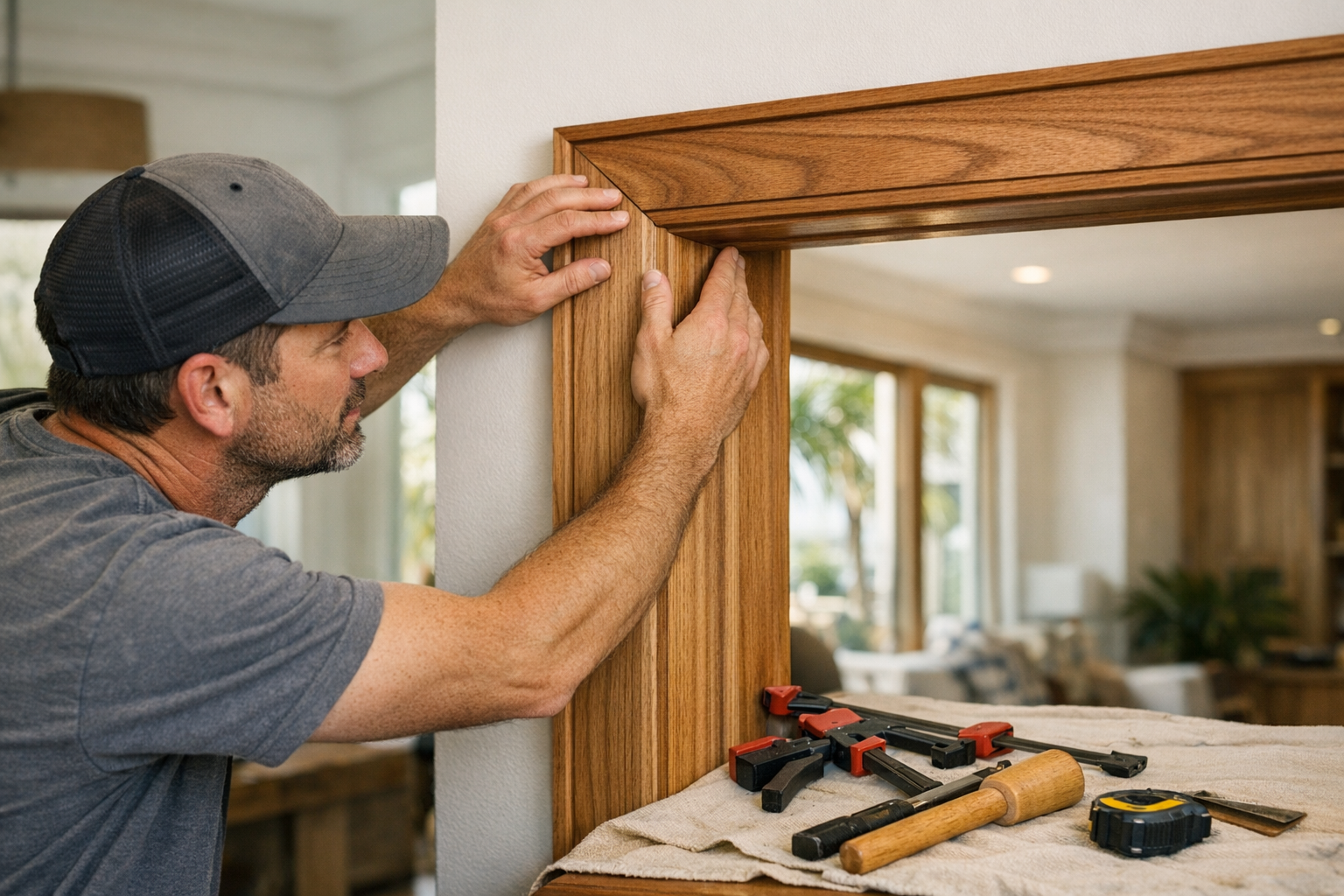
Painted trim tends to look crisp, clean, and consistent from room to room. It can make long walls feel finished without calling attention to every board joint. On casing around doors and windows, it gives openings a sharp outline that works especially well with painted interior doors, smooth drywall, tile floors, and lighter Florida interiors. Crown moulding in a painted finish usually reads as part of the architecture rather than as a separate wood feature.
Stained trim has a different kind of presence. Because the wood character stays visible, the finished look depends on grain direction, board selection, stain tone, and how cleanly the pieces meet. Around windows and doors, stained trim can frame the view like furniture. In feature rooms, custom studies, stair areas, built-ins, or higher-end millwork packages, stain can add warmth and craftsmanship because the material itself becomes part of the design.
Neither option is automatically more upscale. Painted trim versus stained trim comes down to whether the home needs a quiet, seamless frame or a visible wood detail. A painted profile can look refined when the surface is smooth, the lines are straight, and the finish is even. A stained profile can look refined when the boards are well matched and the grain looks intentional instead of random.
For Florida homes, this visual choice also affects how forgiving the finished rooms feel over time. Because humidity and finishing conditions can affect interior trim, the best-looking result is the one where the material, finish, and workmanship all support the look you want before anything is installed.
Cost, Labor, and Finish Quality: What Actually Changes
The budget difference is not just the board price on an estimate; it is the combination of material selection, surface preparation, installation tolerance, and trim finishing. In a paint-grade package, the material is chosen because primer and paint will create the final face. In a stain-grade package, the material remains part of the visible finish, so the selection standard shifts toward boards that look good uncovered.
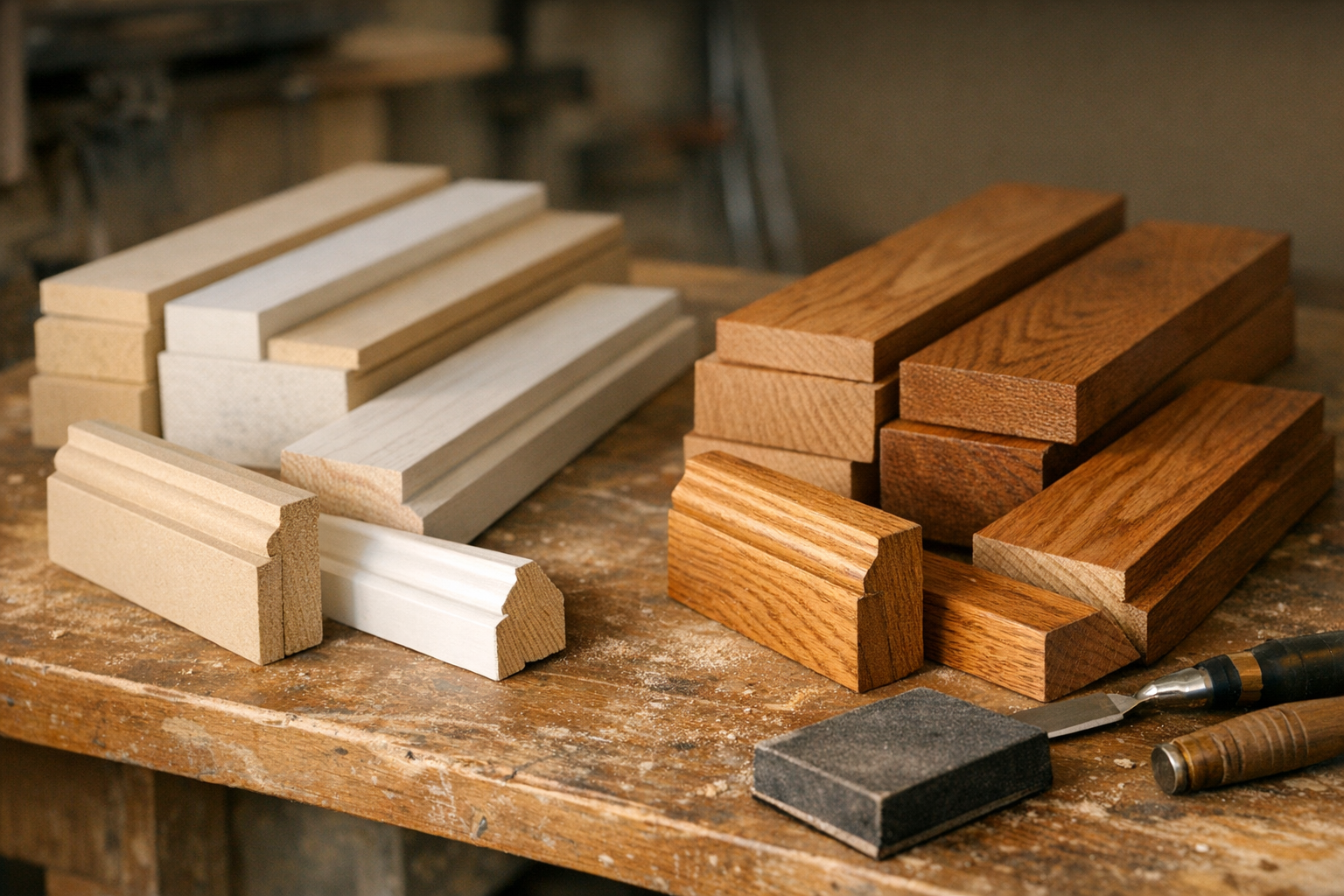
That changes what you are paying for. Paint-grade options such as MDF, finger-jointed pine, and poplar are commonly used when the goal is a smooth painted surface, while stain-grade work usually leans toward clearer, better-matched natural wood such as clear pine, oak, maple, cherry, or walnut. The practical takeaway: paint-grade trim can be the smarter spend when you want crisp, consistent white or colored trim throughout the home; stain-grade trim is where the added investment makes sense if the wood itself is meant to be a design feature.
Labor differs, too. Painted trim still needs skilled prep: nail holes filled cleanly, seams treated, profiles kept sharp, caulk lines controlled, and the painted surface made smooth enough that bright interior light does not reveal lumps or ridges. Paint is more forgiving of some material variation, but it is not a shortcut to a high-end result. A weak painted finish often shows up as heavy brush texture, rounded profile edges, visible joints, or uneven sheen.
Stained trim usually demands more careful selection and finishing because stain does not create the same uniform cover. Grain direction, filler, end cuts, and board-to-board color shifts remain visible, and the clear topcoat becomes part of the final quality signal. Good stained work looks intentional: even absorption, clean miters, balanced color, and a protective clear finish that does not look cloudy or plastic-heavy.
Touch-ups are another practical difference in the paint-grade trim vs stain-grade trim conversation. Painted trim is often easier to blend when small scuffs or nail repairs are handled carefully, while stained trim can be harder to patch invisibly because color, grain, and clear coat all have to line up. In Florida homes, where humidity and finishing conditions matter, the best value is not simply the lower initial number; it is the option whose material and workmanship support the look you expect to live with every day.
Florida Factors: Humidity, Air Conditioning, and Coastal Conditions
Florida interiors ask more from trim than many homeowners expect because the material is sitting between two different moisture worlds: damp outdoor air and cooled indoor air. Air conditioning can keep rooms comfortable, but it also creates drying cycles, especially when doors open often, sliders lead to patios, or rooms sit near garages, lanais, bathrooms, and laundry areas. That movement matters for both painted and stained trim because joints, miters, caulk lines, and finish films all react when the material underneath changes slightly.
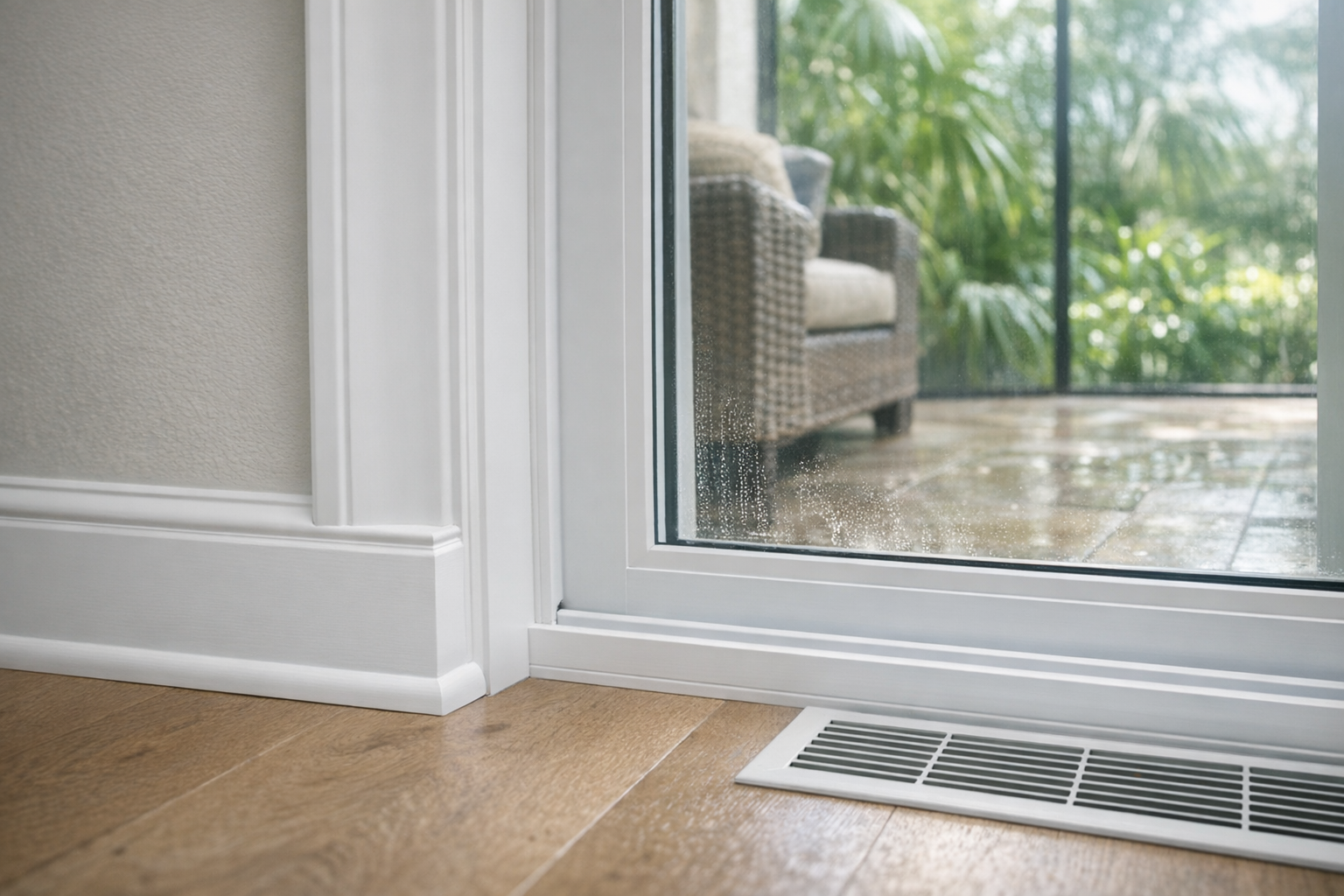
For paint-grade work, MDF can be a strong choice in many conditioned spaces because it gives a very smooth, uniform face for paint. The tradeoff is moisture sensitivity: if water reaches raw edges, cut ends, or the bottom of baseboards, MDF is more likely to swell than solid wood, and that swelling can telegraph through the painted finish. That is why MDF trim vs wood trim is not just a style question in Florida interior trim; it is also a location question.
Poplar sits in the middle for many painted interiors. It is a real wood, so it can move with humidity changes, but it is often chosen because it paints cleanly and handles profiles, casing, and built-up details well. Compared with MDF, poplar can be more forgiving where minor moisture exposure or fastening strength matters; compared with premium stain-grade hardwoods, it usually is not selected for dramatic grain character.
Hardwoods used for stained trim, such as oak, maple, cherry, or walnut, bring the benefit of visible natural grain, but they do not ignore humidity. Solid wood expands and contracts across the grain, so boards that are not acclimated, sealed, or installed with clean joinery may show seasonal gaps, opened miters, slight cupping, or finish stress. With stained trim, those changes can be more noticeable because the eye is already reading the board and grain.
Slab construction adds another practical checkpoint. Baseboards installed close to tile, stone, or concrete-adjacent floors may see cleaning water, condensation, or moisture at the lower edge. Coastal homes add salt-laden air near entries and windows, which makes a well-sealed finish and clean installation details more important. The takeaway for paint-grade trim vs stain-grade trim is simple: choose interior trim materials that match the room conditions, then protect the edges, ends, backs, and joints so the finish has a fair chance to stay clean-looking.
Maintenance, Touch-Ups, and How Trim Ages Over Time
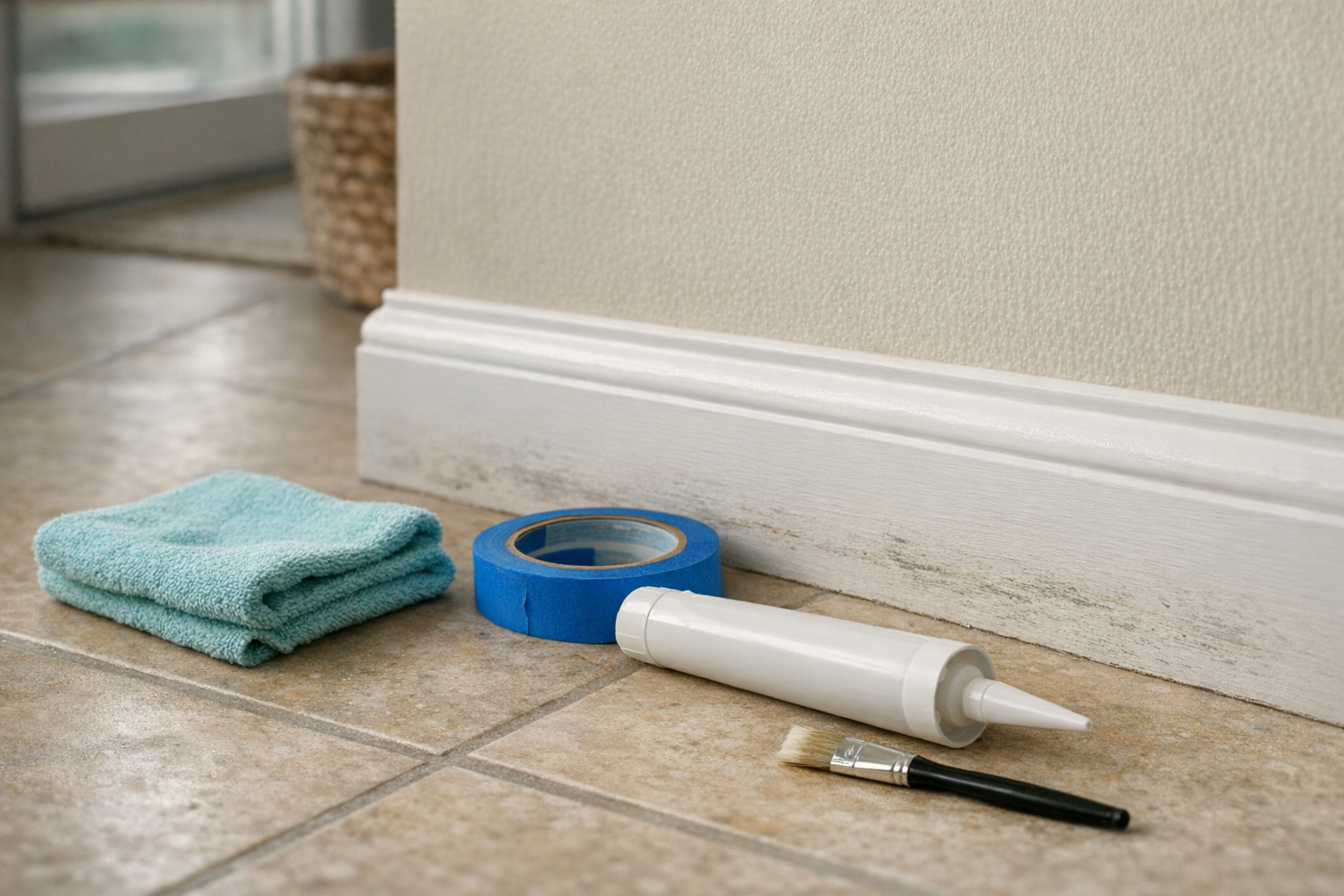
The maintenance difference usually shows up first at shoe level: vacuum bumps, pet claws, chair legs, sandy shoes, and mop water. Painted interior trim has a film finish that sits over the material, so scuffs often read as marks on the surface. When the underlying trim is still sound, those areas can usually be cleaned, lightly sanded, recaulked where needed, primed, and refreshed with enamel paint.
Stained wood trim ages differently because the grain, stain color, and clear topcoat all remain part of what you see. Minor wear can blend into the natural variation of oak, walnut, cherry, or similar hardwoods, which is one reason stained trim can develop a warm, lived-in character. The tradeoff is repair matching: a dent, gouge, water stain, or sanded-through area may require matching the wood tone, the stain absorption, the grain, and the sheen, not just touching up one paint color.
Florida light and moisture add practical pressure points. Trim near large windows, sliders, and sunny entries may show finish changes sooner than shaded walls, while baseboards near exterior doors, bathrooms, laundry rooms, and tile floors are more likely to deal with cleaning water or damp edges. Paint can be easier to renew across a room, but water that gets into vulnerable edges can still cause visible swelling or finish failure.
For busy households, the takeaway is simple: paint-grade trim vs stain-grade trim is also a maintenance personality choice. Choose paint when you want a cleaner reset path after everyday wear. Choose stain when you are comfortable protecting the wood more carefully and accepting that beautiful aging may come with more demanding repairs if damage breaks through the finish.
How to Choose Between Paint-Grade and Stain-Grade Trim
At the selection stage, sort the decision by the result you want to live with every day. Paint grade vs stain grade trim is not a universal better-or-worse choice; it is a match between the intended finish, the material underneath it, the room conditions, and how much finish detail you expect to see up close.
- Choose paint-grade trim when you want crisp, uniform lines across baseboards, door casing, window casing, or crown moulding. Paint-grade material is selected to be covered by primer and paint, so it works well when the design goal is a clean architectural outline rather than visible wood grain.
- Choose paint-grade options such as MDF or poplar for efficient whole-home trim packages where consistency matters more than natural wood character. The practical tradeoff is that the final look depends heavily on prep, caulk lines, paint quality, and clean installation, not on the beauty of the board itself.
- Choose stain-grade trim when the wood is part of the design. Oak, maple, walnut, cherry, or clear pine can make sense in feature spaces, studies, stair areas, built-ins, or custom interiors where grain, tone, and board selection are meant to be noticed.
- Weigh the room before choosing. A formal dining room, office, or primary suite may justify higher-grade wood trim options, while busy hallways, kids' rooms, laundry areas, and high-traffic baseboards may be better served by a painted finish that is simpler to refresh.
- Factor in Florida conditions. Humidity, air conditioning, sunlight, and moisture-prone edges make material behavior and finishing quality more important, especially near sliders, entries, bathrooms, laundry rooms, and floors that are cleaned often.
The safest decision is to choose the finish first, then order interior trim materials that are made for that finish. If you want a smooth painted envelope, do not pay for visible grain you plan to hide. If you want natural wood character, do not expect paint-grade material to become stain-grade after installation.
Choosing Trim That Fits Your Home, Finish, and Florida Lifestyle
A useful final filter is to picture the room five years from now, not just on installation day. Appearance decides whether you want a continuous painted line or visible wood character. Material quality decides whether small joints, filler, and board variation can be covered by paint or will remain part of the finished surface. Labor and budget decide how much selection, fitting, and finishing detail the project can reasonably support.
For a Florida home, lifestyle matters too. Bright interiors, air conditioning, humidity swings, sandy traffic, cleaning water near baseboards, and sunlit windows can all make finish quality more noticeable over time. That does not make one option automatically better; it means the trim should fit the room. A busy hallway may call for a finish that can be refreshed cleanly, while a study, stair feature, or built-in area may justify the extra care of natural wood.
The simplest takeaway in the paint-grade trim vs stain-grade trim decision is this: choose paint-grade trim when you want a clean, uniform painted finish, efficient whole-home consistency, and simpler touch-ups. Choose stain-grade trim when the natural grain, tone, and character of the wood are worth the added material selection, finishing demands, and long-term care. In custom finish carpentry, the best result starts before installation, with trim chosen for the finish it is meant to become.