
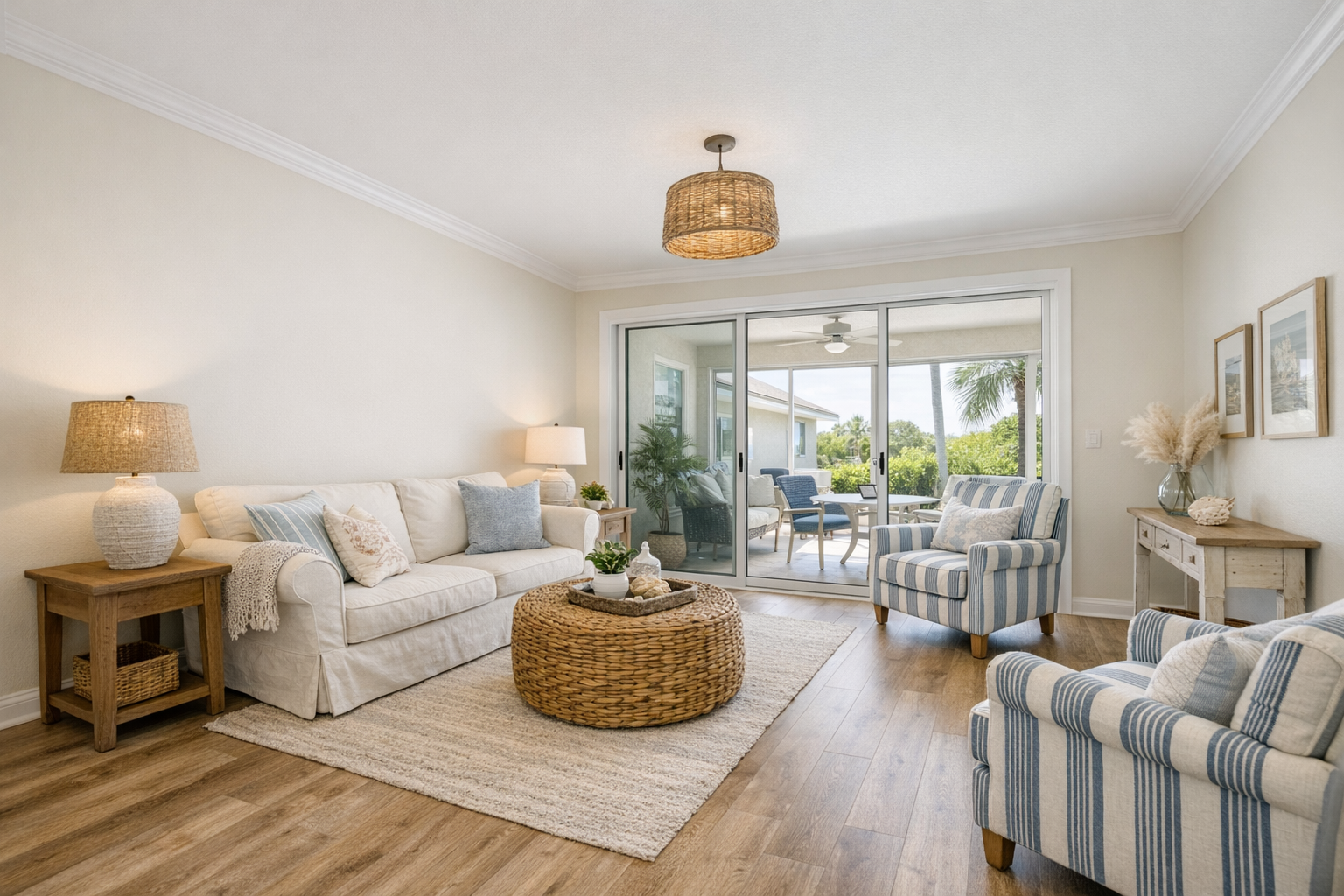
If your rooms are getting new floors, fresh paint, or a full remodel, baseboard installation in Venice FL is the finishing step that helps everything look complete. Baseboards create a clean border where the wall meets the floor, so a room feels intentional instead of almost done.
Clean baseboards do more than add a decorative line. They help cover small perimeter gaps, protect the lower edge of the wall, and create a smoother transition between flooring and paint. That matters in everyday Venice homes, whether you are refreshing a guest bedroom, updating a main living area, or replacing dated trim after years of wear.
The difference shows in the details: corners that meet neatly, seams that are placed thoughtfully, nail holes that are filled, and caulk lines that look smooth once painted. A careful baseboard installer in Venice can help the new trim match the room's style instead of drawing attention to uneven cuts or awkward gaps.
Ready to give your rooms a cleaner finished look? Start by choosing the spaces you want updated, noting any damaged or outdated trim, and sharing what flooring or painting work is already planned. From there, the installation can be matched to the room, the material, and the finish you want.
What the Baseboard Installation Service Includes
The service starts by matching the work to the room: replacement when existing trim is damaged, outdated, or coming off for new flooring, and new installation when a remodeled or freshly finished space needs baseboard molding added for the first time.
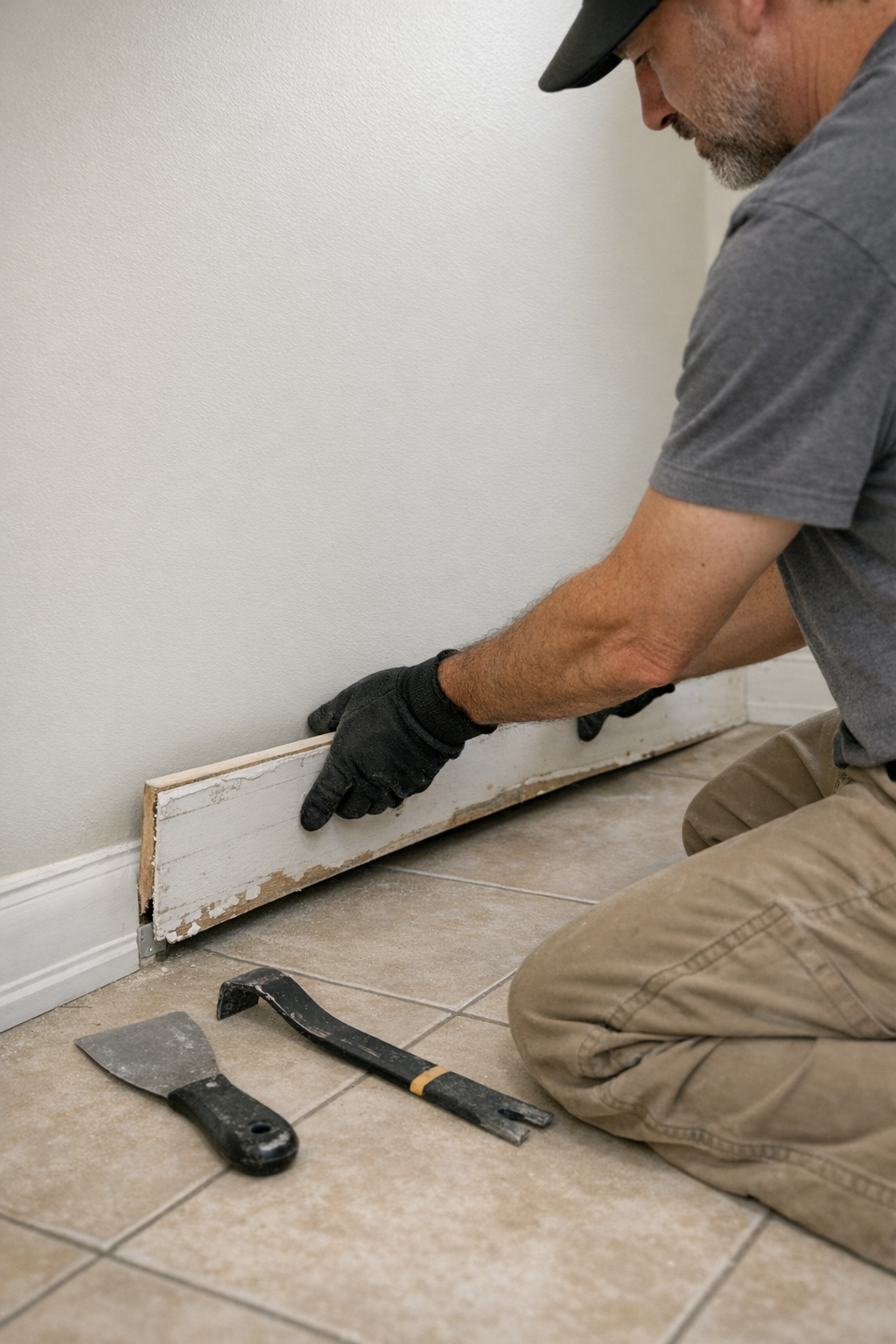
- For baseboard replacement Venice FL projects, old baseboards may need to be carefully removed before new trim is measured and fitted. This is common after flooring changes, repainting, remodeling, or when the existing trim is swollen, chipped, loose, or no longer matches the room.
- Measuring, cutting, and fitting are the core of the installation. Each wall run is sized, pieces are cut to meet at inside corners, outside corners, and longer seams, and the trim is positioned so the line looks straight along the wall and floor.
- Corners and transitions receive extra attention because they are easy to notice. Inside corners, outside corners, and spots where baseboards meet door casing should look intentional, with tight joints instead of open gaps or bulky overlaps.
- Once the pieces are fitted, the baseboards are fastened in place, nail holes are filled, and seams are prepared for a smoother finished appearance. Good fastening helps the trim sit securely without distracting nail marks or uneven edges.
- Finishing usually includes clean caulk lines where the trim meets the wall and preparation for paint or final finish. Custom baseboard installation may also involve matching a taller profile, a simpler modern shape, or a style that works with existing door trim.
Before work begins, the estimate should spell out the practical details: which rooms are included, whether old trim removal is part of the job, how paint preparation will be handled, and whether disposal or haul-away is included or listed separately.
Why Professional Installation Makes a Difference
The real test of baseboard work is what you notice after the tools are gone: whether the trim line feels straight, the corners look deliberate, and the finished paint surface does not draw your eye to gaps, nail marks, or uneven caulk.
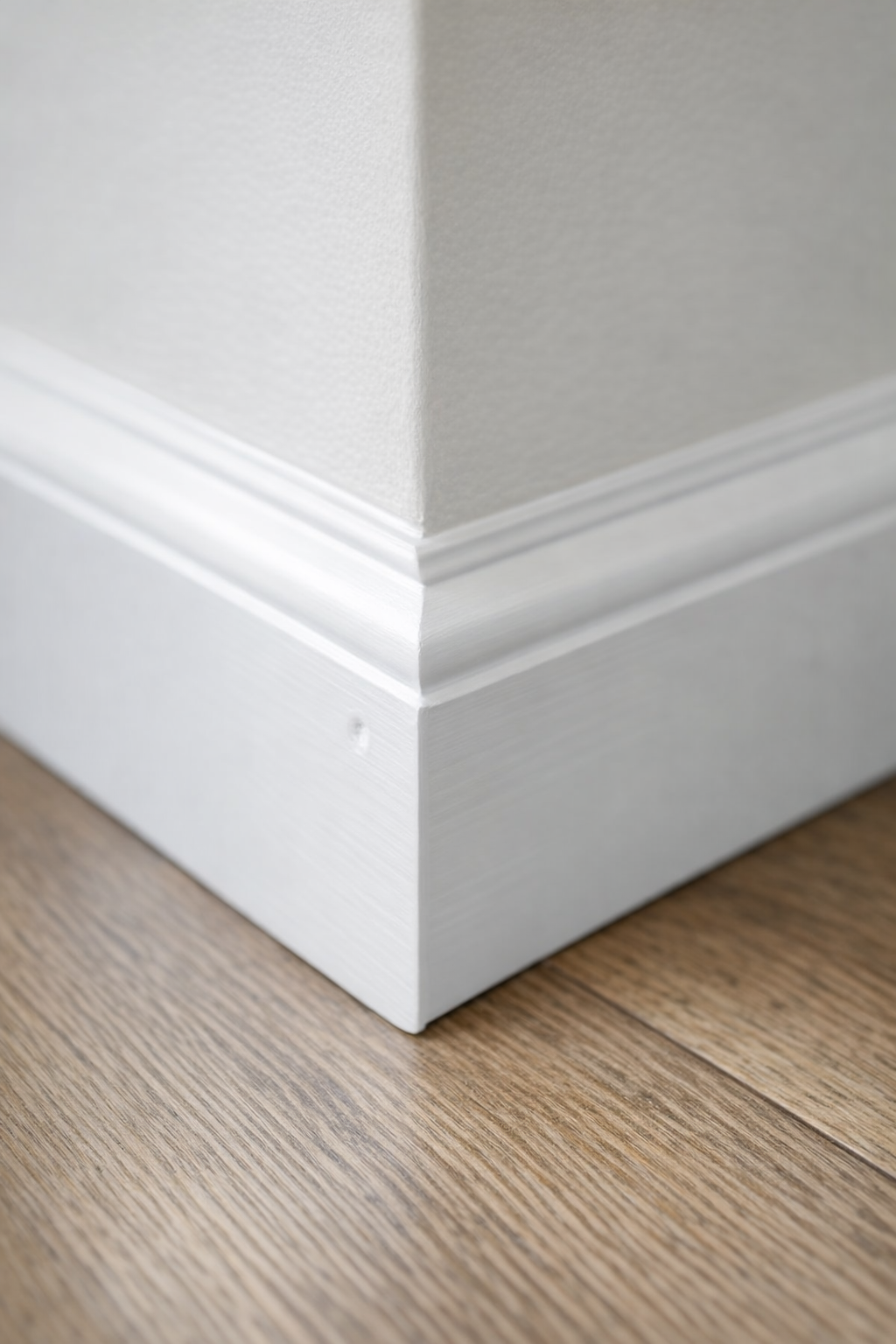
In finish carpentry, small choices change the look of the whole room. A miter is an angled cut used where pieces meet, often at outside corners. A coped joint shapes one piece to fit against the profile of another, which is especially useful at inside corners where walls are not always perfectly square. The takeaway is simple: cleaner cuts and better-fitting joints make the trim look built into the room instead of added on afterward.
- Good fastening helps the baseboard sit securely against the wall, while weak fastening can leave slight waves, loose spots, or edges that are harder to finish cleanly.
- A strong seam should be placed and prepared so it blends after finishing; a weak seam may separate visually or interrupt a long wall run.
- Filled nail holes should feel subtle once painted, not like a dotted line across the trim face.
- Caulk should create a smooth transition where trim meets the wall; messy or bulky caulk lines can make even new baseboards look rushed.
For homeowners comparing Venice FL baseboard installers, these details are often the difference between "installed" and truly finished. Professional baseboard installation in Venice FL cannot make every wall perfectly straight, but it can account for common wall and flooring conditions so the final result looks cleaner, tighter, and more intentional.
Baseboard Materials and Styles for Florida Homes
A room near a lanai door has different trim needs than a dry bedroom with carpet, so material selection should start with exposure, flooring height, and finish plan. The right choice usually depends on the room, the flooring, the budget, and the look you want once everything is painted or stained.
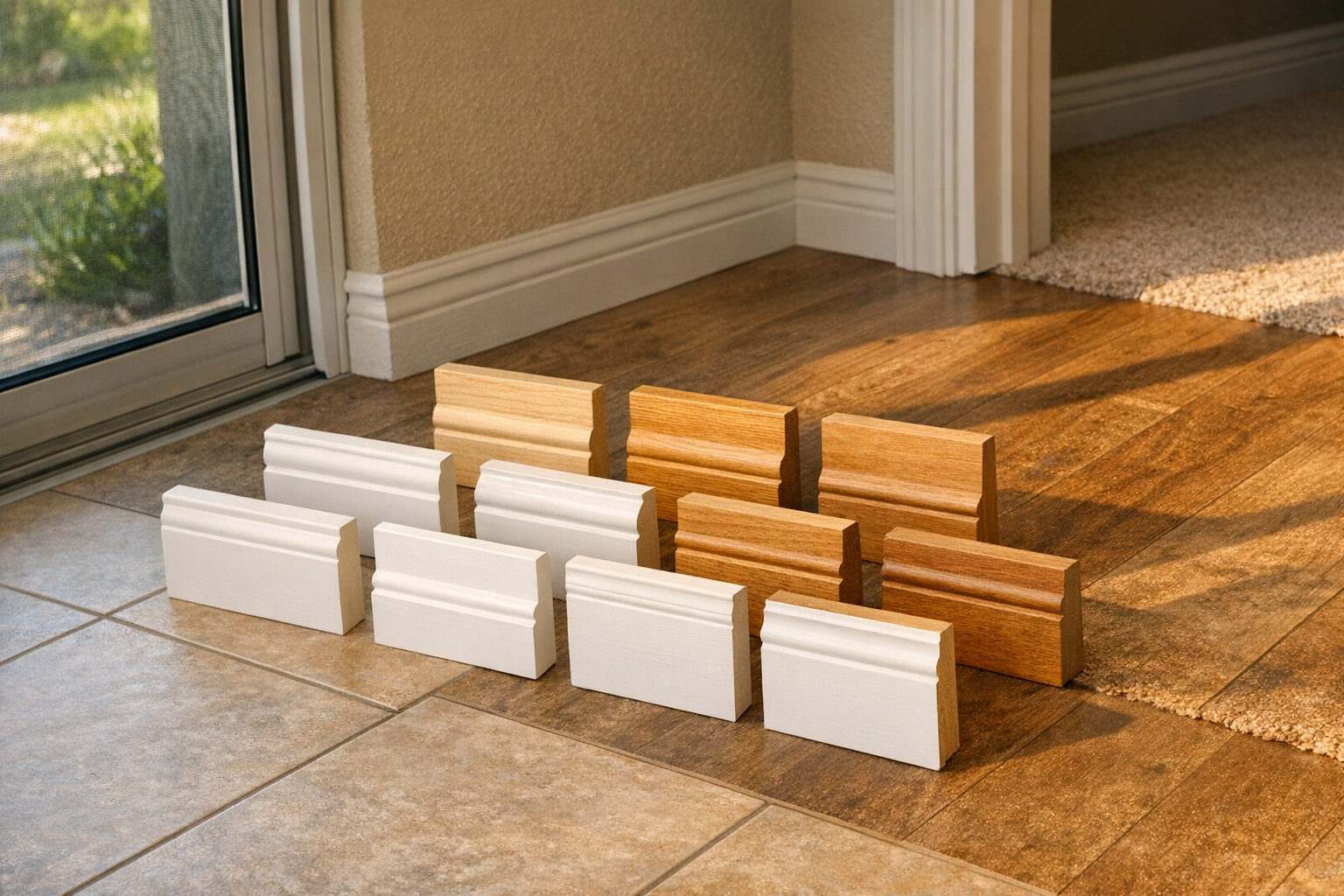
- MDF baseboards are a common paint-grade choice when the goal is a smooth, clean painted finish. They work well with simple profiles and modern room updates, especially when the baseboard will be painted white or matched to wall trim. The tradeoff is that MDF is not the most forgiving option for damp or repeatedly wet areas, so placement matters.
- Wood baseboards offer a more traditional material feel and can be used for paint-grade or stain-grade looks. Paint-grade wood gives a crisp painted result, while stain-grade wood is selected when the grain and natural tone are part of the design. Wood can be a good fit with hardwood floors or more detailed interior trim, but it typically calls for more attention to finishing.
- PVC baseboards are often considered for moisture-prone spots, such as areas near exterior doors, laundry spaces, bathrooms, or rooms where damp mopping is common. They are typically chosen for durability and moisture resistance rather than a stained wood appearance, so they make the most sense when a painted finish is desired.
Style matters too. Taller baseboards can make rooms feel more updated, especially after tile, luxury vinyl plank, laminate, or hardwood installation leaves the old trim looking undersized. Simpler profiles tend to pair well with coastal, transitional, and modern interiors, while more shaped profiles can suit traditional rooms or homes with existing decorative casing.
The practical takeaway is to choose the material and profile together. A budget-friendly painted update may point toward MDF baseboards, a stain-grade feature may point toward wood baseboards, and a damp entry or bath area may make PVC baseboards worth considering. A good installer can help match those choices to the room instead of treating every wall the same.
When to Replace or Install New Baseboards
A good time to plan trim work is when another room update exposes the edges. New flooring often changes the height or reveal at the wall, so reinstalling old baseboards may leave uneven lines, scuffed faces, or gaps that make the new floor look unfinished.
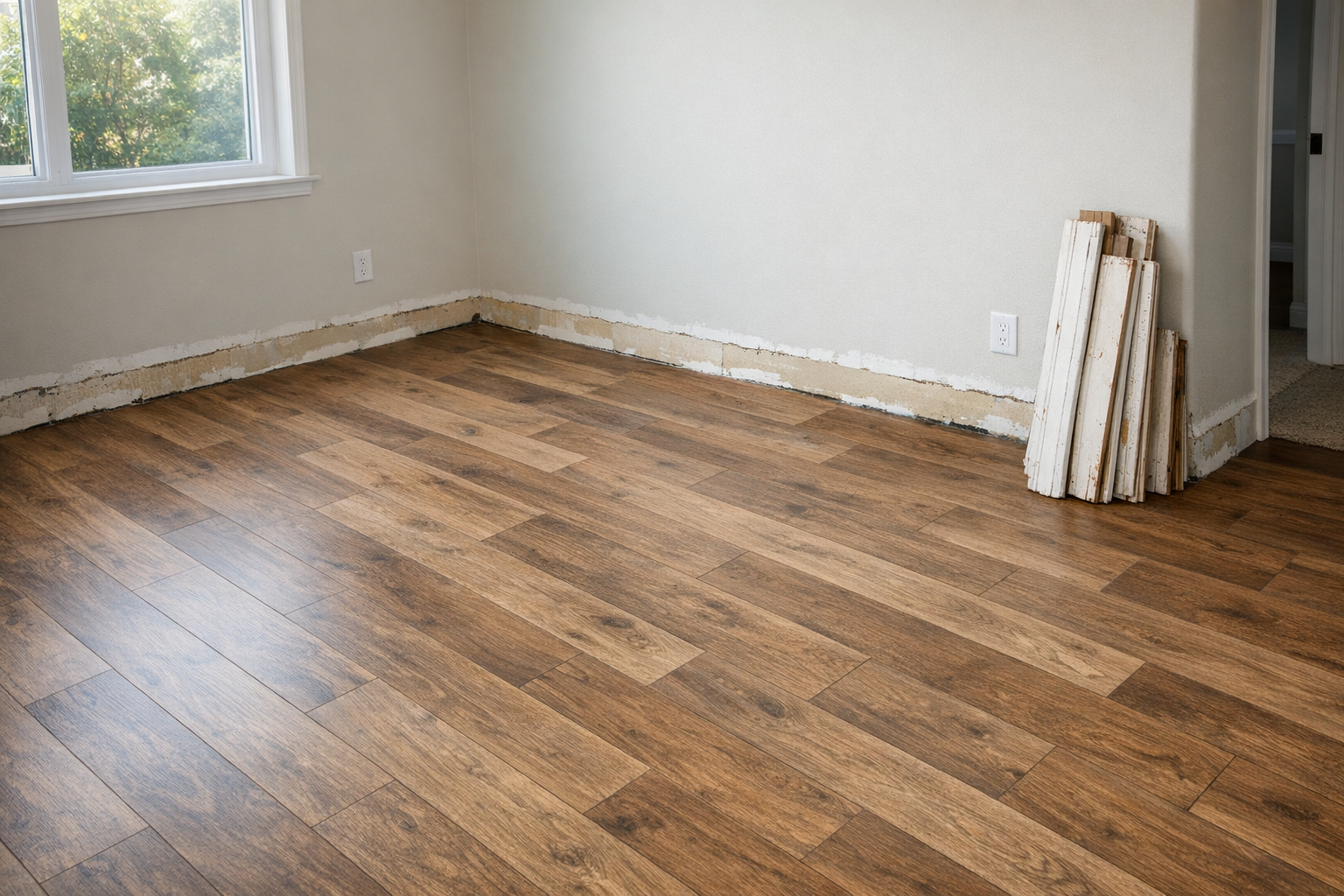
- After new floors: baseboards help cover the joint where the flooring meets the wall. The goal is not to hide poor work, but to create a clean, intentional transition around the room.
- When trim is swollen, cracked, or loose: baseboard replacement Venice FL projects often start near exterior doors, bathrooms, laundry areas, or older rooms where damaged trim no longer sits flat.
- When the profile looks dated: short, thin, or heavily worn baseboards can make fresh paint, new casing, or updated floors feel incomplete. Taller or cleaner-lined trim can better match the room's new style.
- After painting or remodeling: freshly painted walls can make old nail holes, caulk ridges, and chipped edges more noticeable, especially in bright rooms with natural light.
- When transitions look rough: strong baseboard work should leave straight runs, tight joints, filled nail holes, and smooth caulk lines so the wall-to-floor edge looks finished rather than patched.
If you are planning to install baseboards Venice Florida homeowners typically get the best result by grouping the work with flooring, painting, or room-by-room remodeling so the trim, finish, and transitions are handled together.
What Homeowners Can Expect From the Process
Once the rooms are chosen, the process usually starts with a conversation about what is changing in the space: new flooring, fresh paint, damaged trim, or a cleaner updated profile. From there, measurements are taken so the estimate can reflect the rooms involved, the amount of trim needed, and any extra prep such as removing existing baseboards.

- Consultation and measuring: the installer looks at room layout, doorways, corners, flooring edges, and wall conditions. This helps identify where long runs, outside corners, inside corners, and transitions will need careful fitting.
- Material and profile selection: the profile is the visible shape and height of the baseboard, while the material affects how it is finished and used in the room. Paint-grade baseboards are a common choice when the goal is a smooth painted look that ties into fresh walls, casing, or remodeled spaces.
- Scheduling: timing is planned around room count, material availability, paint or finish requirements, wall conditions, and whether old baseboards need removal. If the work is part of flooring or painting, the schedule should account for those trades so the finished edge is not handled out of order.
- Preparation and installation: the work area is prepared, trim is cut and fitted, and pieces are fastened so the runs line up cleanly. Good installation shows in tight joints, straight-looking lines, and corners that do not look forced or patched.
- Finishing details: nail holes are filled, seams are addressed, and caulk lines are smoothed where the baseboard meets the wall. These steps matter because they affect how the trim looks once paint or final finish is applied.
- Cleanup and walkthrough: before the job is wrapped up, the work area should be left orderly and the finished trim reviewed with the homeowner. This is the time to look at corners, seams, nail holes, caulk lines, and transitions so any touch-up needs are clear.
For baseboard installation in Venice FL, the goal is a process that feels organized from estimate to final review: you know which rooms are included, what finish is expected, and what the completed trim should look like before the crew leaves.
What Affects the Cost of Baseboard Installation
The most accurate price comes from the measured scope, not a flat guess. Linear footage is the total length of baseboard needed; room count affects how many separate spaces, doorways, and transitions are involved; and removal adds labor when old trim has to come off before new pieces are fitted.
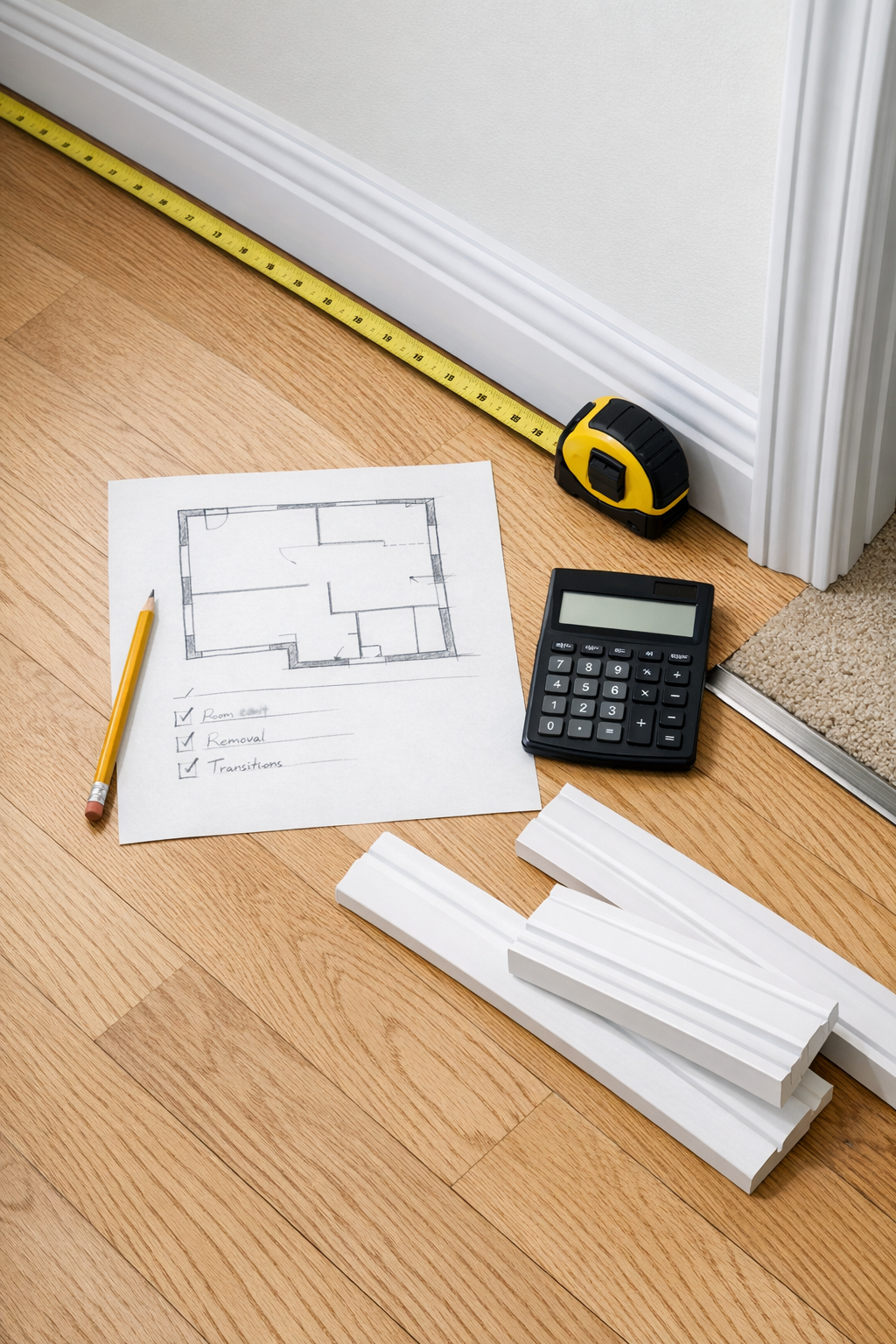
- Height and profile: a simple, lower baseboard is different from a taller or more detailed molding because the cuts, corners, and seams have to line up cleanly across a larger visible face.
- Room layout: long straight runs are usually less complex than rooms with many inside corners, outside corners, closets, columns, or short returns, where each extra cut affects fit and finish.
- Wall and floor conditions: uneven walls, flooring edges, or damaged areas can require more careful fitting so gaps, nail holes, and caulk lines do not stand out after finishing.
- Finishing requirements: paint-ready work may include filled nail holes, addressed seams, and smooth caulk lines; more detailed finish expectations can add time because the final surface has to look clean once the room is complete.
A baseboard installer in Venice can give the clearest estimate after seeing the rooms, measuring the runs, and understanding whether the project is connected to flooring, painting, trim damage, or a larger remodel.
Schedule Baseboard Installation in Venice, FL
To get your project moving, request an estimate for baseboard installation in Venice FL and be ready to share which rooms need trim, whether old baseboards are staying or coming out, and whether the work follows new flooring, painting, or a remodel.
- Share room details: note the number of rooms, any damaged or swollen trim, and the areas where flooring or paint work has changed the wall-to-floor edge.
- Send photos if useful: pictures of corners, doorways, long walls, and transitions can help show where clean cuts, smooth caulk lines, and finish-ready details will matter most.
- Choose a profile: the profile is the height and shape of the baseboard; simple profiles keep the look understated, while taller or more detailed options create a more custom baseboard installation.
When you are ready, schedule professional baseboard installation Venice homeowners can use to give each room cleaner lines, smoother transitions, and a more finished look from wall to floor.
Plan baseboard installation in Venice, FL
Compare the broader Baseboard Installation service details, then use the Venice, FL service area page if you want the local overview. When you are ready, request a baseboard installation estimate with the rooms, trim goals, and photos that help explain the scope.
FAQs
Do baseboards help cover gaps between flooring and walls?
Yes, baseboards help cover small perimeter gaps where the wall meets the floor and create a cleaner transition between flooring and paint. They also protect the lower edge of the wall and make the room look finished.
Can new baseboards be installed after new flooring?
Yes, new baseboards are commonly installed after new flooring because flooring changes can affect the height and reveal at the wall. Installing new trim helps cover the floor-to-wall joint and avoids uneven lines, scuffed old trim, or visible gaps.
How much does baseboard installation cost in Venice, FL?
Baseboard installation cost in Venice, FL depends on measured linear footage, room count, whether old trim must be removed, and the height and profile of the baseboard. Layout complexity, wall and floor conditions, and finishing needs such as filled nail holes, seams, and caulk lines also affect the estimate.
What is the difference between MDF, wood, and PVC baseboards?
MDF baseboards are a common paint-grade choice for a smooth painted finish, but they are not the best option for damp or repeatedly wet areas. Wood baseboards can be paint-grade or stain-grade, while PVC baseboards are often chosen for moisture-prone spots like bathrooms, laundry areas, exterior doors, and rooms with damp mopping.
What type of baseboard is best for Florida homes?
The best baseboard depends on the room exposure, flooring height, budget, and finish plan. MDF works well for budget-friendly painted updates, wood fits paint-grade or stain-grade designs, and PVC is a smart choice for moisture-prone areas such as bathrooms, laundry spaces, and entries near exterior doors.