

For homeowners planning crown molding installation in Sarasota FL, the goal is simple: add a clean, finished transition where the walls meet the ceiling without leaving gaps, rough seams, or uneven corners behind. Professional crown molding installation in Sarasota can be scaled for one bedroom, a main living area, a whole-home trim update, a condo refresh, or an older home where the walls and ceilings need extra attention during layout and fitting.
Crown molding works because it frames the top of the room and softens the line between vertical walls and the ceiling plane. A simple paint-grade profile can make a guest room feel more complete, while a taller or more detailed profile can give a dining room, foyer, or high-ceiling living area more presence. The right choice depends on the room's size, ceiling height, finish style, and whether the molding will be painted or stained.
A good installation is more than attaching trim to the wall. It includes careful measuring, accurate cuts, tight corner work, secure fastening, seam filling, caulking, priming or painting as needed, and cleanup. That level of finish matters in Sarasota condos, coastal Florida interiors, and long-established homes where small imperfections at the ceiling line can stand out once the molding is painted.
What Our Crown Molding Installation Service Includes
The service starts before any trim is cut. Measurements are taken for each wall run, the ceiling line is reviewed, and profile options are discussed so the molding fits the room instead of fighting it. Paint-grade molding is typically chosen when the finished look will be painted, while stain-grade material needs a cleaner wood appearance because the grain remains visible in the final finish.
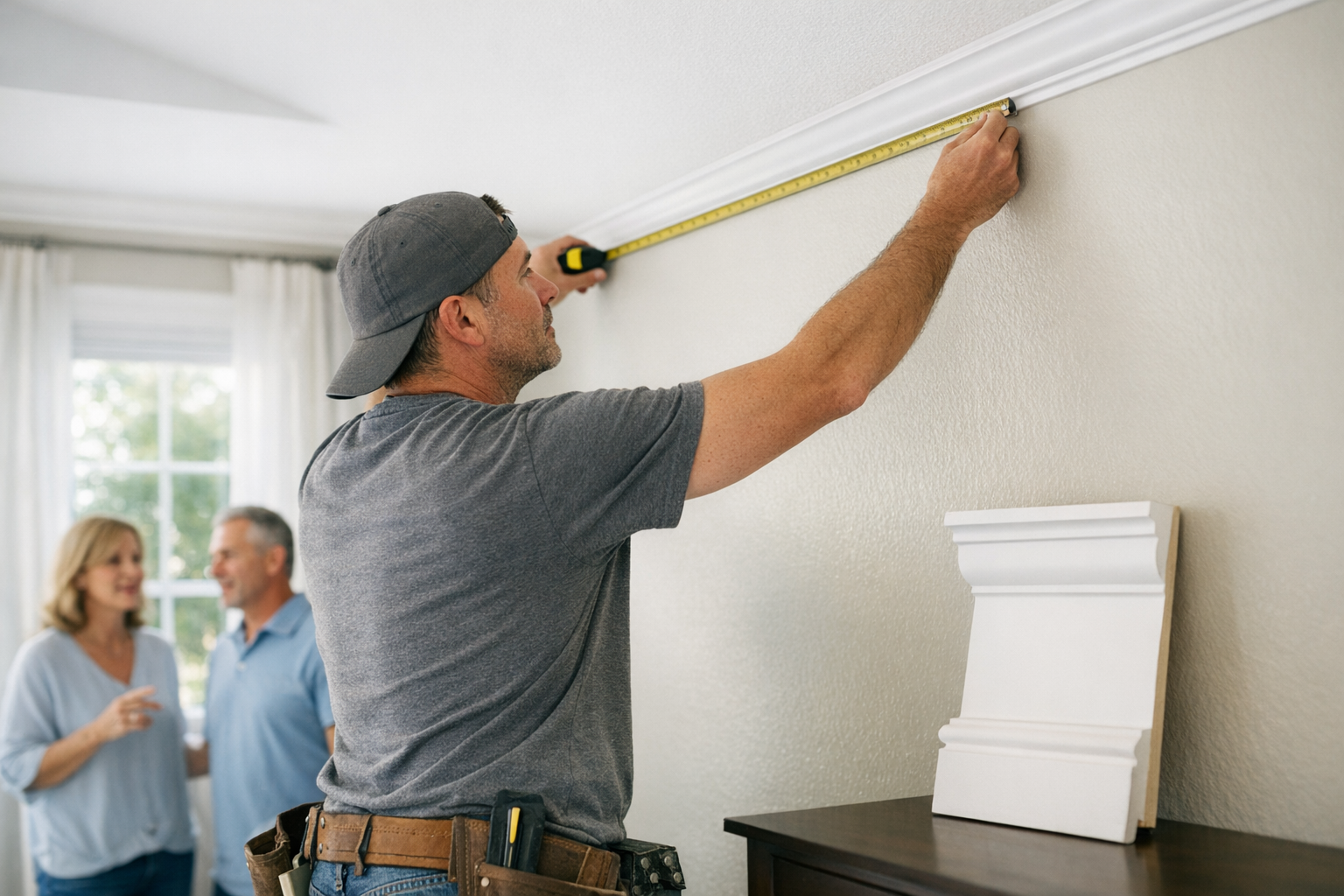
- Layout planning covers where pieces will start and stop, where seams should land, and how the molding will wrap the room. Good planning helps avoid awkward short pieces in visible areas.
- Cutting includes the angled work needed for crown molding, including miter cuts for corners and matched lengths for long wall runs. The practical goal is a consistent reveal along the wall and ceiling line.
- Inside corners may be coped or mitered depending on the profile and room conditions. A cope joint follows the face of the adjoining piece, while a miter joins two angled cuts; both are used to create a cleaner corner than a square butt joint.
- Outside corners are fitted with matching angled cuts, then fastened securely so the profile lines up instead of twisting or opening at the edge.
- Finishing includes treating seams, filling nail holes, caulking small gaps where the molding meets the wall or ceiling, and preparing the surface for paint or the final finish.
This is a done-for-you interior trim installation service, not a DIY coaching visit. If you need a crew to install crown molding Sarasota homeowners can plan around, the scope can include measuring, fitting, fastening, caulking, finishing preparation, and cleanup, while items such as full-room repainting or drywall repair may depend on the project condition and requested finish.
Why Professional Installation Makes a Difference
The difference often shows up after the ladder is gone: a corner that looked "close enough" during installation can become the first thing you notice once light hits the ceiling line. Crown molding is precision finish carpentry because each piece has to meet the next at an angle, stay aligned across the wall and ceiling, and still look smooth after fastening, filling, caulking, and paint preparation.
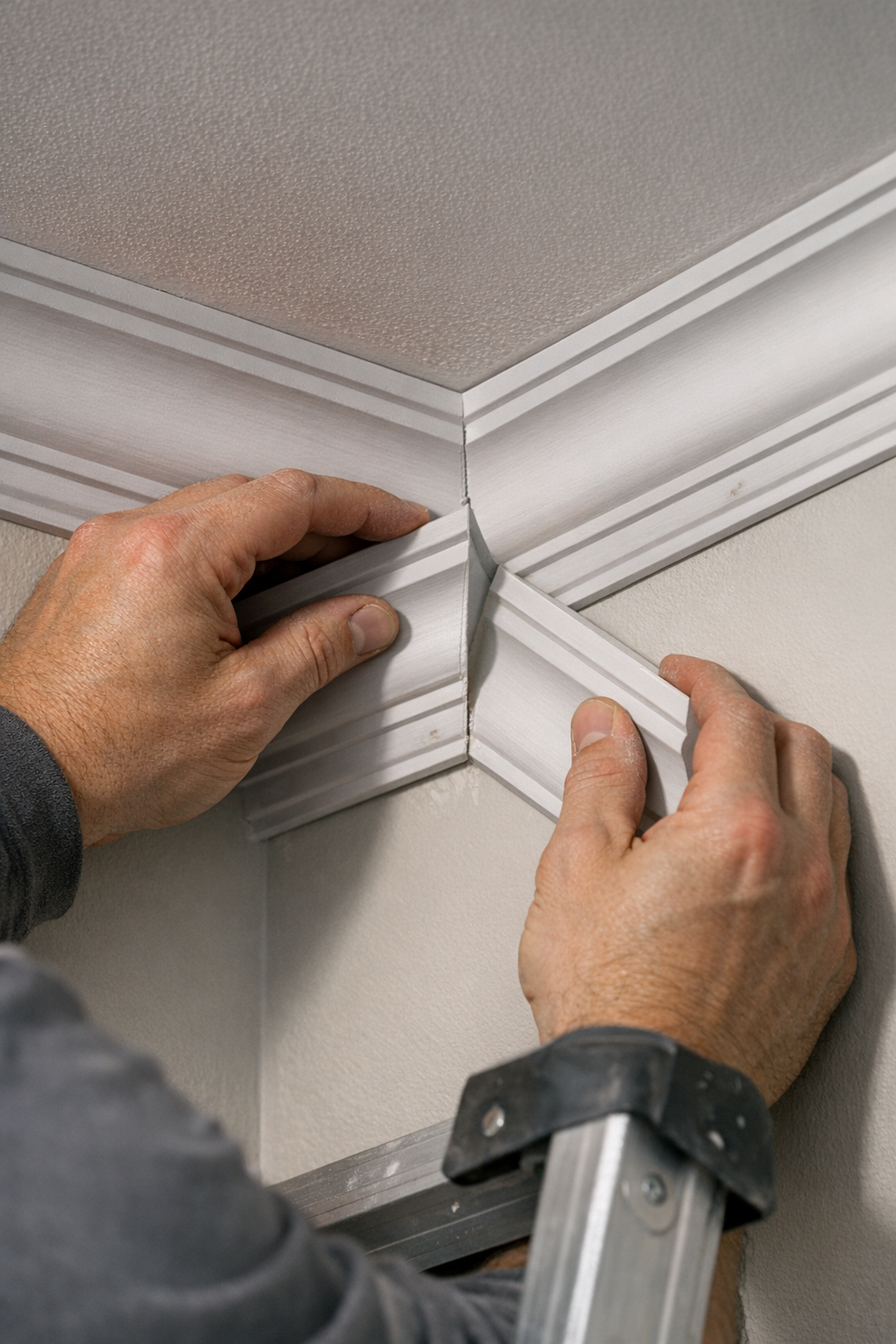
Uneven walls, out-of-square corners, taller ceilings, long runs, and more detailed profiles all change how the work is handled. A simple paint-grade profile in a small bedroom may be more forgiving, while a taller or more layered profile in a living room can make small layout errors easier to see. That is where an experienced Sarasota crown molding installer pays attention to the room itself, not just the trim length.
- Strong installation shows tight inside and outside corners, clean miter cuts where they are used, and seams placed so they do not draw attention across long wall runs.
- Consistent reveals mean the molding keeps an even visual line along both the wall and ceiling instead of drifting up, dipping down, or twisting as it crosses the room.
- Smooth caulk lines, filled nail holes, and clean paint-ready surfaces help the trim look built into the room rather than added as an afterthought.
- Weak installation often shows gaps, visible seams, uneven corners, loose sections, or profiles that do not match well from one piece to the next.
Hiring a crown molding contractor Sarasota FL homeowners can communicate with also helps prevent small decisions from turning into visible finish problems. The goal is not just to get the molding on the wall; it is to make the ceiling transition look intentional, secure, and ready for the final finish.
Crown Molding Options: Materials, Profiles, and Room Fit
The best-looking trim choice is usually the one that feels proportional before it feels decorative. Profile selection should account for the room's ceiling height, wall length, existing trim, moisture exposure, and whether the finished surface will be painted or stained.
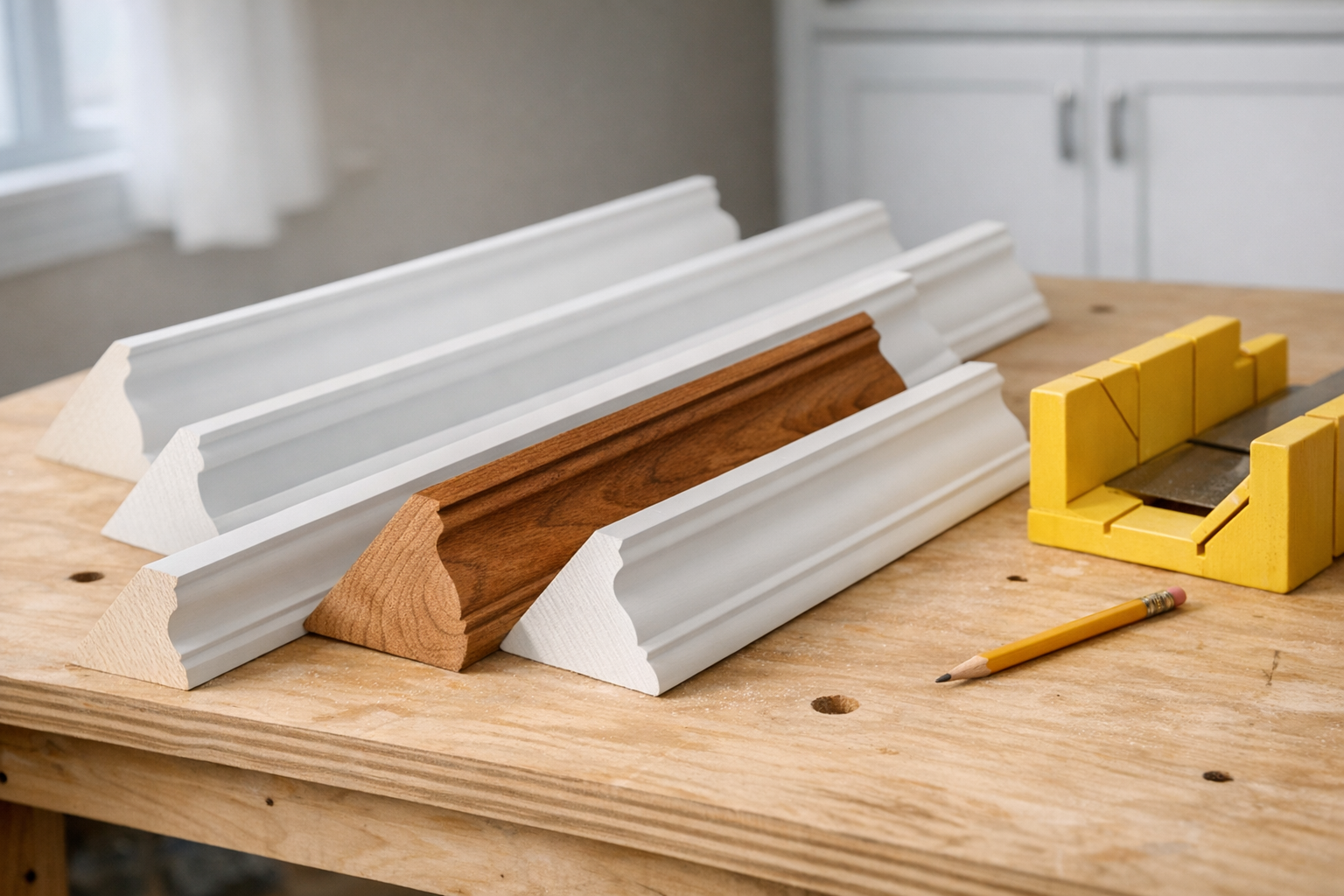
MDF is a common paint-grade option because it is made for a smooth painted finish rather than a visible wood-grain look. Finger-jointed wood is also typically used for paint-grade work; it is made from shorter wood pieces joined together, so it can give the installer a real-wood material while still being intended for paint. Solid wood is the better fit when the homeowner wants stain-grade crown molding, because the grain remains part of the finished appearance and the material itself becomes more visible.
Polyurethane and other moisture-conscious molding alternatives can make sense in areas where humidity, kitchens, baths, or coastal conditions are part of the planning conversation. These materials are often selected for durability and finish stability, while wood-based options are often chosen for their traditional feel, clean paintability, or stain potential. The practical takeaway is simple: the material affects how the crown is cut, fastened, filled, sanded, caulked, and finished.
- For bedrooms or smaller rooms, a simple paint-grade profile usually keeps the ceiling line clean without making the room feel crowded.
- For living rooms, dining rooms, foyers, or rooms with taller ceilings, a taller crown or layered custom crown molding can add more presence, but it also demands tighter planning at corners, seams, and transitions.
- For open floor plans, profile selection should consider how the molding will continue from one area to the next so the trim does not look undersized in one space and oversized in another.
- For stain-grade work, material selection and seam placement matter more visually because filler and paint will not hide the joint in the same way they can on paint-grade molding.
Good planning balances room proportions with the finish goal. A narrow crown may disappear in a large room with high ceilings, while an oversized profile can feel heavy in a low-ceiling bedroom. Choosing the right material and profile before cutting begins helps the installation look intentional once the final caulk, primer, paint, or stain is complete.
Considerations for Sarasota Condos, Coastal Homes, and Older Properties
Local project conditions can change the plan even when the molding profile stays the same. In Sarasota condos, the installation is often less about heavy construction and more about coordination: elevator access, parking, material staging, noise-sensitive work windows, and association-related requirements can affect how the job is scheduled and set up.
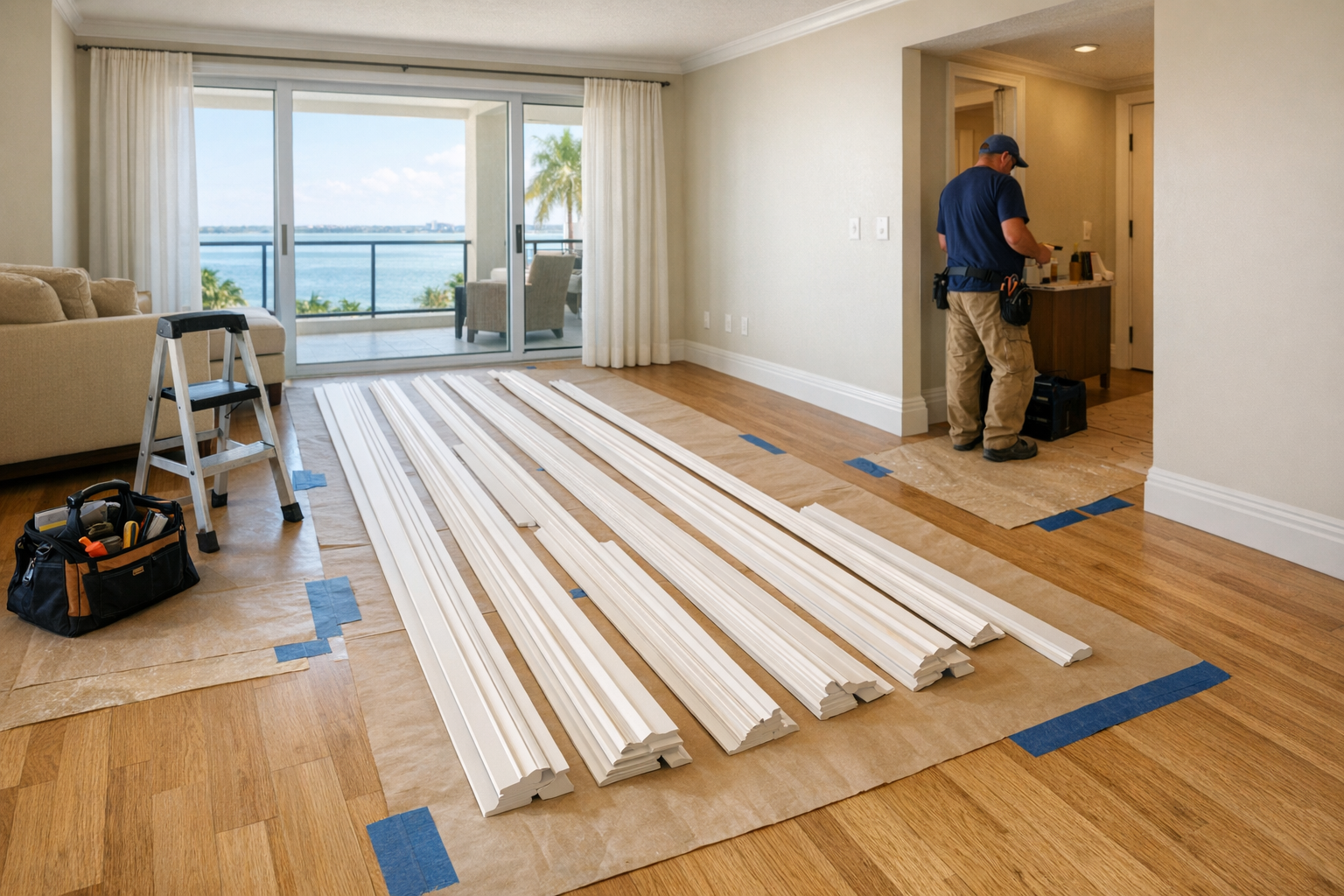
For coastal Florida homes, humidity belongs in the material conversation. Paint-grade MDF, finger-jointed wood, solid wood, and polyurethane-style options do not all respond the same way to moisture exposure, so the practical choice is the one that fits the room, the finish, and the amount of environmental stress the trim may see.
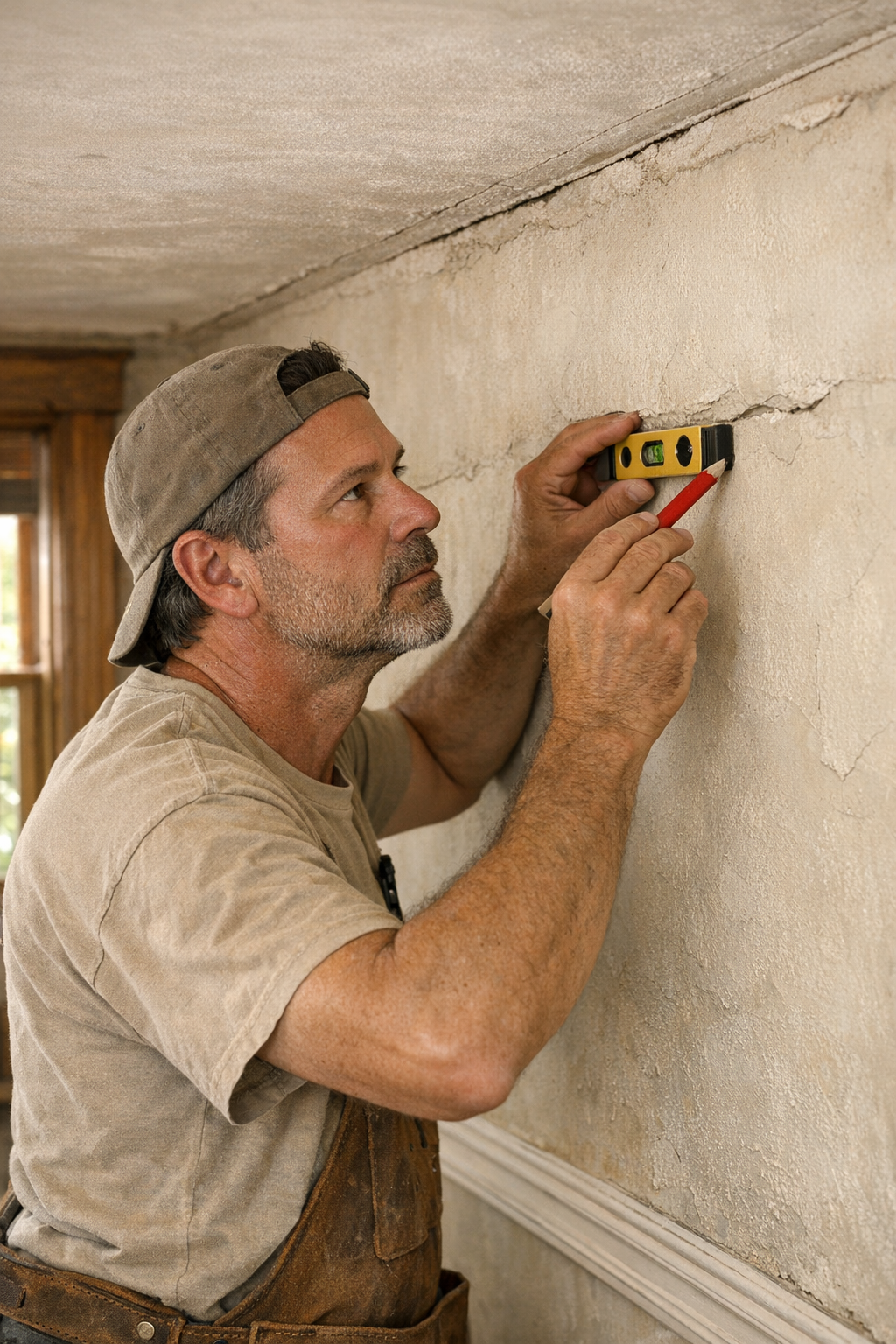
Older Sarasota properties may have ceiling lines, plaster, drywall, or corners that are not perfectly straight. That does not rule out crown molding, but it does make careful measuring, test fitting, seam placement, caulking, and finish prep more important so small irregularities do not become obvious gaps.
Historic homes or historic-style interiors may call for a profile that echoes existing baseboards, casings, or built-ins instead of introducing a modern shape that feels out of place. Newer homes often need the opposite approach: a clean, proportional crown that adds architectural definition to otherwise simple rooms without making the ceiling line feel overdone.
Where Crown Molding Adds the Most Value
Some rooms simply give the trim more work to do. In living rooms, dining rooms, foyers, hallways, and open floor plans, crown molding helps organize long ceiling lines, so layout, seam placement, and corner work matter more than in a small square room. Taller or more detailed profiles can suit larger public spaces, while bedrooms often look better with a simpler paint-grade crown that finishes the room without making the ceiling feel heavy.
Kitchens need a more practical plan because cabinets, soffits, vents, tile, and lighting can interrupt the run. That changes where the molding starts and stops, how returns are cut, and whether a moisture-conscious material or painted finish makes sense for the room. Homeowners can start with one high-impact room or plan a coordinated whole-home installation, using the same profile throughout or adjusting scale by room so the trim feels connected without looking oversized.
What Affects Project Cost, Timeline, and Planning
Budget and schedule are easiest to discuss once the room list is clear. Linear footage is the total length of molding needed around the ceiling line, so a single bedroom is planned differently than several connected rooms. Room count affects setup and transitions, ceiling height affects access and working pace, and material choice changes how pieces are cut, fastened, filled, and finished.
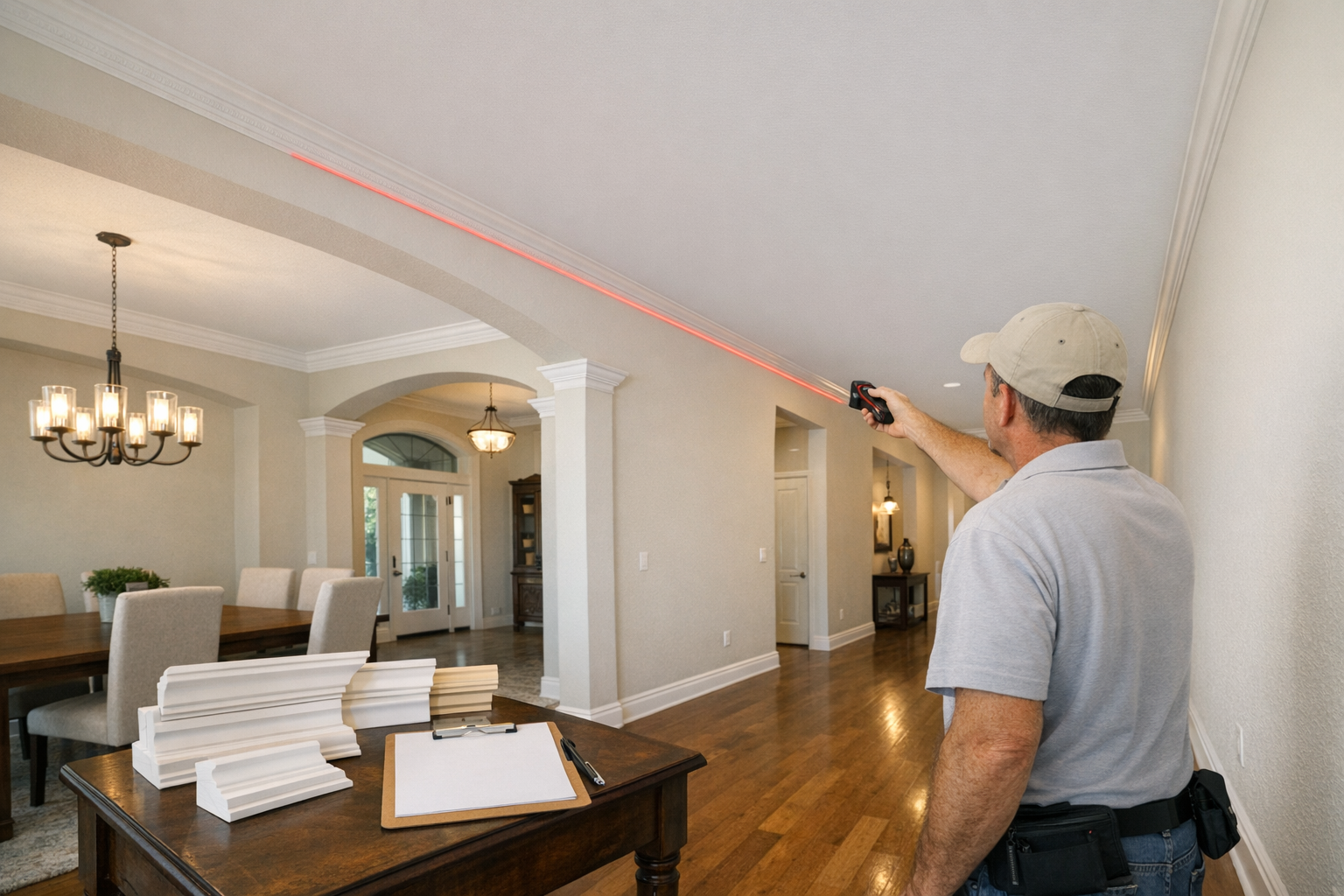
Profile complexity also matters. A simple paint-grade crown has fewer details to align, while a taller or more decorative profile can require more careful fitting at inside corners, outside corners, returns, and seams. Prep work can add planning time when old caulk, uneven paint buildup, damaged drywall, wavy ceiling lines, or gaps need attention before the molding can sit cleanly.
For a more useful estimate for crown molding installation in Sarasota FL, homeowners can share room measurements, ceiling height, photos of the ceiling line and corners, the number of rooms, preferred material or profile, and whether painting should be included. A crown molding contractor Sarasota FL homeowners contact can then discuss the likely scope, finishing needs, and scheduling considerations without pretending every room carries the same cost or timeline.
Request Crown Molding Installation in Sarasota
A useful project review can start with one clear checkpoint: which rooms are ready for trim now, and which ones may need painting or ceiling-line touchups included. To request an estimate, share the room count, a few photos of the ceiling line and corners, approximate ceiling height, and whether you prefer a smooth paint-grade profile or a more detailed style with stronger shadow lines.
From there, the conversation can cover material choices, profile proportions, finishing expectations, and any project details that may affect planning. If your home is in Sarasota, schedule a consultation or project review for professional installation that is measured carefully, fitted cleanly, finished neatly, and planned around the way the space actually looks.
Plan crown molding installation in Sarasota, FL
Compare the broader Crown Molding Installation service details, then use the Sarasota, FL service area page if you want the local overview. When you are ready, request a crown molding installation estimate with the rooms, trim goals, and photos that help explain the scope.
FAQs
What does professional crown molding installation in Sarasota include?
Professional crown molding installation includes measuring each wall run, planning the layout, cutting angled joints, fitting inside and outside corners, fastening the trim, filling seams and nail holes, caulking gaps, and preparing the molding for paint or final finish. Cleanup is also part of the done for you interior trim installation service.
Can crown molding hide gaps between walls and ceilings?
Crown molding can cover small gaps and create a cleaner transition where walls meet the ceiling. Proper installation still requires careful measuring, tight corner work, seam filling, and caulking so uneven ceiling lines or wall imperfections do not remain visible.
How much does crown molding installation cost in Sarasota, FL?
Cost depends on linear footage, room count, ceiling height, material choice, profile complexity, prep work, and whether painting is included. A useful estimate requires room measurements, photos of ceiling lines and corners, approximate ceiling height, preferred material or profile, and the number of rooms.
Can crown molding be installed in condos or older Sarasota homes?
Crown molding can be installed in Sarasota condos, coastal homes, and older properties. Condos may require planning around elevator access, parking, material staging, noise windows, and association requirements, while older homes often need extra care for uneven ceiling lines, plaster, drywall, or out of square corners.
Is MDF or wood crown molding better for Florida homes?
MDF is a common paint grade option for a smooth painted finish, while finger jointed wood is also typically used for paint grade work. Solid wood is better for stain grade crown molding because the grain remains visible, and polyurethane style options can be a practical choice where humidity, kitchens, baths, or coastal conditions are concerns.