

A plain wall-to-ceiling line can make an otherwise finished room feel like it is missing its final detail. Crown molding installation in Venice FL adds that clean ceiling trim transition in living rooms, dining rooms, bedrooms, entries, hallways, and main gathering spaces, with local trim specialists providing estimates and guidance rather than a step-by-step DIY approach.
With professional crown molding installation in Venice, the focus is on fit, proportion, and finish. A profile is the shape and size of the molding; a smaller, simpler profile can feel subtle in a bedroom, while a taller or more detailed profile can add presence in a dining room or open living area. The right choice should look balanced with the ceiling height, door casings, baseboards, and overall style of the home.
Professional installation matters because crown molding is detail-sensitive: accurate measuring, clean miter cuts, cope joints where needed, and tight seams all affect the finished result. Strong work looks smooth and seamless once painted or stained; weak work shows up as gaps, uneven corners, lumpy caulk, or trim that does not follow the room consistently.
What Our Crown Molding Installation Service Includes
The service starts with a room-by-room walkthrough, not just a quick linear-foot measurement. We measure the walls, note inside and outside corners, look at ceiling height, and consider how the molding will relate to doors, windows, cabinets, baseboards, and the overall wall-to-ceiling transition.
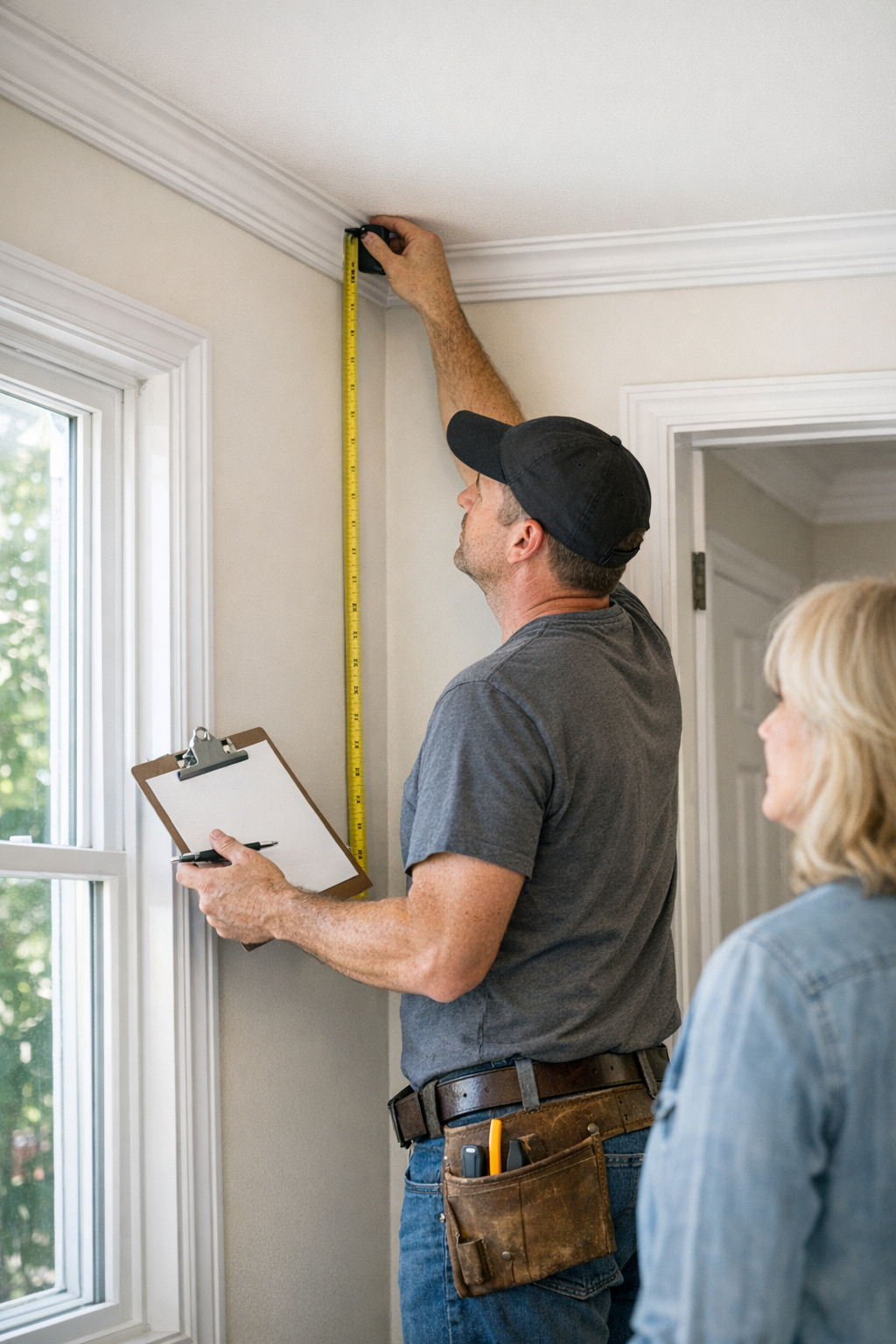
Profile selection is part of that planning. A profile is the shape, depth, and height of the crown; a simple paint-grade profile may suit a bedroom or hallway, while custom crown molding can help a dining room, foyer, or main living area feel more finished. The practical takeaway is proportion: the molding should add detail without looking too small for the room or too heavy for the ceiling height.
Installation includes cutting and fitting each length, fastening the molding securely, and handling corner conditions carefully. Inside corners may need coping where appropriate, while outside corners depend on clean, accurate miter work. Good fitting shows up as consistent reveal lines and corners that meet cleanly instead of opening into visible gaps.
Finishing work is included as part of the installed look. Seams are caulked where needed, nail holes are filled, and the trim is prepared so it can be painted or stained for a smooth final appearance. For homeowners planning broader interior trim installation, crown can also be coordinated with other trim updates so the room feels cohesive.
For crown molding installation in Venice FL, the project can be planned around one feature room, several connected spaces, or a larger trim upgrade. The estimate and guidance help define the scope before work begins, so you know which rooms are included and what level of finish is expected.
Why Professional Installation Makes a Difference
A small corner error can change the way the whole room feels. Crown sits at an angle between the wall and ceiling, so it has to meet two surfaces at once; when either surface is out of square, the installer has to adjust the fit so the line still looks straight and intentional from below.
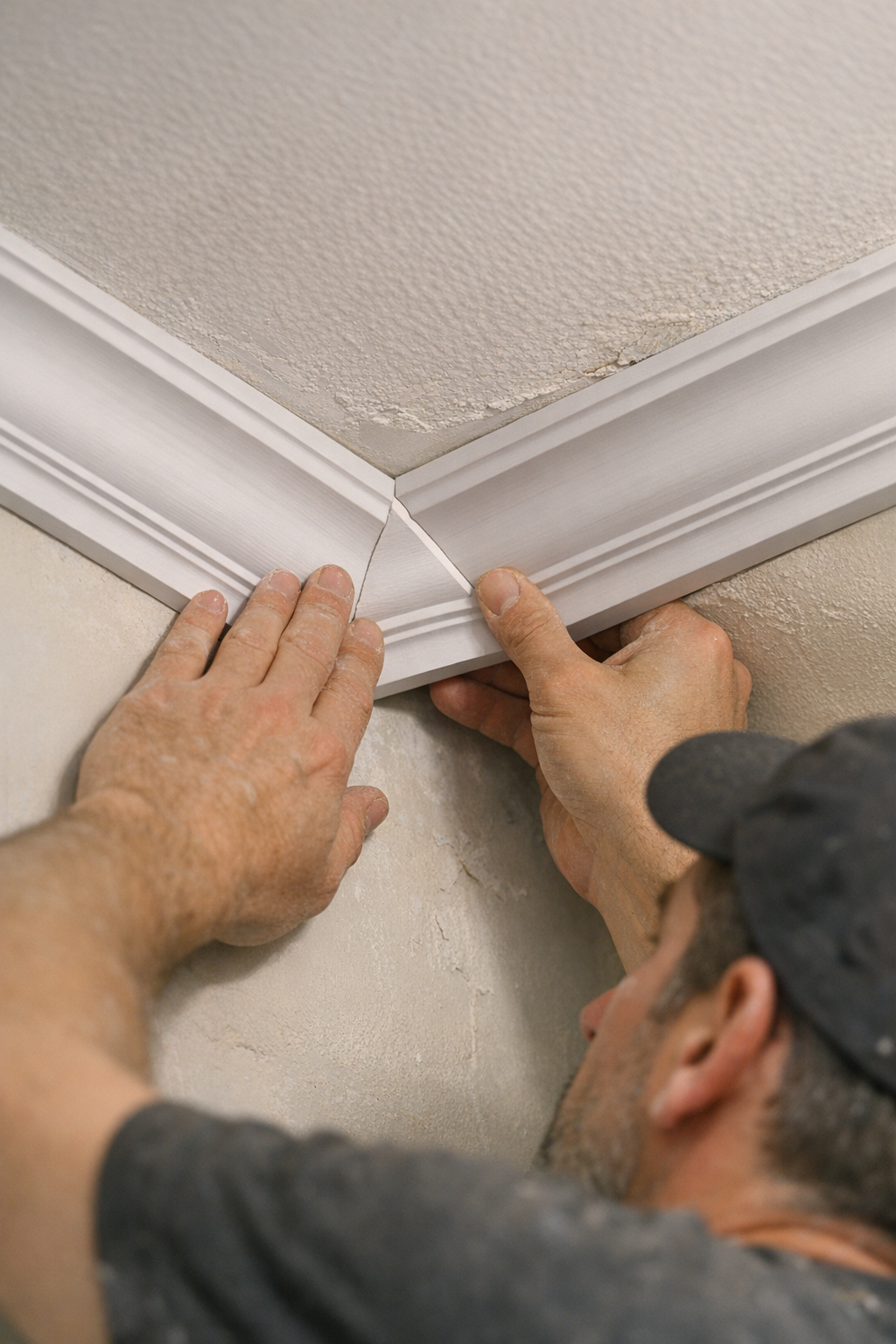
That is where experienced finish carpentry in Venice FL makes a practical difference. Accurate measuring keeps each run consistent, miter cuts help outside corners close cleanly, and cope joints may be used on inside corners so one piece follows the shape of the other instead of relying on two angled cuts to land perfectly. The homeowner's takeaway is simple: the better the joinery, the less the eye notices the trim as separate pieces.
Professional crown molding installers in Venice FL also look beyond the cut itself. They watch reveal lines, wall waves, ceiling texture, and transitions into cabinets, door casings, or adjacent rooms. A strong installation has corners that meet tightly, seams that disappear after finishing, and caulk lines that support the profile instead of becoming the most visible part of it.
Poor installation creates the opposite effect: open gaps at corners, uneven returns, lumpy caulk, mismatched profiles, or molding that looks too large for a lower ceiling. Instead of making the room feel more finished, the trim starts drawing attention for the wrong reasons. Skilled installation helps the crown look like it belongs to the room, not like an add-on trying to cover a problem.
Material, Profile, and Finish Options for Your Home
Material choice usually comes down to the look you want after the trim is finished. For a painted room, paint-grade options such as MDF are often considered because they are meant to receive primer and paint rather than show a natural grain. Wood may be preferred when the goal is a stain-grade finish, a more custom profile, or a closer match to existing wood trim, cabinetry, or built-ins. The takeaway: choose the material around the final appearance, not just the piece on the rack.
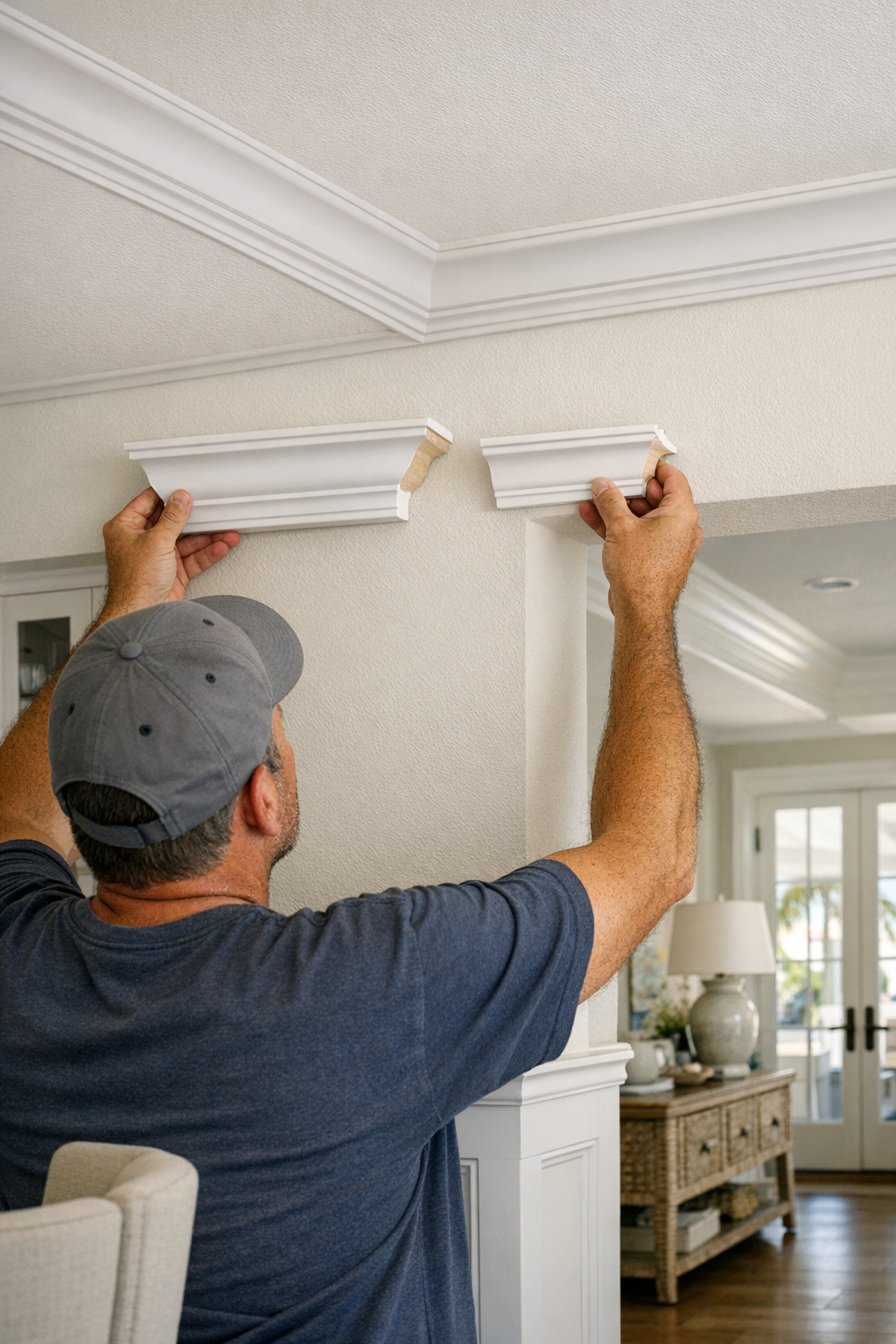
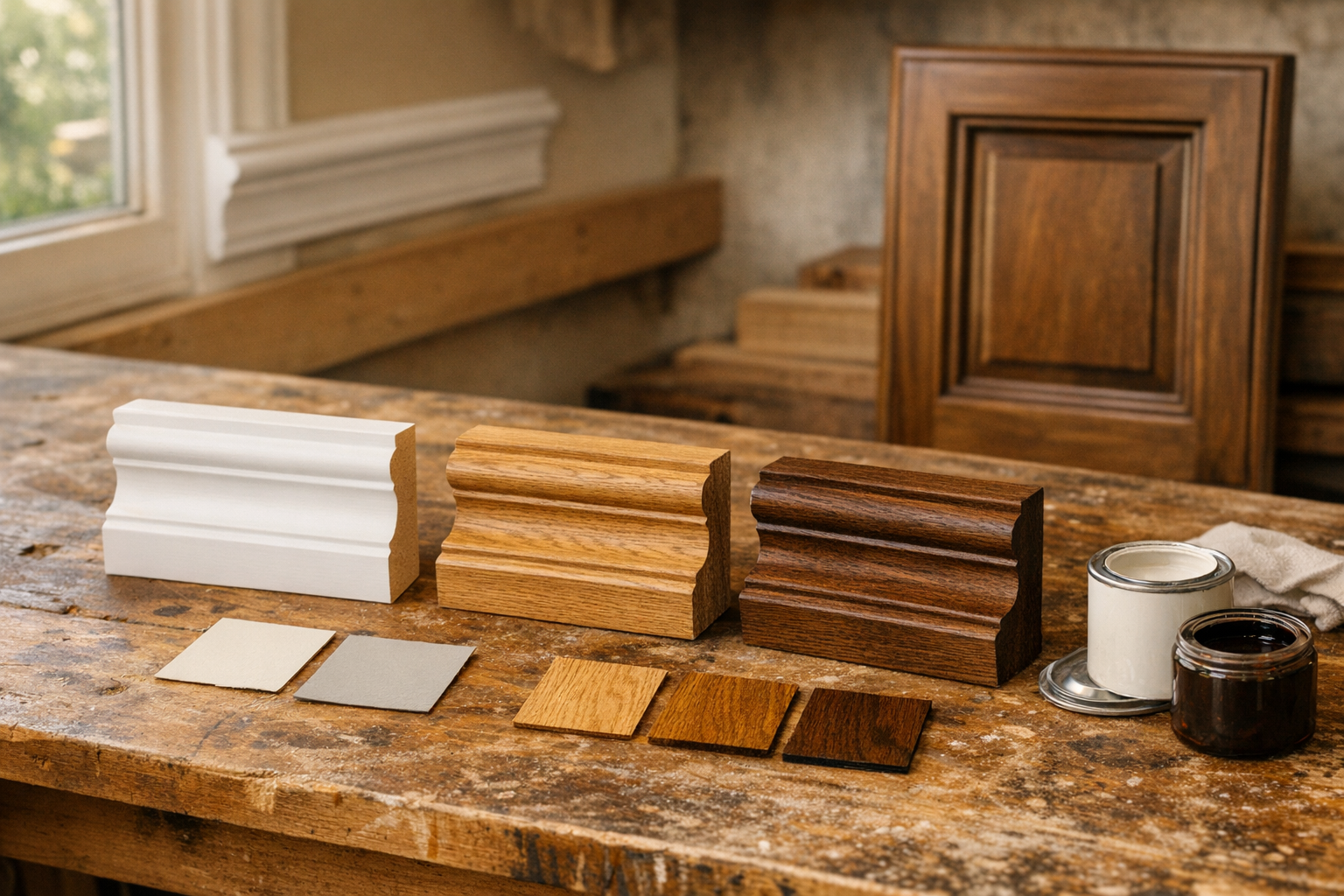
Profile selection affects how bold or subtle the room feels. A simple cove or stepped profile can work well in bedrooms, hallways, and clean-lined spaces, while a larger layered crown may suit a formal dining room, entry, or living area with taller walls and more substantial baseboards. Ceiling height matters because oversized molding can feel heavy in a lower room, while a very small profile can disappear in a larger open space.
The crown should also relate to what is already in the room. If the baseboards, door casings, window trim, or kitchen cabinets have a simple square style, a highly ornate crown can look disconnected. If the home already has traditional trim details, a more shaped profile may feel more natural. Good planning for crown molding installation in Venice FL looks at these relationships before material is ordered, so the finished trim feels intentional from room to room.
Painting and finishing decisions should be made before installation begins. Some trim arrives pre-primed, some needs priming, and most painted crown is caulked and finished after it is fastened so seams, nail holes, and small wall-to-trim lines can be addressed. For stained work, the fit and surface quality matter even more because caulk and filler are harder to hide. A clean result should look ready for paint or stain, with smooth seams and a finish plan that matches the rest of the interior trim.
Considerations for Coastal Florida Homes
Venice-area rooms do not always give an installer perfectly flat, square surfaces to work with. Textured walls, textured ceilings, and slightly uneven corners can change how the molding sits against the surface, so the goal is not just cutting the trim accurately; it is fitting it so the finished line still looks straight, tight, and intentional from normal viewing distance.
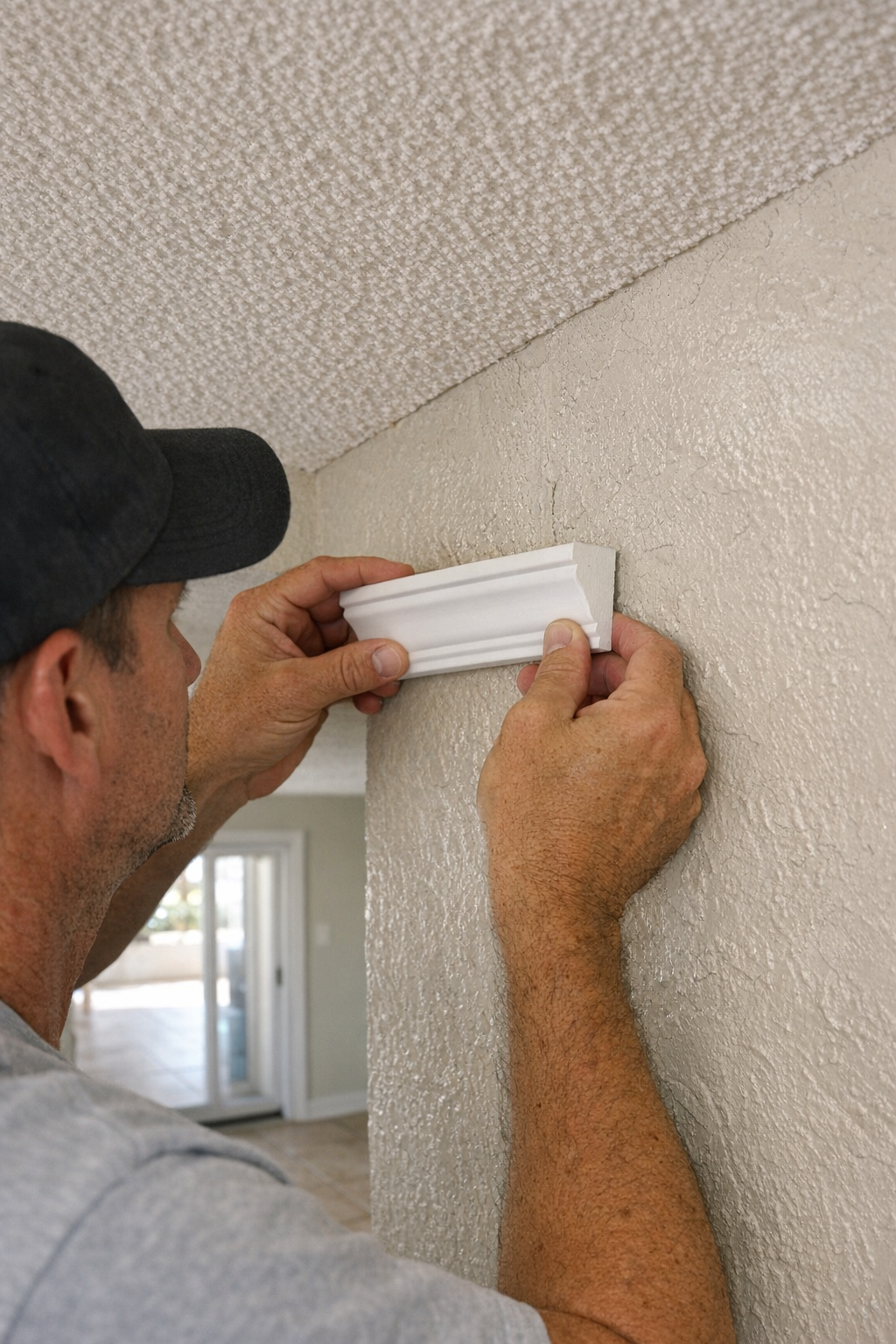
Older homes and remodeled spaces may have ceiling dips, patched drywall, or corners that are not a true 90 degrees. In those rooms, crown molding installation in Venice FL should be planned around the actual conditions in the house, with careful measuring, adjusted corner work, and enough finish prep to avoid obvious gaps or heavy caulk lines.
Open floor plans need a different eye than a single bedroom or dining room. When the living room, kitchen, and entry share sightlines, the crown profile has to transition cleanly around cabinets, soffits, archways, and long ceiling runs. A weak installation may look acceptable in one corner but reveal waves or mismatched returns when viewed across the larger space.
Style matters, too. Coastal interiors usually call for cleaner, lighter profiles; transitional rooms can handle a simple shape with a little more depth; traditional spaces may suit a more detailed crown; and modern rooms often look better with crisp, understated lines. A professional assessment helps match material, profile, surface prep, and finish expectations to the home instead of forcing the same trim choice into every room.
Our Installation Process: From Estimate to Cleanup
Once the room conditions and style goals are clear, the next step is a practical estimate conversation. For crown moulding installation Venice FL homeowners can start by sharing which rooms are involved, whether the trim will be painted or stained, and whether there are special areas such as tray ceilings, cabinets, long hallways, or open living spaces that need clean transitions.

During the walkthrough, measurements are taken room by room and the molding profile is matched to the space. A smaller bedroom may call for a simpler crown that keeps the ceiling from feeling crowded, while a dining room or main living area may support a deeper profile. The estimate then reflects the agreed scope, including room count, molding choice, ceiling height, wall conditions, and the level of painting and finishing needed.
Scheduling is handled after the details are set. A one-room project is typically easier to coordinate than several connected rooms because there are fewer cuts, corners, transitions, and finish steps. Larger projects may need more planning time so material, access, surface prep, and finish work are lined up before installation begins.
On installation day, the work focuses on accurate layout, clean cuts, secure fastening, and consistent reveal lines. After the molding is installed, seams, nail holes, and small wall-to-trim gaps are addressed with careful caulking and filling so the crown has a smooth, seamless-looking surface that is ready for paint or stain.
Before wrapping up, the finished runs are reviewed with you from normal viewing angles, not just up close on a ladder. Good checkpoints include tight corners, even transitions, smooth filled nail holes, and no obvious globs or breaks along the ceiling line. The work area is then cleaned so the room is left neat and ready for the next finishing step or everyday use.
Schedule Crown Molding Installation in Venice and Nearby Areas
Start with the room list, finish preference, and any trim you want the new crown to match. A focused walkthrough helps narrow the scope: one bedroom may need a simple paint-grade profile, while a dining room, entry, or open living area may call for custom crown molding, meaning a profile and size chosen around the room's proportions instead of a one-size-fits-all trim choice.
The best next step is project-specific guidance, because the right plan depends on ceiling height, corner conditions, profile depth, material choice, and whether the crown needs to be paint-ready or stain-ready. Schedule a consultation for your Venice home, and the conversation can turn those details into a clear installation plan with the goal of tight seams, smooth caulk lines, secure fastening, and a polished finished look.
Plan crown molding installation in Venice, FL
Compare the broader Crown Molding Installation service details, then use the Venice, FL service area page if you want the local overview. When you are ready, request a crown molding installation estimate with the rooms, trim goals, and photos that help explain the scope.
FAQs
What does crown molding installation in Venice, FL include?
Crown molding installation includes a room by room walkthrough, wall measurements, review of inside and outside corners, profile selection, cutting, fitting, fastening, caulking, nail hole filling, and prep for paint or stain. The installer also checks ceiling height, doors, windows, cabinets, baseboards, and the wall to ceiling transition.
Can crown molding be installed on textured walls or ceilings?
Yes, crown molding can be installed on textured walls or ceilings, but the trim must be fitted to the actual surface conditions. Textured ceilings, uneven corners, ceiling dips, and patched drywall may require adjusted corner work and careful finish prep to avoid visible gaps or heavy caulk lines.
Do you paint crown molding after installation?
Most painted crown molding is caulked, filled, and finished after it is fastened so seams, nail holes, and small wall to trim gaps can be addressed. Some trim arrives pre primed, while other trim needs priming before the final paint or stain finish.
How do you choose the right crown molding profile for a room?
Choose the profile based on the molding shape, depth, height, ceiling height, baseboards, door casings, and the room style. Smaller simple profiles work well in bedrooms and hallways, while taller or more detailed profiles fit dining rooms, foyers, and larger living areas with taller walls.
Is MDF or wood better for crown molding in a Florida home?
MDF is often used for paint grade crown molding because it is intended to receive primer and paint rather than show natural grain. Wood is better when the project needs a stain grade finish, a custom profile, or a closer match to existing wood trim, cabinetry, or built ins.