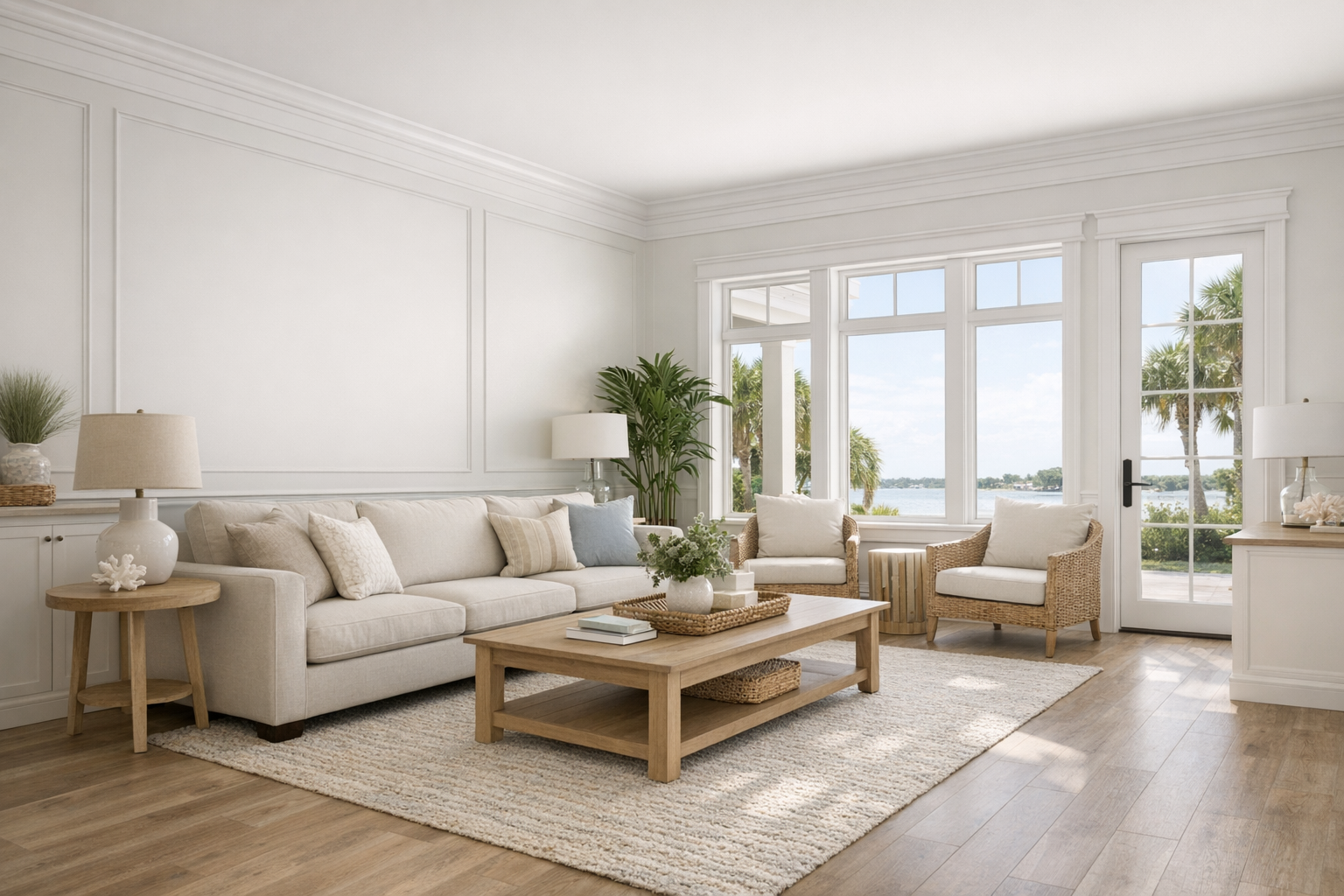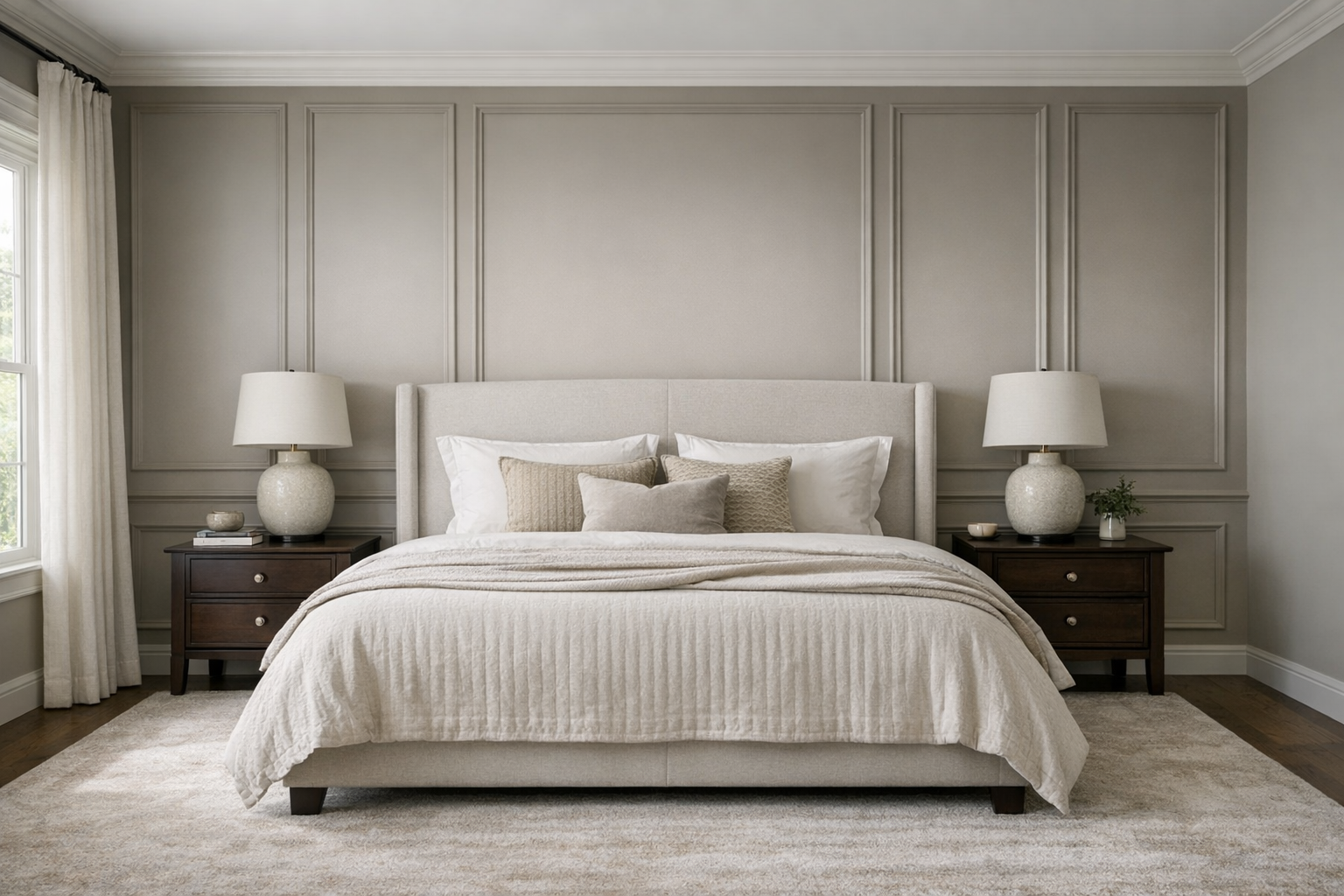
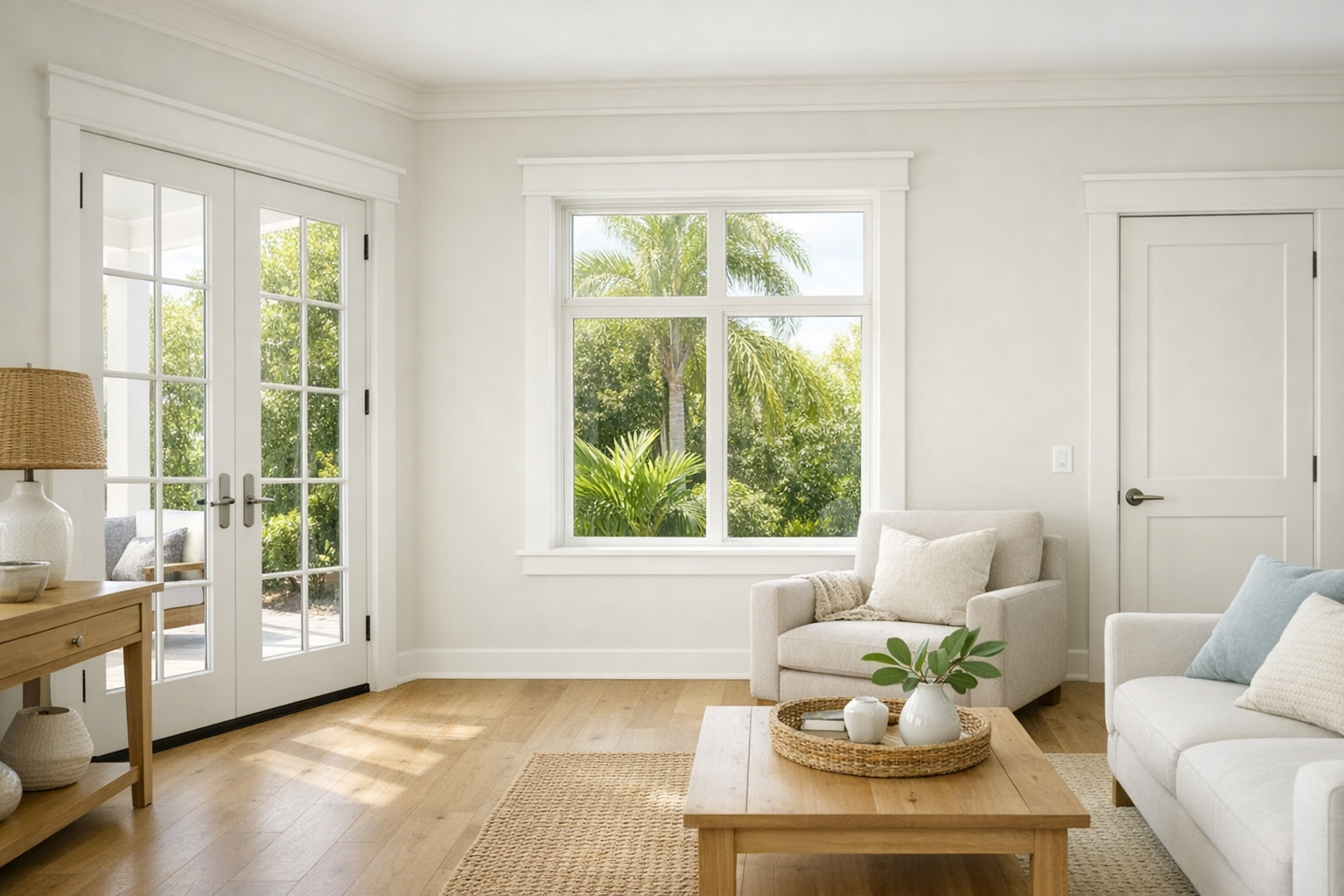

Craftsman trim works best when it feels intentional, not overpowering. Its appeal comes from flat, crisp boards, clean shadow lines, and a sense of structure around doors, windows, and walls. The risk is visual weight: a detail can measure only a few inches wide and still feel heavy if it is too dark, too layered, or too tall for the room.
That balance matters in Sarasota County interiors, especially when the goal is a lighter coastal look rather than a dark bungalow feel. Dark stain is not required for Craftsman-style trim; painted finishes and lighter wood tones can still define the profile while keeping the room brighter. Material choices also need to weigh appearance, moisture resistance, and maintenance because humidity and air conditioning can affect how interior trim performs over time.
So this is not a history lesson or an installation manual. It is a design guide for choosing Craftsman trim details with the right scale, color, and restraint. A strong choice might be simple white casing with a modest header; a weak one might be oversized dark-stained millwork in a room with low ceilings or limited light. The difference is proportion, not just style.
Start With Proportion: How to Keep Trim Substantial but Not Bulky
Before choosing a board width, look at the room as a whole: ceiling height, wall height, window size, daylight, and the number of door and window openings all change how trim reads. A 4-inch side casing might feel clean and tailored in a bright room with tall walls, but the same width can feel crowded in a lower room where several openings sit close together.
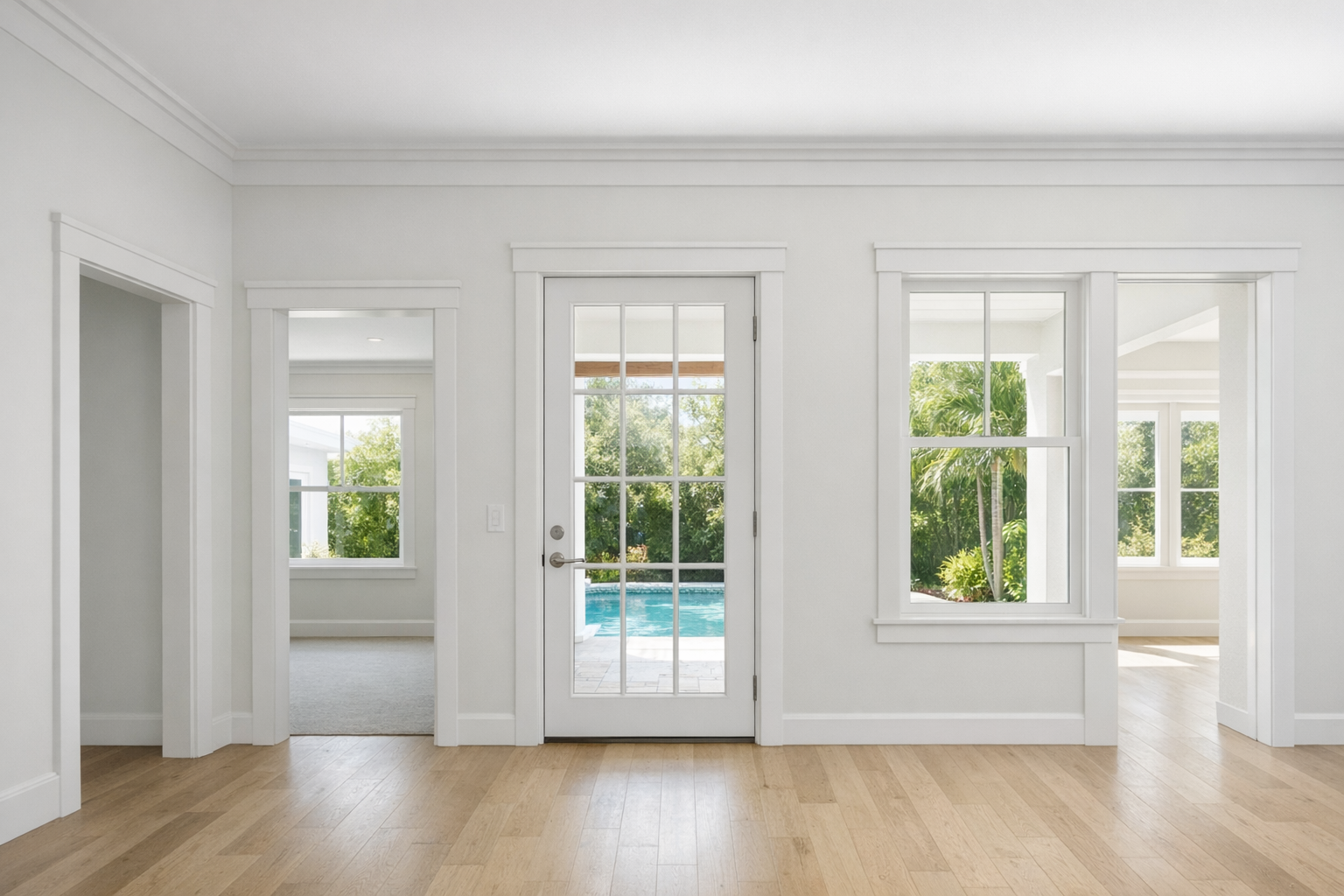
Flat stock casing is one of the easiest ways to get structure without fuss. It uses plain, square-edged boards rather than curved or ornate profiles, so the shadow lines stay crisp and the eye reads the trim as architectural rather than decorative. The lighter version of the look comes from restraint: a simple side casing, a modest top piece, and a small reveal where the trim steps back from the door or window edge.
- Lower ceilings: keep the header compact and the layers minimal. A painted flat stock casing with a clean top board can add Craftsman character without pressing the ceiling visually lower.
- Standard-height rooms: you can usually give the header a little more presence, but the trim should still relate to the size of the door, window, and wall around it rather than becoming the loudest feature in the room.
- Taller or brighter rooms: modern Craftsman trim can handle slightly stronger headers or wider boards, especially when the profile stays flat and the layering remains simple.
The weak move is treating every opening like it needs the biggest possible frame. Oversized dark headers on every doorway can make an open Sarasota County living area feel chopped up and heavy. A stronger move is light Craftsman trim used consistently but selectively: enough width to create rhythm, enough reveal to show craftsmanship, and enough restraint to let the walls, windows, and natural light breathe.
Craftsman Door Casing: Clean Lines, Measured Headers, and Simple Reveals
At the doorway, the best Craftsman door casing usually has a quiet order to it: side casing running vertically, a top casing or header that gives the opening a cap, and a small casing reveal where the trim sits back from the edge of the jamb. That reveal matters because it creates a thin shadow line, which makes the casing look crafted without needing curves, grooves, or extra ornament.
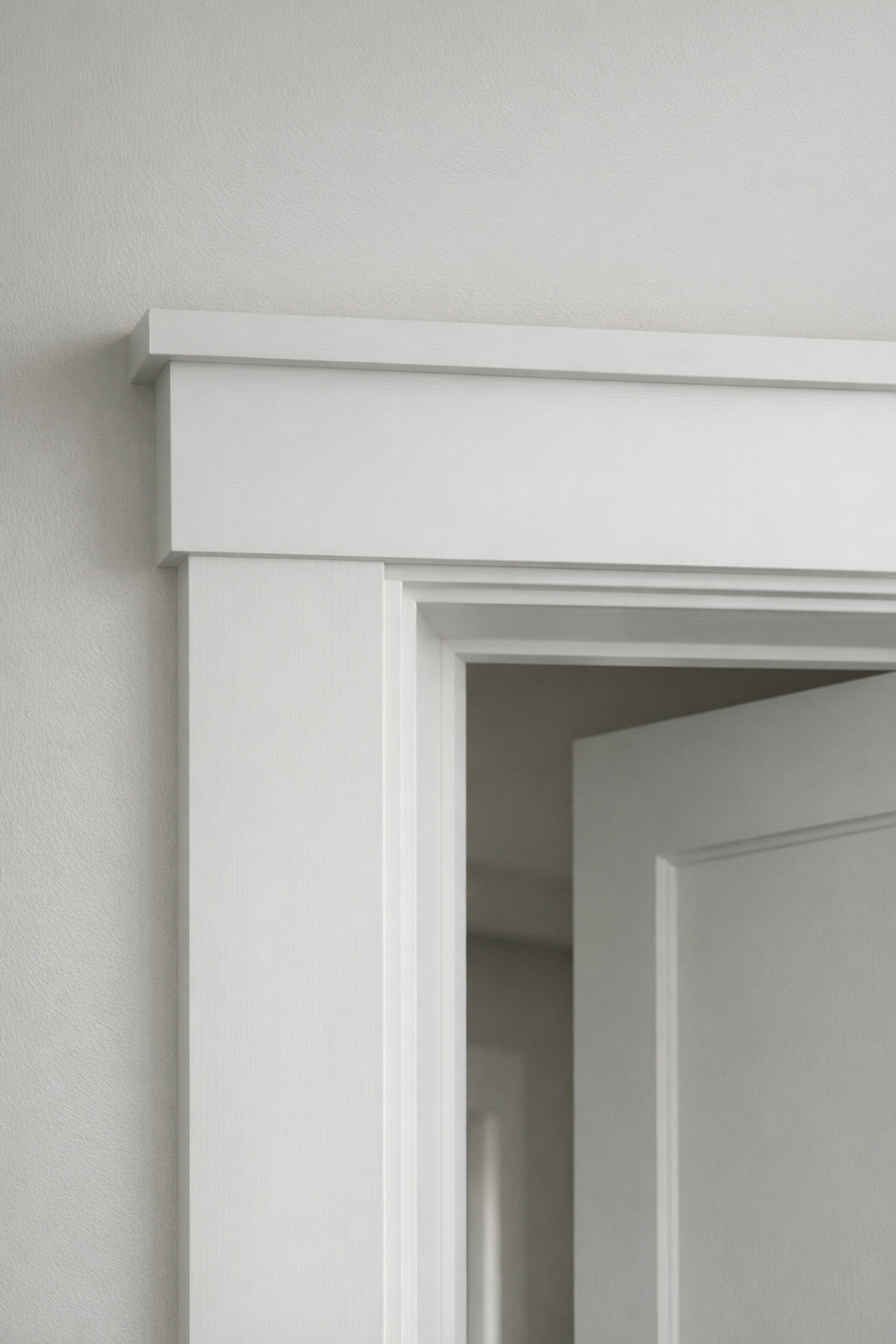
The side casing sets the visual weight first. Wider side boards can make a tall door feel more substantial, while slimmer boards keep a hallway or compact bedroom from feeling crowded. The header should then feel related to those side pieces, not like a separate statement piece. A balanced flat-stock header reads clean and architectural; a tall stacked header over a standard interior door can make the whole opening look top-heavy, especially when several doors are visible from one room.
- Simple header: a flat top board, sometimes with a small cap, is the lightest way to get the Craftsman shape. It works well when doors sit close together or when the room already has plenty of trim lines.
- Layered header: extra build-up can add presence to a main opening, but too many stacked pieces shift the attention upward and make a modest doorway feel formal or bulky.
- Backband or plinth blocks: a backband adds a second edge around the casing, and plinth blocks create a thicker base where the side casing meets the floor. Used selectively, they add polish; used everywhere, they can make Craftsman door casing feel more traditional than fresh.
For a lighter Sarasota County look, keep the profiles square, paint the casing in a bright or soft neutral finish, and reserve the strongest Craftsman headers for the openings that deserve emphasis. A main passage between living and dining areas can handle more presence than a row of bedroom doors off a short hall. The takeaway is simple: let the doorway look framed, not armored.
Craftsman Window Trim That Frames the View Without Blocking the Light
Windows need a slightly lighter hand than doors because the trim is competing with daylight, glass, and the view beyond it. Craftsman window trim usually starts with flat side casing, which gives the opening a clean vertical edge without adding curves or fussy profile lines. On a single bedroom or office window, that casing can be wide enough to feel intentional; on a wall of closely spaced windows, slimmer boards often look better because the repeated vertical lines add up quickly.
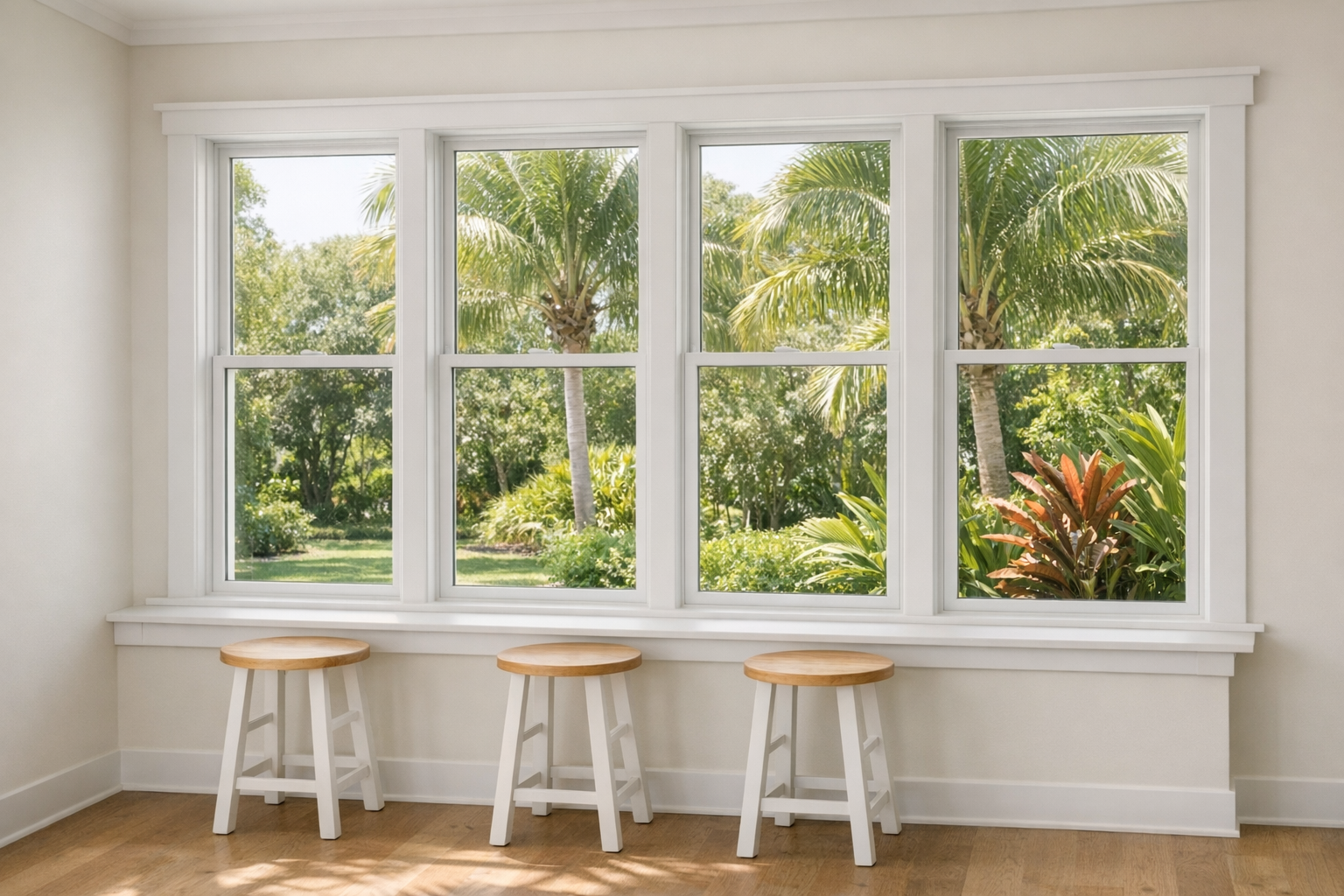
The head casing or header above the window should act like a quiet cap, not a heavy shelf. A modest flat header keeps the Craftsman shape visible, while an oversized stacked header can pull the eye away from the view and make the window feel boxed in. The practical takeaway is to let the glass remain dominant: the trim should frame the opening, not visually shrink it.
Window stools and aprons add another layer of character. The stool is the horizontal ledge at the bottom of the window, and the apron is the trim piece below it; together, they make the lower edge feel finished. For a lighter Sarasota look, choose a modest stool projection and a slim, square apron instead of a deep ledge with a tall, layered apron that makes the lower half of the window feel heavy.
In coastal homes with large windows, nearby sliders, and open sightlines, consistency matters more than bulk. Painted flat stock with clean square edges can connect windows to doors without darkening the room, especially when the casing width is scaled to each opening. A good window casing installation looks calm across the whole wall: stronger around a feature window, lighter around grouped openings, and restrained near sliding glass doors so the room still feels open.
Craftsman Baseboards: Ground the Room Without Shrinking the Walls
At floor level, the trim has a different job: it should make the room feel settled, not shorter. Craftsman baseboards usually work best as clean, flat boards with enough height to read as intentional. In rooms with lower ceilings, that often means choosing a restrained board rather than the tallest option available, because visual weight matters as much as the actual measurement.
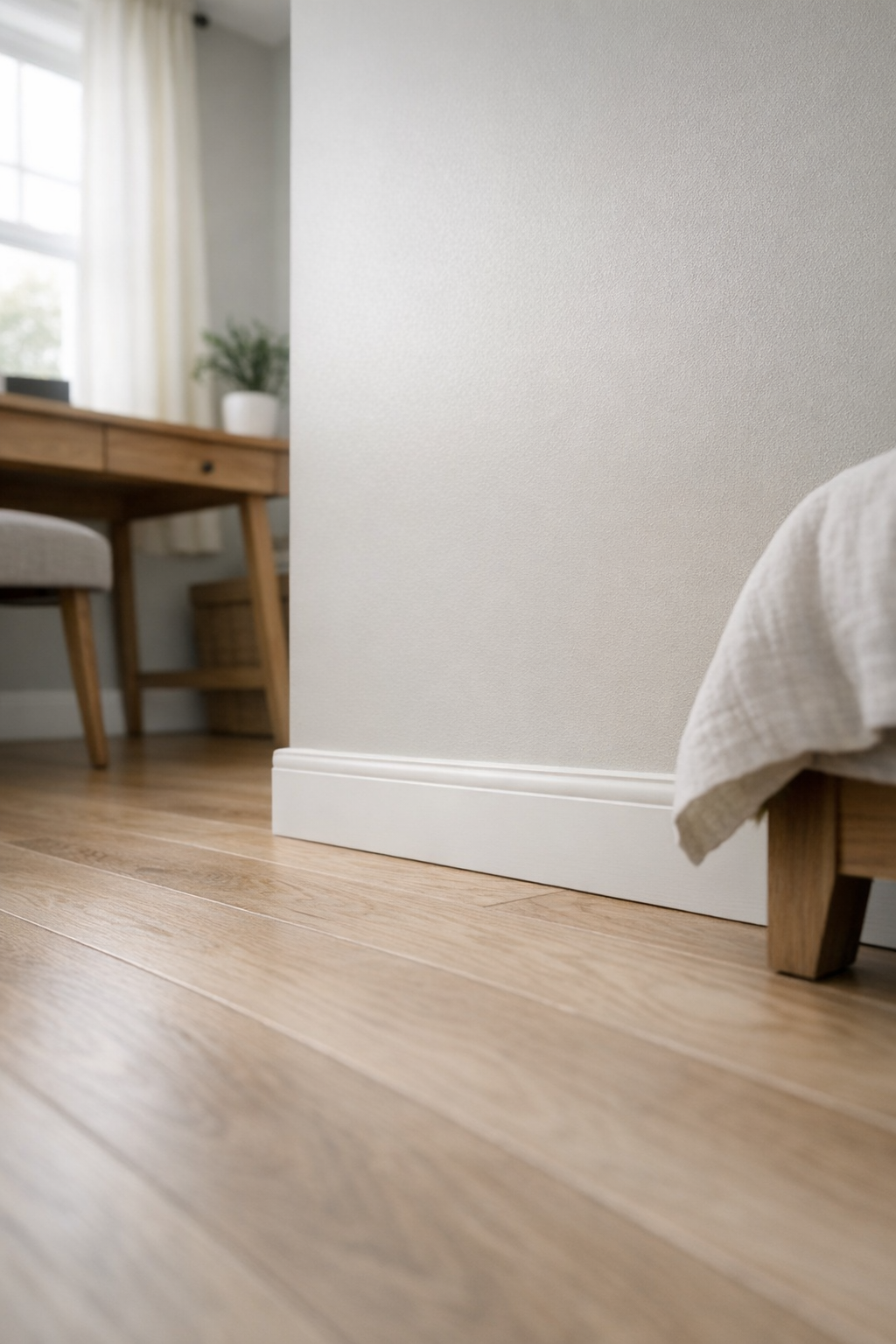
A simple base cap is the small trim piece that sits on top of the baseboard and creates a shadow line. Used lightly, it gives a square board a finished edge; stacked with several extra layers, it can start to look bulky. A strong choice is a flat baseboard with one modest cap. A weaker choice is an overly tall, multi-layer baseboard that competes with the door headers and makes the wall feel compressed.
Color changes the weight, too. A dark baseboard against pale walls and light flooring creates a strong outline around the room, which can be handsome but visually heavy. Painted trim in a soft white or warm neutral keeps the baseboard connected to the casing while reflecting more light, which suits many Sarasota County interiors better than a dark, traditional stain.
The baseboard should also follow the hierarchy already set by the doors and windows. If the casing is wide and the headers are prominent, keep the baseboard calmer so the room has one clear rhythm. If the casing is very slim, a slightly taller square-edge baseboard can add substance without needing extra profile lines. The goal is coordination: simple profiles, clean edges, and enough grounding to finish the room without pulling the eye down.
Paint, Stain, and Materials for a Lighter Sarasota County Look
The finish choice is where a square, simple profile can either relax into the room or suddenly look formal. Craftsman trim does not have to mean dark stained wood trim; a soft white, warm off-white, pale greige, or light natural finish can keep the board edges readable while lowering the contrast that makes trim feel heavy.
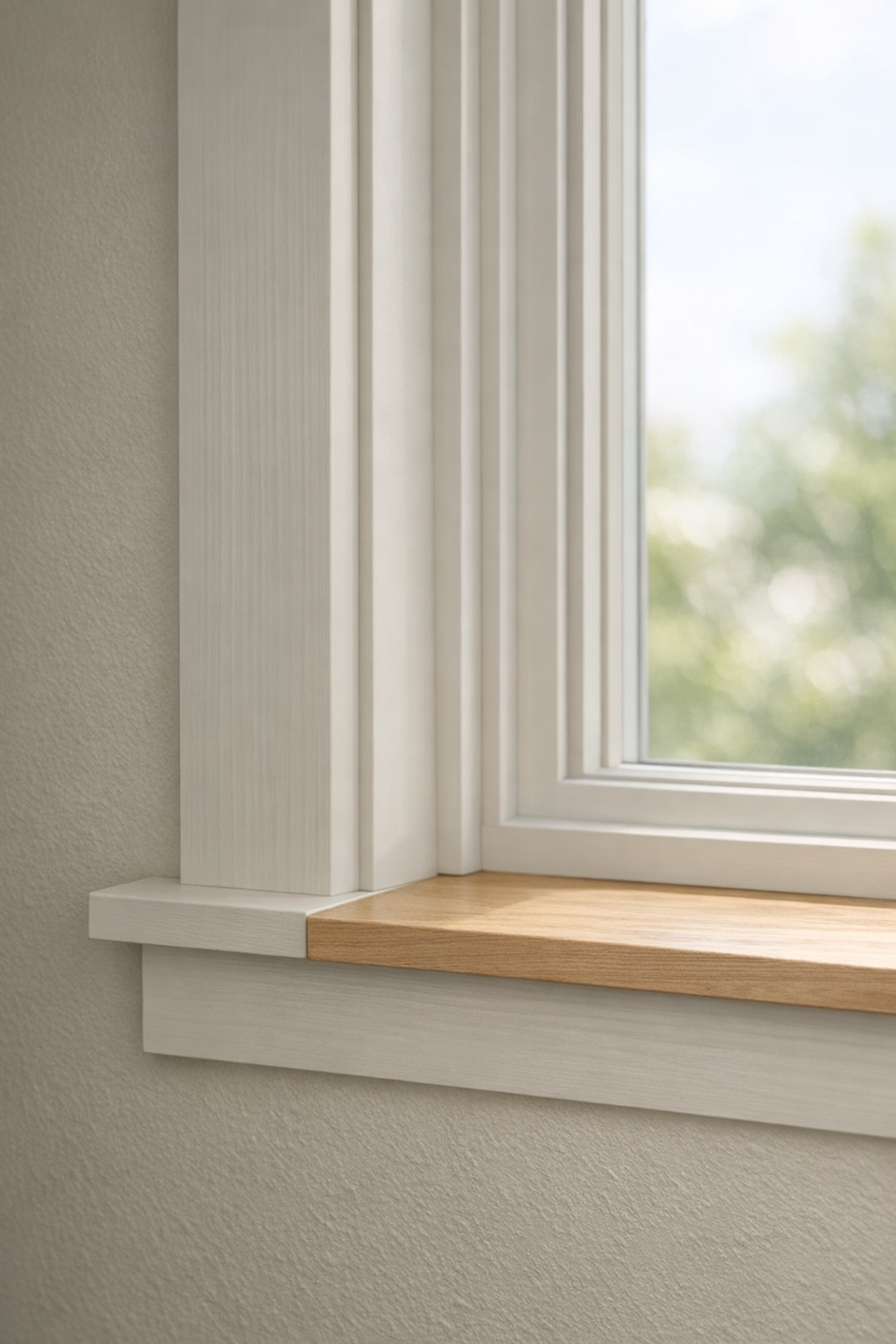
Painted trim is the most flexible choice for many Sarasota County interiors because it works with coastal palettes, air-conditioned rooms, and open layouts where doors, windows, and baseboards all need to feel connected. Poplar is a common paint-grade wood option when you want crisp boards and a smooth painted surface. MDF trim can also make sense for straight, paint-grade interior runs where budget and a very smooth finish matter, though moisture exposure should influence where it is used.
Light stained wood is the warmer alternative. Instead of a deep brown finish that outlines every opening, a pale stain lets the grain show while keeping the room brighter. White oak is a good example of the look many homeowners are after: clean, natural, and less traditional than a dark amber stain. The tradeoff is coordination; wood trim has more visible color variation than painted trim, so it needs to relate to flooring, cabinetry, and furniture instead of being chosen in isolation.
PVC trim is the more moisture-conscious option to consider in spots that are more exposed to dampness, such as near exterior doors, laundry areas, or window locations where condensation is a recurring concern. It does not bring the same natural grain as wood, but when painted in a clean, simple profile, it can visually blend with the rest of the casing package while offering a different maintenance tradeoff.
A good signal is when the material supports the profile instead of competing with it: flat boards, clean edges, and a finish that lets light move through the room. A weak signal is a low-light space with thick, dark, glossy trim on every opening; even well-proportioned boards can start to feel bulky when the color and material add too much visual weight.
Use Custom Trim Design to Create Rhythm in Open Floor Plans
In an open floor plan, the trim package works almost like a visual beat: repeat enough details to make the rooms feel connected, then adjust the scale so one area does not overpower the next. A custom trim design might use the same square-edged side casing throughout the main living space, then pair it with slightly stronger headers at the front entry or dining opening and quieter caps in hallways.
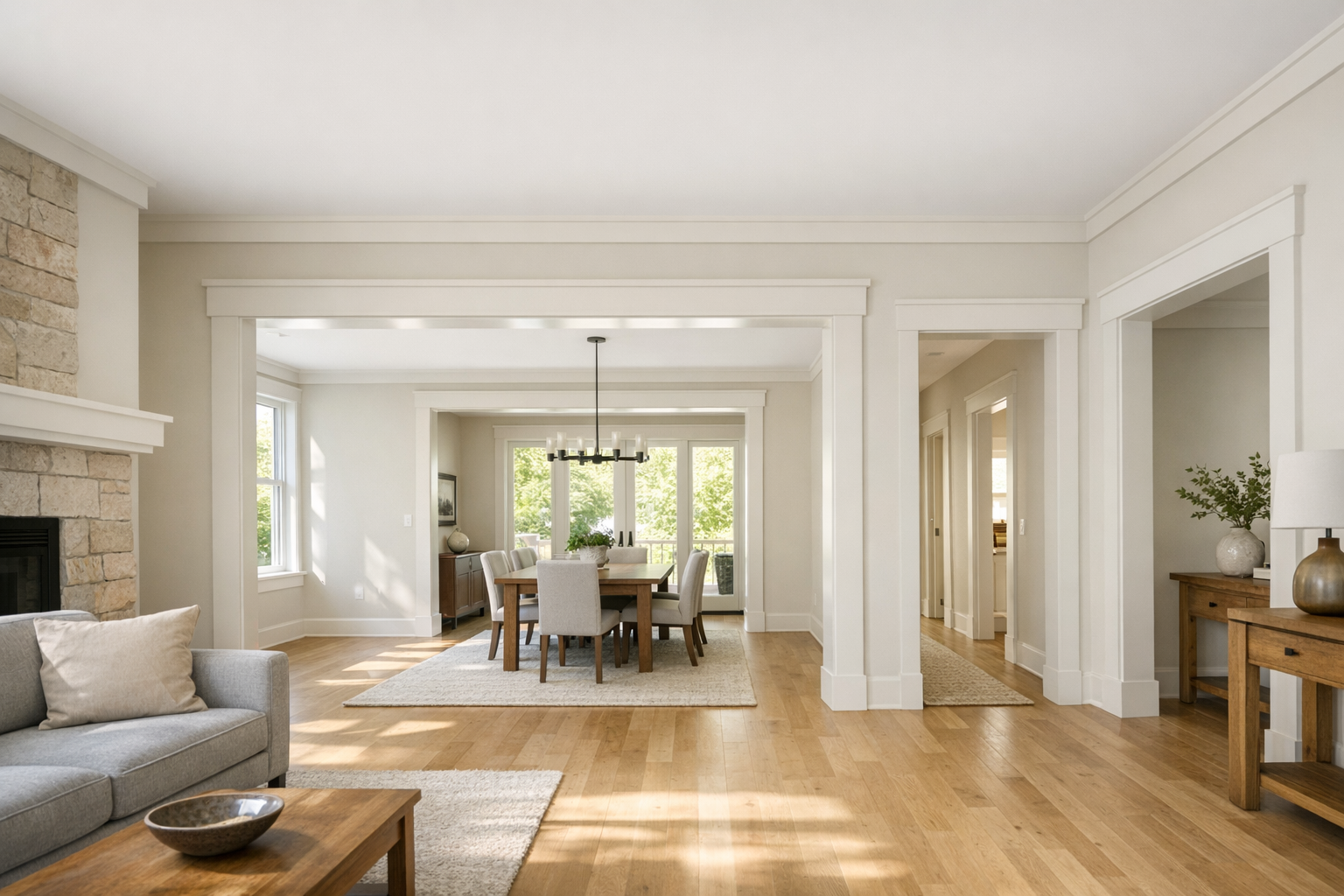
The easiest details to repeat are the ones people notice subconsciously: consistent casing reveals, matching window stools, simple aprons, and baseboards with the same top edge from room to room. These pieces create order without needing extra layers. Door casing and window trim do not have to be identical in size, but they should feel related; for example, a modest door header can pair well with slimmer window headers if the casing profile, reveal, and paint finish stay consistent.
Transitions matter because open homes often shift from kitchen to living area to hallway without a full wall between them. A transition can be a cased opening, a trimmed pass-through, or a change in baseboard direction where one room gives way to another. Stronger Craftsman interior trim works best at the main sightlines, while smaller bedrooms, baths, and side halls usually feel better with lighter versions of the same language.
A good interior trim design feels edited: modest door headers, matching window stools, simple baseboards, and clean reveals repeated with intention. A weak one puts oversized headers, heavy aprons, tall baseboards, and extra layering everywhere, so every opening competes for attention. The takeaway is restraint: choose a few Craftsman trim details to carry through the home, then let scale and placement do the refining.
The Best Craftsman Details Feel Intentional, Not Overbuilt
The final test is simple: the room should feel more finished, not more crowded. Modern Craftsman trim succeeds when the profiles stay clean, the scale matches the walls, and the strongest details are used where they actually help the architecture. A crisp painted casing, a modest header, a simple stool and apron, and a calm baseboard can add warmth and structure without turning every opening into a focal point.
For Sarasota County homes, that usually means balancing character with light: lighter finishes instead of defaulting to dark stain, materials chosen with humidity and maintenance in mind, and proportions judged by how they feel in the room rather than by size alone. If a custom trim design looks edited, consistent, and breathable, you are on the right track.