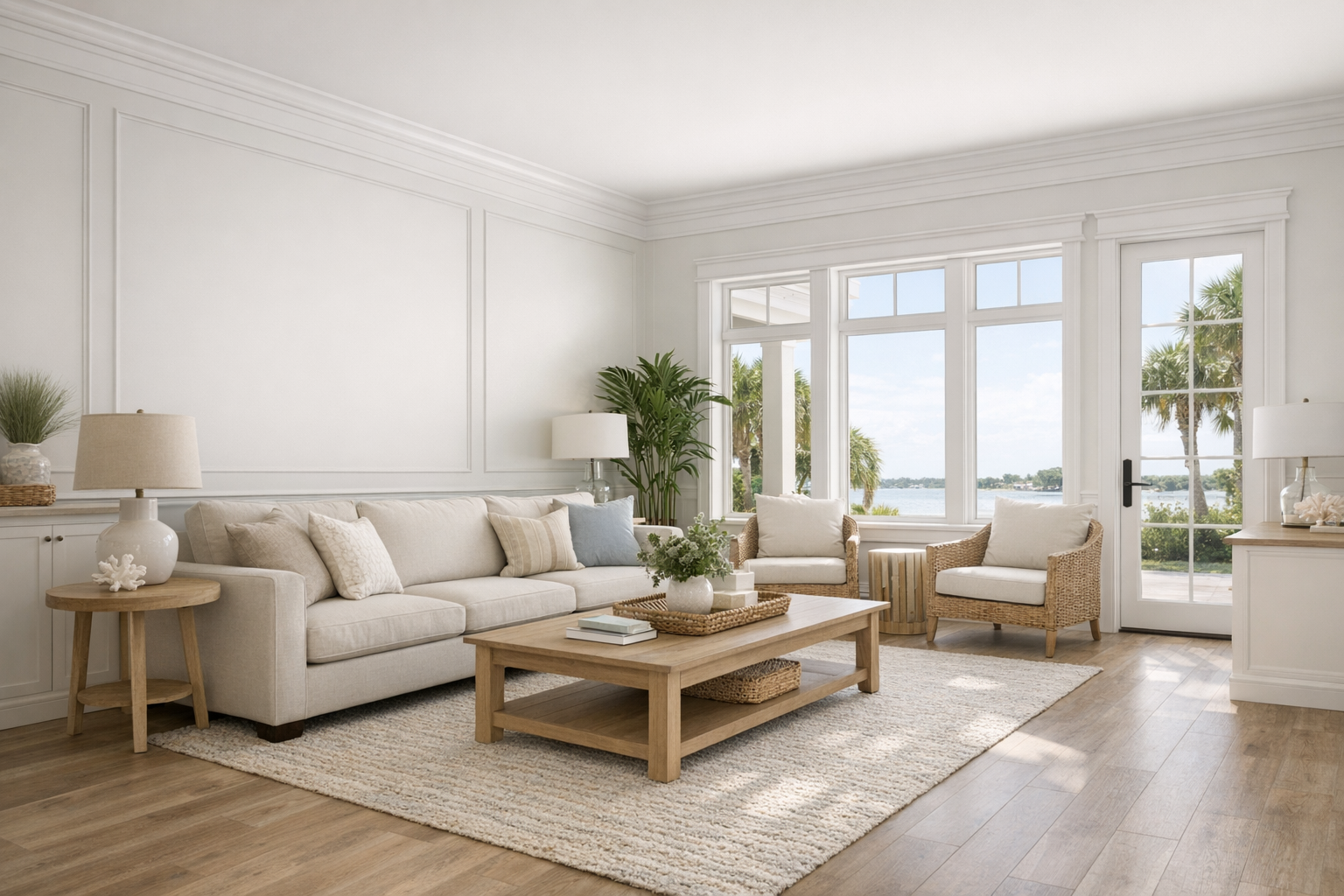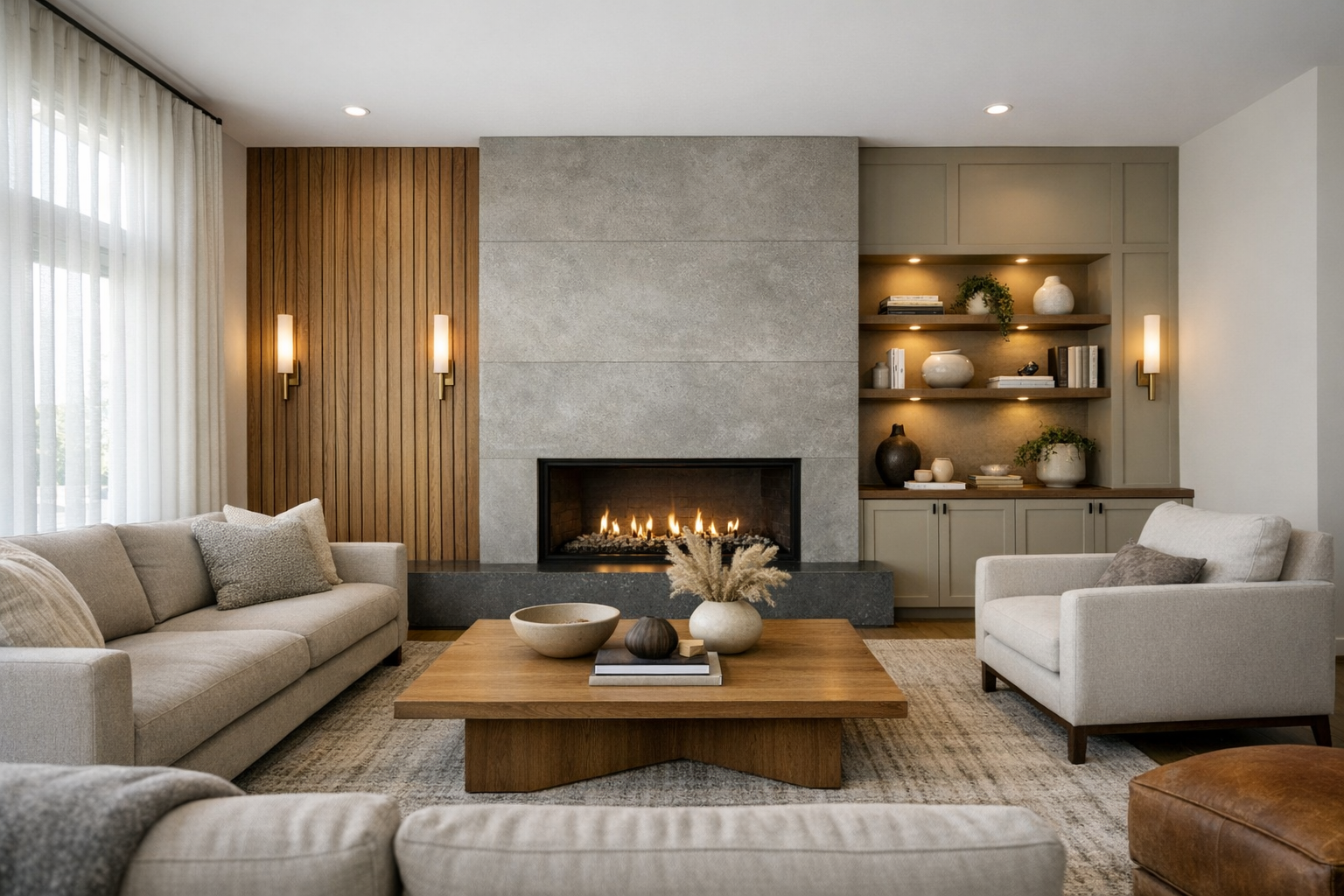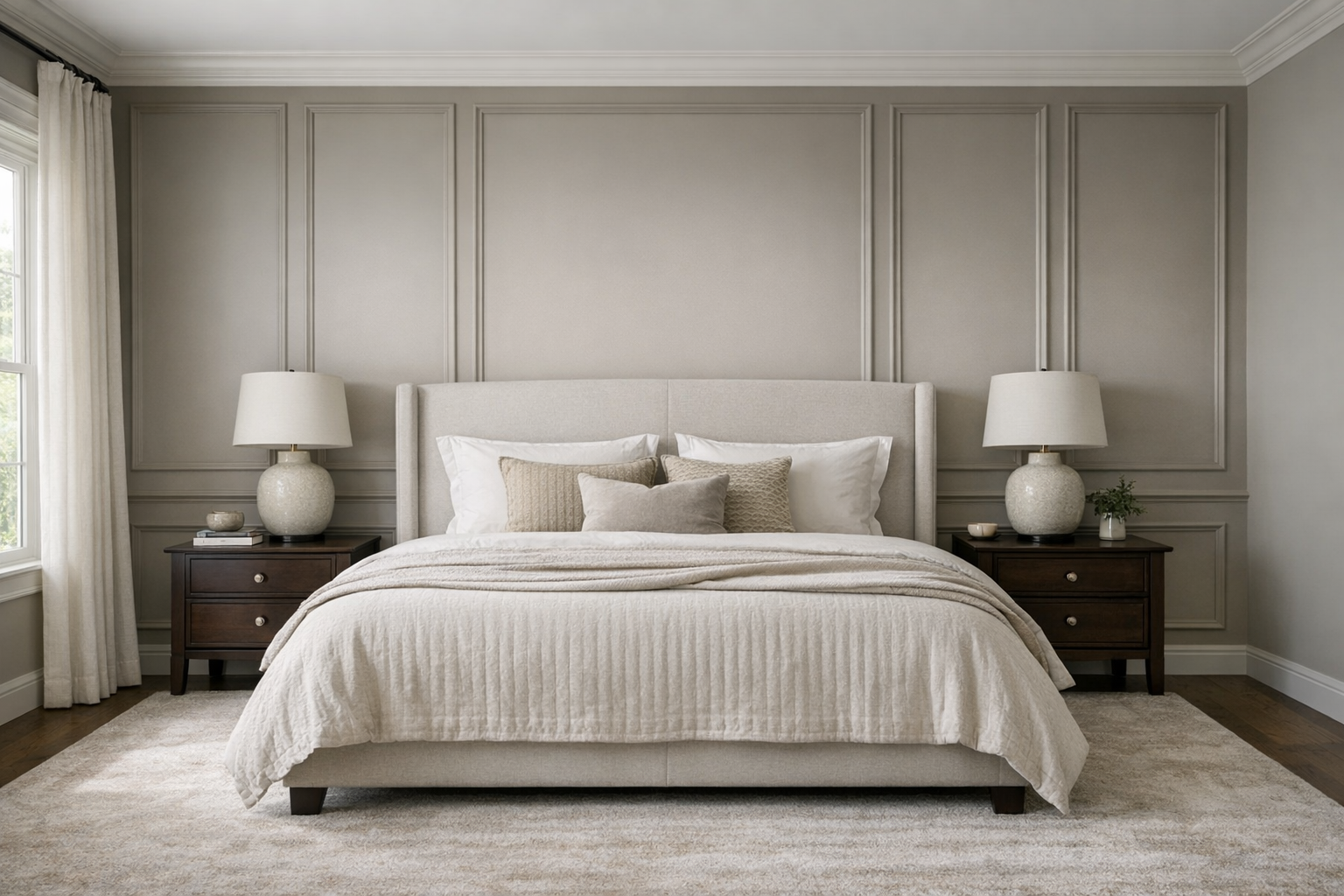
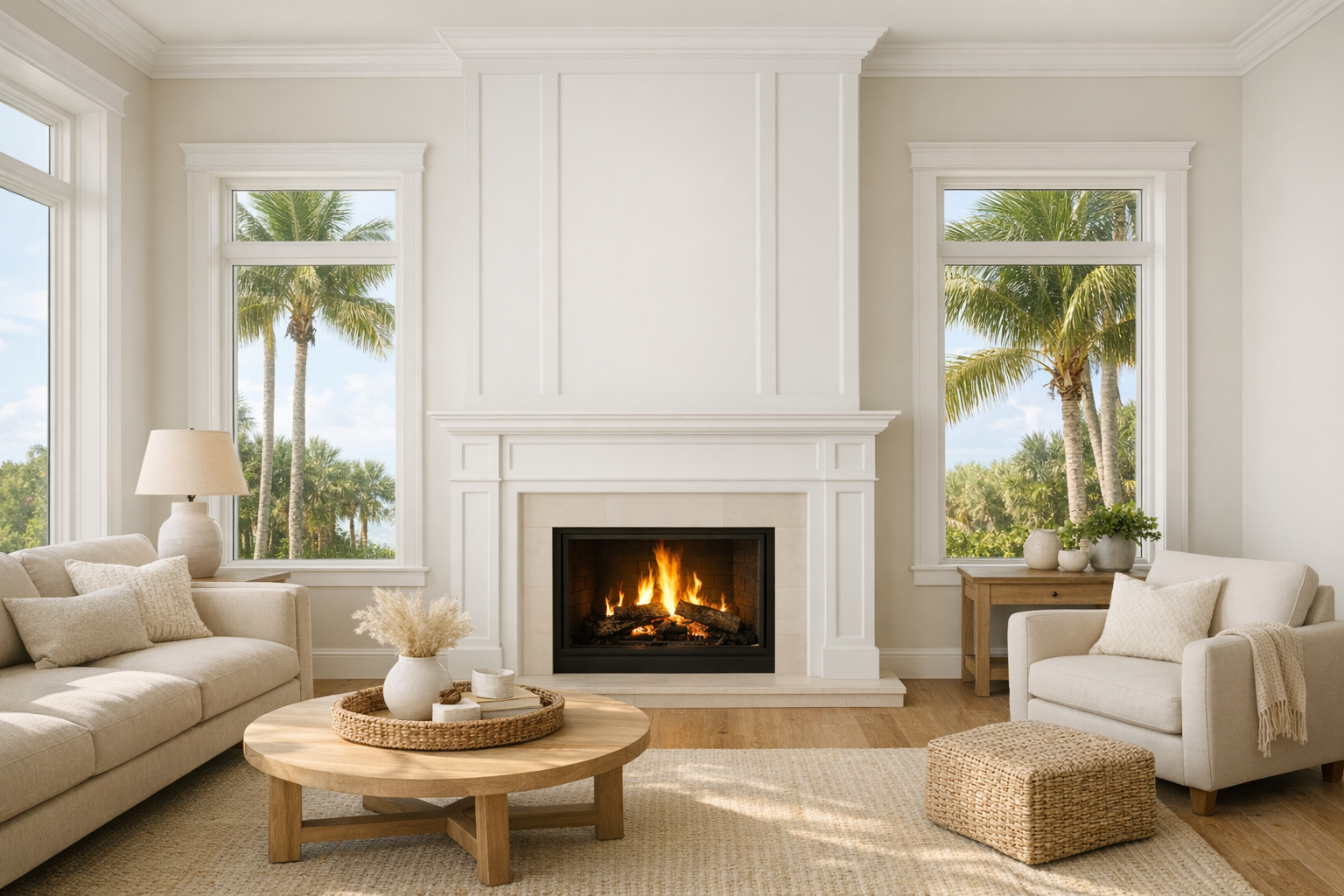

A fireplace wall is one of the easiest places for a Sarasota County living room to look unfinished, even when the rest of the space is well decorated. In open layouts, high-ceiling rooms, coastal interiors, transitional homes, updated ranches, and condos, a flat fireplace surround can feel too small for the wall or too plain for the room. The right trim changes that by adding proportion, architectural detail, and a clearer focal point without forcing every home into the same style.
If you are thinking about fireplace mantel installation in Sarasota County, the first design question is not just "What mantel do I like?" It is "What should this whole wall become?" A mantel shelf gives the fireplace a clean horizontal anchor. Fireplace surround trim frames the firebox or existing tile so the opening feels intentional. Panel moulding, shiplap, board-and-batten details, and overmantel trim can extend the design upward or outward so the fireplace wall feels connected to the room instead of added as an afterthought.
This guide walks through practical fireplace wall trim ideas for local homes: simple and built-up mantel styles, trim around stone or tile, full feature wall treatments, TV-friendly overmantel layouts, and material choices that suit Florida interiors. The goal is to help you compare what looks balanced, what may feel too heavy, and what details make custom finish carpentry look polished rather than builder-basic.
How Trim Can Turn a Plain Fireplace Wall Into a Sarasota Living Room Focal Point
In many local homes, the weak spot is not the firebox itself; it is the empty space around it. A thin shelf, a small tile border, or a blank wall above the opening can make the fireplace read as a leftover detail instead of the visual center of the living room, especially in open rooms or spaces with taller ceilings.
This is where finish carpentry changes the conversation. A mantel adds a horizontal anchor. Fireplace surround trim gives the opening a cleaner frame. Shiplap, board-and-batten, or panel moulding can spread the design across more of the wall, while overmantel trim carries the composition upward so the fireplace does not look undersized beneath a TV, art, or high ceiling.
The ideas in this guide stay focused on trim design rather than fireplace inserts, chimney repair, or masonry restoration. For Sarasota County homes, that distinction matters because the best look often comes from matching the carpentry to the room's style: crisp paint-grade profiles for coastal interiors, balanced moulding for transitional rooms, cleaner plank or vertical details for modern farmhouse spaces, and lighter built-up trim for updated Florida ranch layouts that need character without feeling heavy.
Start With the Home Style, Wall Scale, and Fireplace Conditions
Before choosing a profile or mantel shape, look at the fireplace wall as a set of constraints: ceiling height, wall width, firebox size, existing stone or tile, nearby windows, TV placement, and the room's architecture. A tall wall can usually handle an overmantel panel or vertical trim that carries the eye upward; a narrow condo wall may look better with a cleaner mantel shelf and restrained side trim. The goal is proportion first, decoration second.
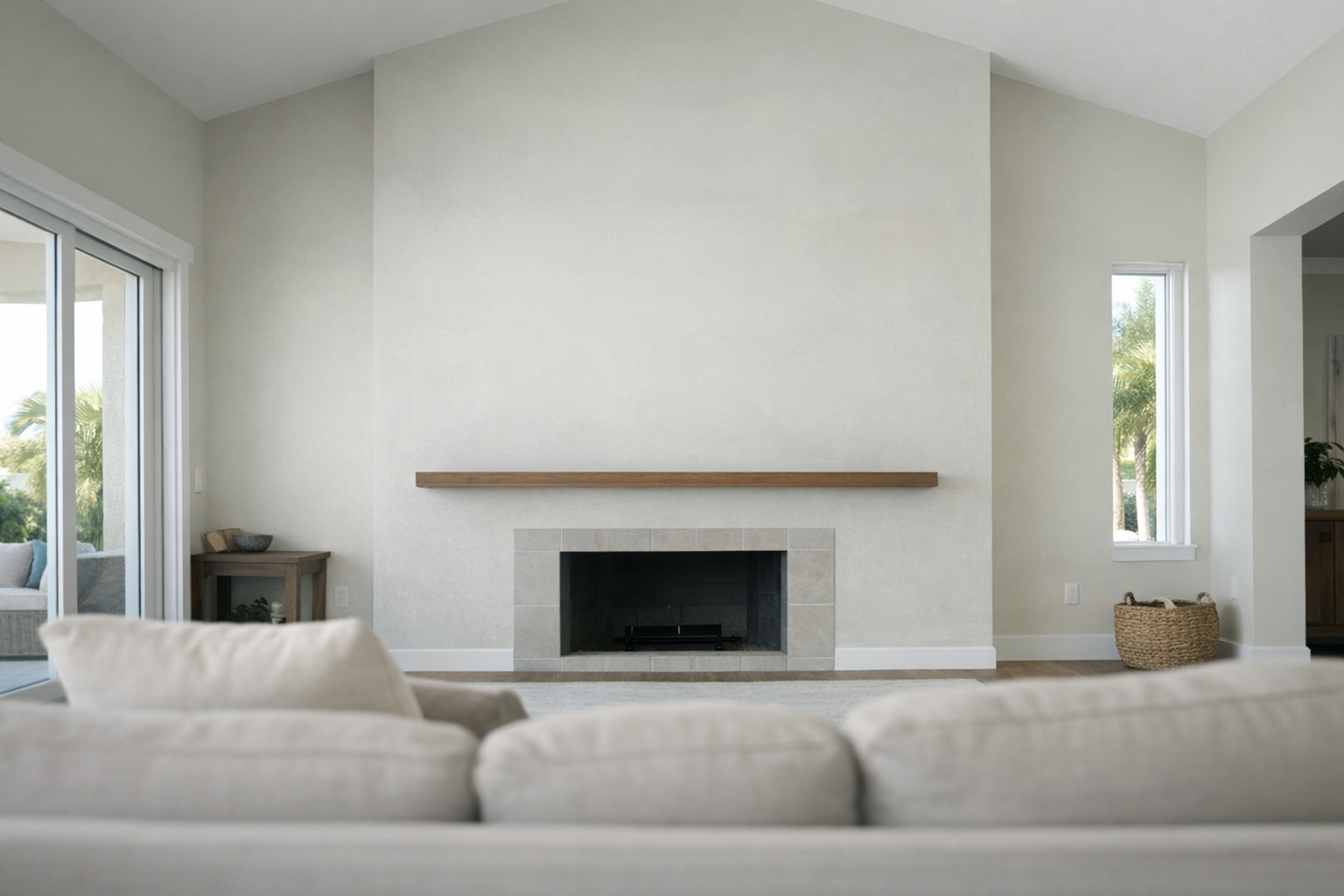
Style should narrow the choices, not make every fireplace look the same. In a coastal contemporary room, a coastal trim style usually means crisp white or soft-neutral paint-grade details, simple edges, and light visual weight. A transitional living room can carry more layered moulding because it blends classic and updated details. Modern farmhouse spaces often suit shiplap or vertical boards, while updated ranch homes in Sarasota County often need trim that adds height and structure without making the room feel boxed in.
Existing materials matter too. If the fireplace already has stone or tile, the trim should either frame it cleanly or intentionally contrast with it; a thin strip of moulding beside chunky stone can look disconnected, while overly wide trim around a small opening can feel top-heavy. If a TV is planned above the mantel, the trim layout needs to leave enough visual breathing room so the screen, mantel, and firebox read as one composition rather than three stacked objects.
The practical caution is that not every fireplace wall can accept the same treatment. Wood trim, shiplap, mantel legs, and overmantel panels all sit near heat-producing equipment, so clearances and heat exposure have to shape the design before the final look is chosen. Among fireplace mantel ideas Sarasota County homeowners consider, the best candidates are the ones that fit the room's scale and the fireplace conditions, not just the inspiration photo.
Mantel Ideas: From Simple Shelves to Full Custom Fireplace Surrounds
The mantel itself sets the visual weight of the fireplace, so it is often the first trim decision to make. A clean mantel shelf is the lightest option: it gives the wall a finished ledge without adding side pieces, which works well for narrow condo walls, smaller fireboxes, or coastal rooms where simple paint-grade lines feel more natural than heavy ornament.
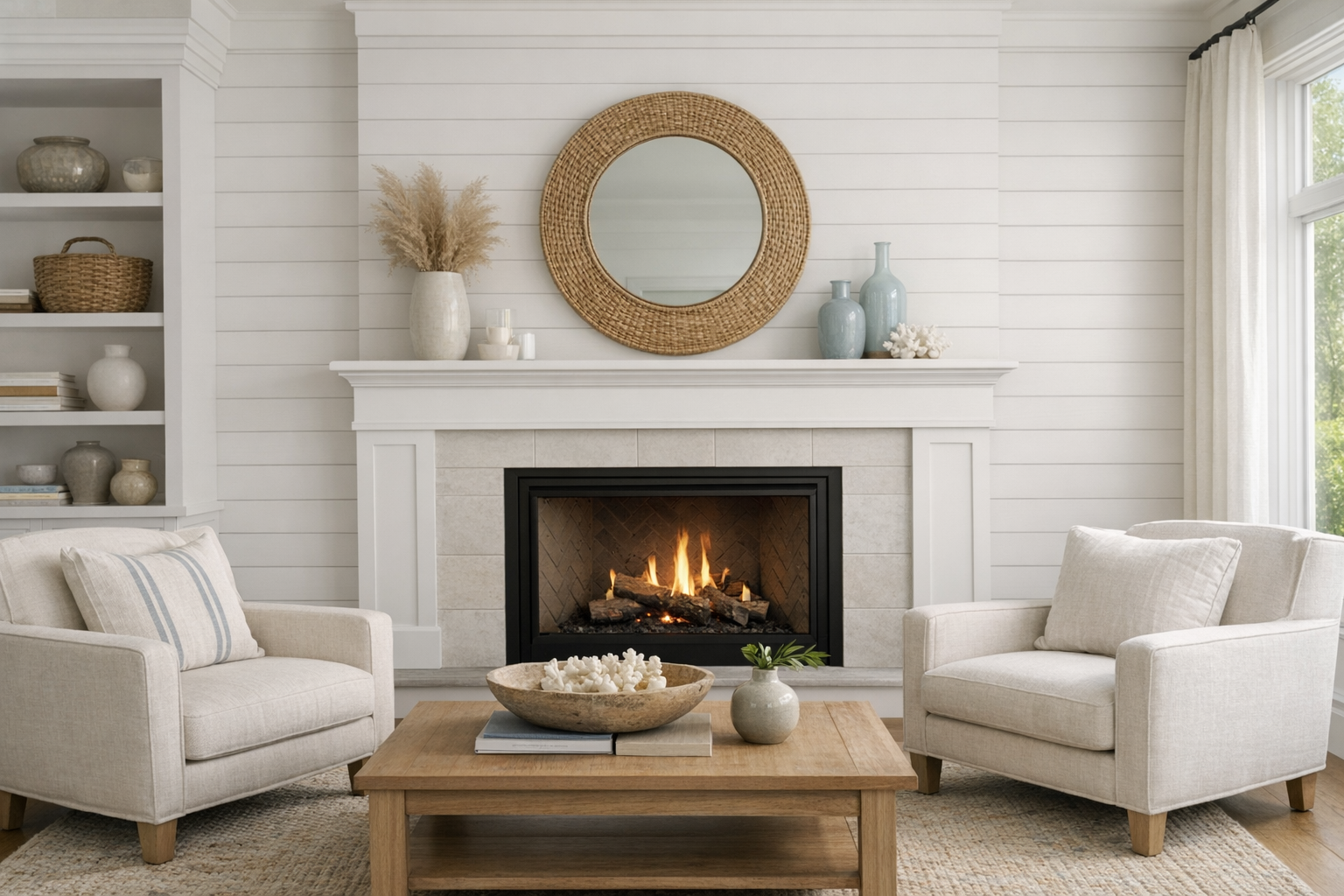
- A thicker floating-style mantel has more depth and shadow than a slim shelf, so it reads as a stronger horizontal anchor. It can look great in updated ranch homes, modern farmhouse rooms, and relaxed Sarasota County living spaces, but it can feel bulky if the fireplace opening is small or the wall is already crowded by windows, art, or a TV.
- A full mantel with legs or pilasters adds vertical structure around the firebox. The legs make the fireplace feel more framed and architectural, which suits transitional rooms and larger walls. The caution is scale: legs that are too skinny look stock and undersized, while legs that are too wide can overpower tile, stone, or a compact insert.
- A built-up traditional mantel uses layered mouldings, a shaped shelf, and stacked trim details to create more depth. This style works best when the room already has crown, casing, or other classic trim details. In a coastal contemporary home, the same built-up idea usually needs cleaner profiles and fewer curves so it does not feel too formal.
- A custom design matched to nearby cabinetry, baseboards, crown, or built-ins is the most flexible choice because it can solve unusual wall widths, off-center fireplaces, and TV layouts. For a custom fireplace mantel Venice FL homeowners are considering in an upgraded living room, this is where the surround can be sized to the actual wall instead of forcing a stock mantel to "almost" fit.
The best signal that a custom fireplace mantel Sarasota County project is headed in the right direction is that the mantel looks connected to the rest of the room. Shelf thickness, leg width, moulding profile, and paint finish should relate to nearby trim and cabinetry, not just the fireplace opening by itself.
Fireplace Surround Trim That Adds Shape Without Overpowering the Room
Around the opening, small profile choices do a lot of visual work. Fireplace surround trim can make a modest firebox feel wider, connect a mantel shelf to the wall, or soften the transition between tile, stone, drywall, and painted carpentry. The trick is to add enough shape that the fireplace looks intentional without covering the wall in trim just because there is empty space.
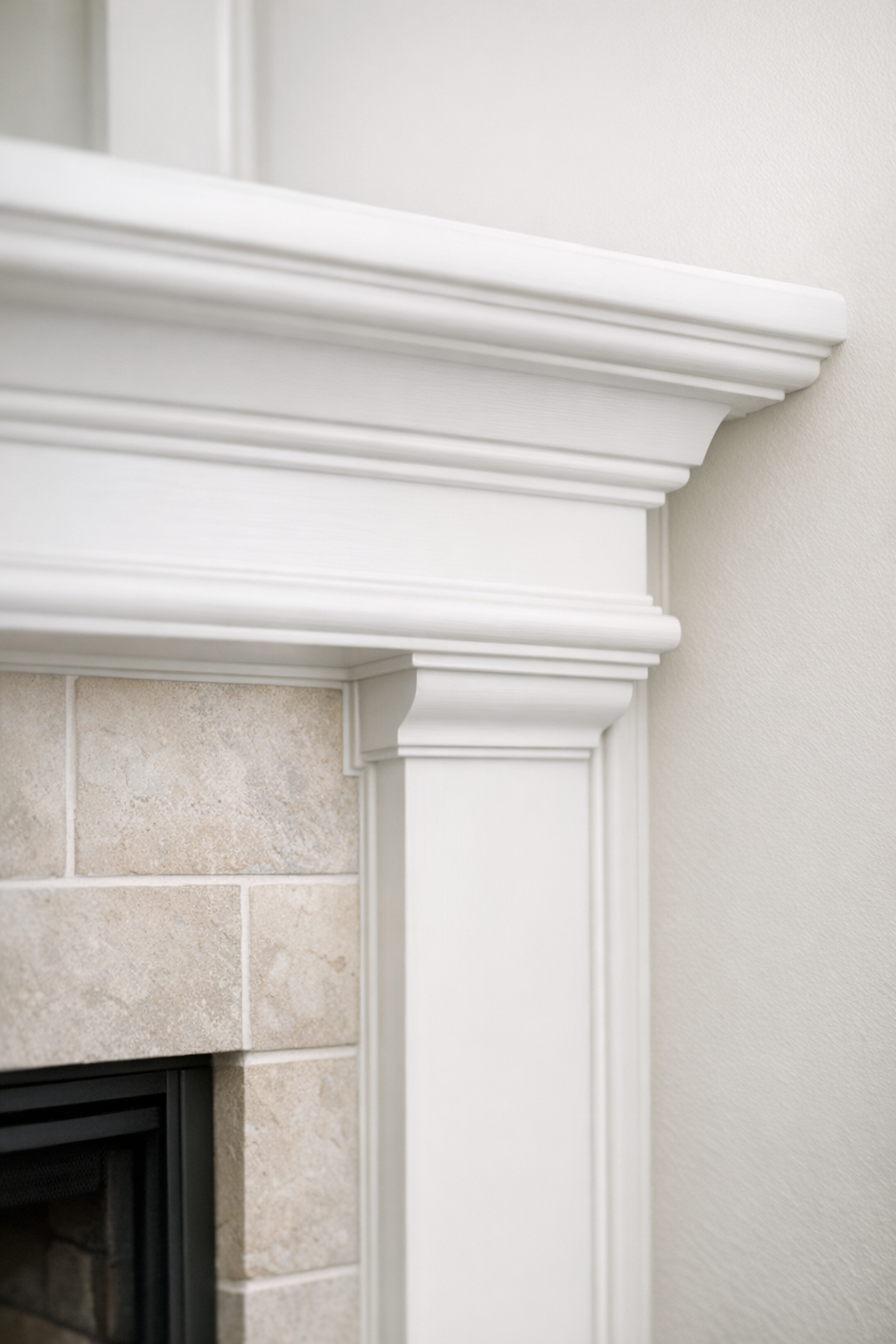
- Picture-frame moulding is a rectangular trim layout that creates framed panels beside or above the fireplace. On a narrow wall, one clean frame on each side can visually widen the surround without adding bulky mantel legs. On a wider wall, larger panels need generous spacing so they feel architectural rather than like small boxes floating on drywall.
- Panel moulding with base cap adds a little more profile and shadow than a flat frame. It suits transitional Sarasota County rooms where the fireplace needs refinement, but too many stacked profiles can feel fussy in coastal or condo interiors. A good signal is consistent reveals around each panel; a weak one is trim that changes spacing to "make it fit."
- Chair rail-inspired details and wainscoting-style lower panels work best when the fireplace wall connects to trim already used elsewhere in the room. Lower panels can ground a tall wall, while a single horizontal break can help a low-ceiling living room feel organized instead of chopped up.
- Vertical side panels and clean-lined casing are the simplest ways to give the firebox a finished edge. Casing is especially useful when existing tile or stone should remain the visual feature; vertical panels add height when the mantel alone feels disconnected from the wall.
Refined finish carpentry fireplace work usually shows up in the quiet details: tight miters, level panels, balanced left-to-right spacing, and trim profiles that relate to the mantel instead of competing with it. Overdone detailing usually has the opposite problem: thin moulding scattered across a large wall, oversized trim crowding the firebox, or too many profiles fighting for attention at once.
Shiplap, Board and Batten, and Vertical Trim for Fireplace Feature Walls
For a larger treatment, the pattern on the wall becomes just as important as the mantel profile. A shiplap fireplace wall, a board-and-batten layout, or a cleaner vertical panel design can tie the surround, mantel, and upper wall together so the fireplace reads as one planned composition instead of separate parts.
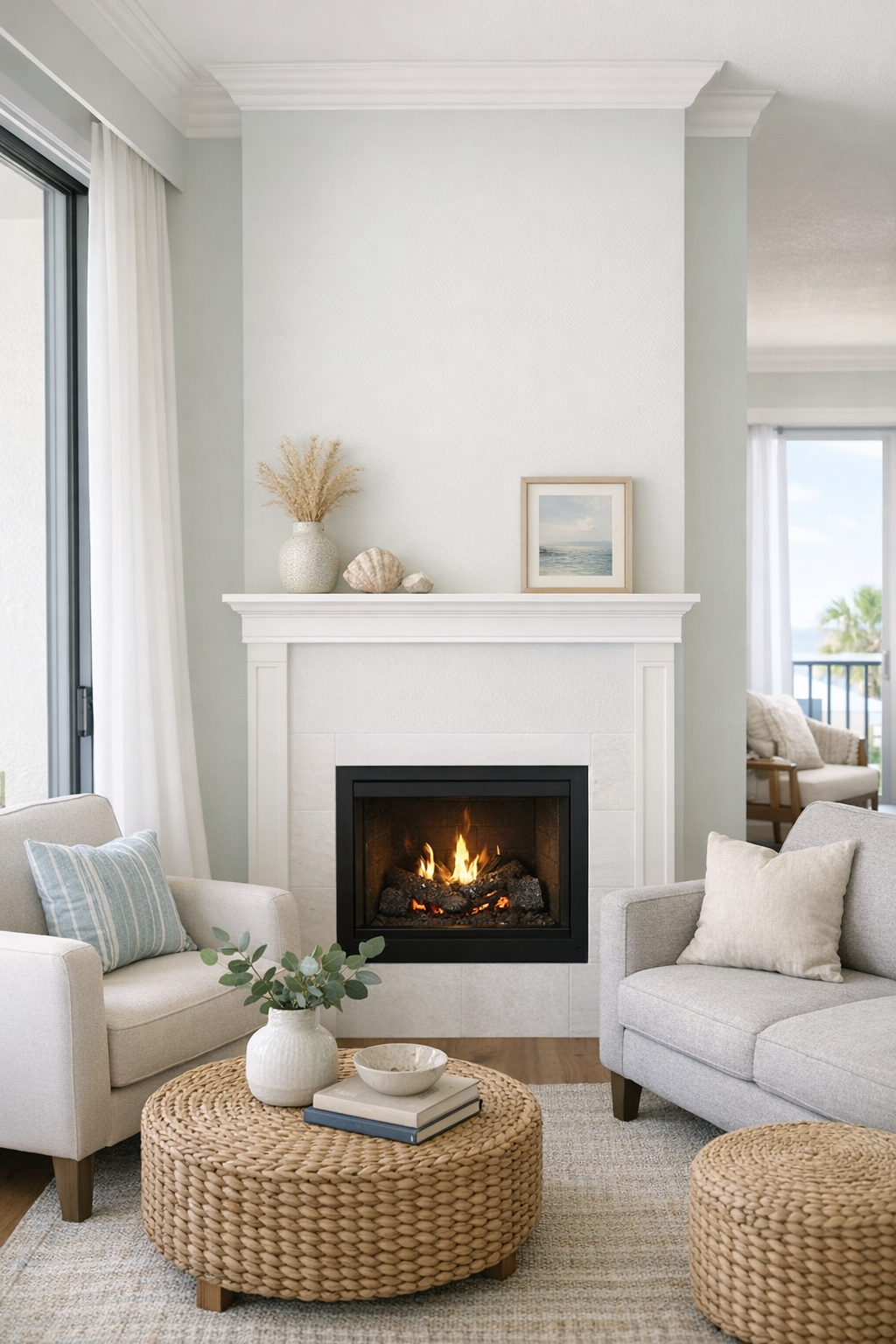
- Horizontal shiplap uses long side-to-side boards or panel grooves. It can feel relaxed and coastal in Sarasota County homes when the boards are painted crisp white or a soft neutral, especially in beach-influenced rooms. The tradeoff is busyness: tight lines across a tall wall can start to look trendy or striped if the mantel, tile, and furniture already have a lot going on.
- Vertical shiplap turns those lines upward, which helps a fireplace wall feel taller and cleaner. It is a strong choice for updated ranch homes, condos with lower ceilings, or contemporary coastal rooms where you want texture without a farmhouse-heavy look.
- Narrow board and batten uses vertical battens over a flat panel or wall surface. Wider spacing feels calmer and more transitional; tighter spacing adds rhythm and a modern farmhouse edge. On a broad living room wall, it can give the fireplace presence without needing ornate moulding.
- Clean panel layouts use fewer, larger rectangles or vertical sections. They work well when existing stone, tile, or a planned TV area needs breathing room, because the trim supports the wall instead of competing with every other element.
These fireplace wall trim ideas still have to respect the fireplace itself. Wood trim, shiplap, MDF panels, and other combustible materials need to be selected and placed with fireplace conditions and required clearances in mind, especially around the opening and mantel area. That safety planning should happen before committing to a full-wall pattern or fireplace mantel installation Sarasota County homeowners expect to look built-in and lasting.
Overmantel Trim, TVs, and Built-Ins: Making the Whole Wall Feel Intentional
The space above the mantel is where a fireplace wall can either settle into the room or start to feel like stacked parts. Overmantel trim is the carpentry above the mantel shelf: a single framed panel, a pair of tall vertical panels, a shallow picture-frame layout, a cap that meets crown moulding, or a clean frame sized around a TV. Its job is to connect the mantel to the upper wall without making the fireplace look heavier than the seating area can support.
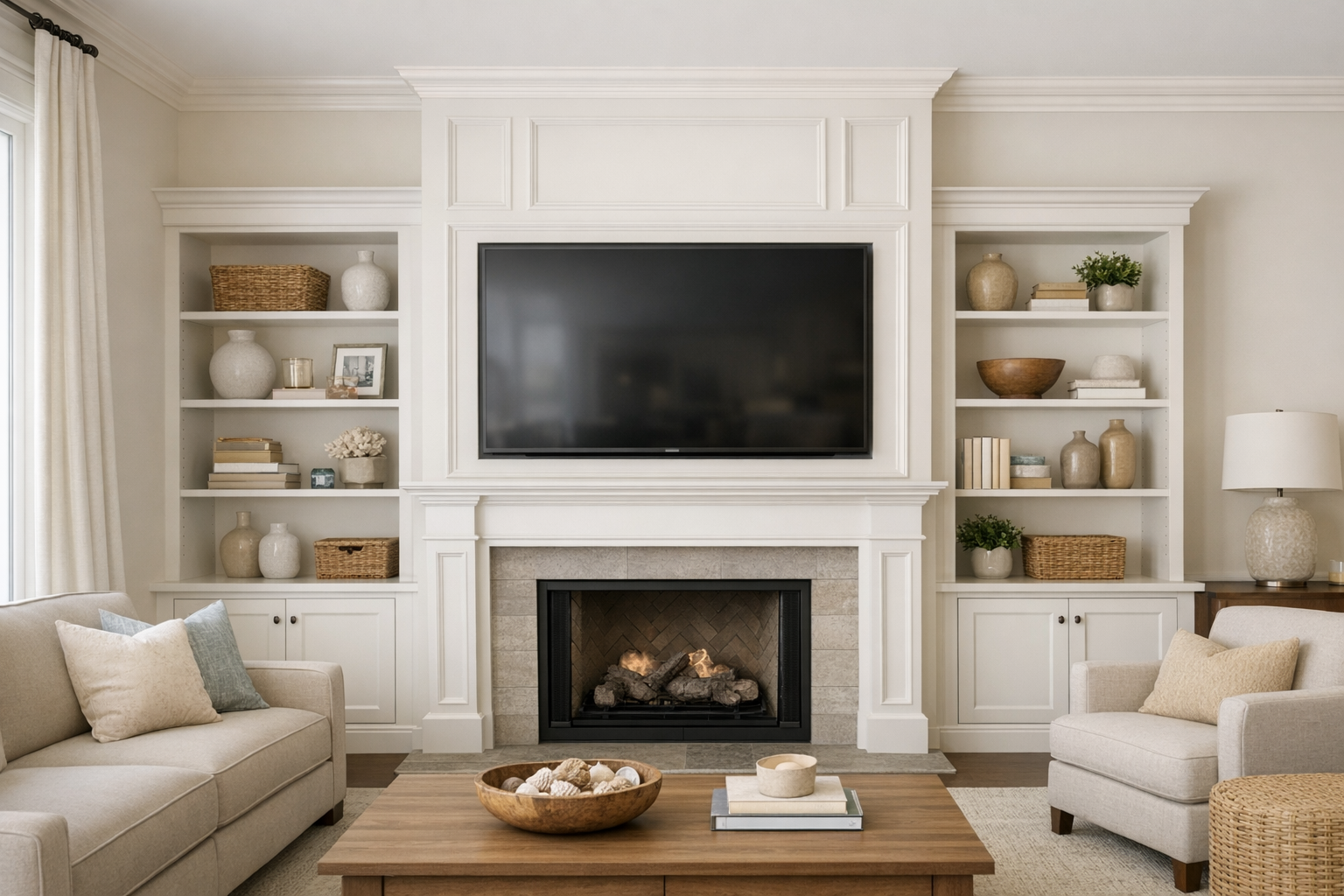
If a TV is going above the mantel, treat it as part of the composition from the beginning. A strong layout gives the screen a defined zone, leaves enough plain space around it, and keeps the mantel shelf from pushing the TV too high visually. A weak layout usually has the opposite problem: a tall mantel, a big screen, and busy trim all competing in the same vertical stack. Heat exposure and mantel clearances also matter here, so the trim design should leave room for the fireplace's required safe zones rather than assuming every wall can accept wood panels tight to the opening.
- Tall overmantel panels work best on higher Sarasota County living room walls, especially open rooms where the fireplace needs more vertical presence. The panel can run from the mantel toward the ceiling, but it should still have breathing room at the top so the wall does not feel capped off or top-heavy.
- Shorter framed TV zones are usually cleaner for 8- or 9-foot rooms, condos, and updated ranch layouts. Instead of filling every inch above the mantel, the trim creates a neat rectangle around the screen and lets the surrounding drywall or panel field stay calm.
- Built-ins on both sides call for symmetry: cabinets, shelves, mantel height, and vertical trim lines should relate to each other so the fireplace reads as the center of one wall system. If one side has a window, doorway, or shorter cabinet run, an asymmetrical layout can still work, but the fireplace trim needs one clear dominant line to keep the wall from looking accidental.
- Wire management should be planned before the trim pattern is finalized. A framed TV panel can hide cable paths or outlets more gracefully than surface raceways, but only if the TV size, bracket depth, outlet location, and panel spacing are considered before the carpentry is laid out.
For a polished fireplace trim installation Sarasota County homeowners will not want to redo in a few years, the best overmantel trim looks connected to the mantel, nearby built-ins, ceiling height, and furniture arrangement. If the upper detail is taller, darker, or busier than everything below it, simplify the profile, reduce the panel count, or lower the visual emphasis so the whole wall feels intentional instead of overloaded.
Materials and Finishes That Make Sense for Florida Fireplace Trim
Material choice is what keeps a crisp fireplace wall from looking tired after the first few seasons of air conditioning, cleaning, and everyday use. Paint-grade trim is the most flexible choice for many Sarasota County homes because it is meant to be finished in an opaque trim paint, so the design can use a mix of smooth boards, primed mouldings, poplar, finger-jointed pine, or MDF without needing every piece to show matching grain. The takeaway: it is usually the best fit for coastal, transitional, condo, and updated ranch interiors where clean white or soft neutral trim matters more than natural wood character.
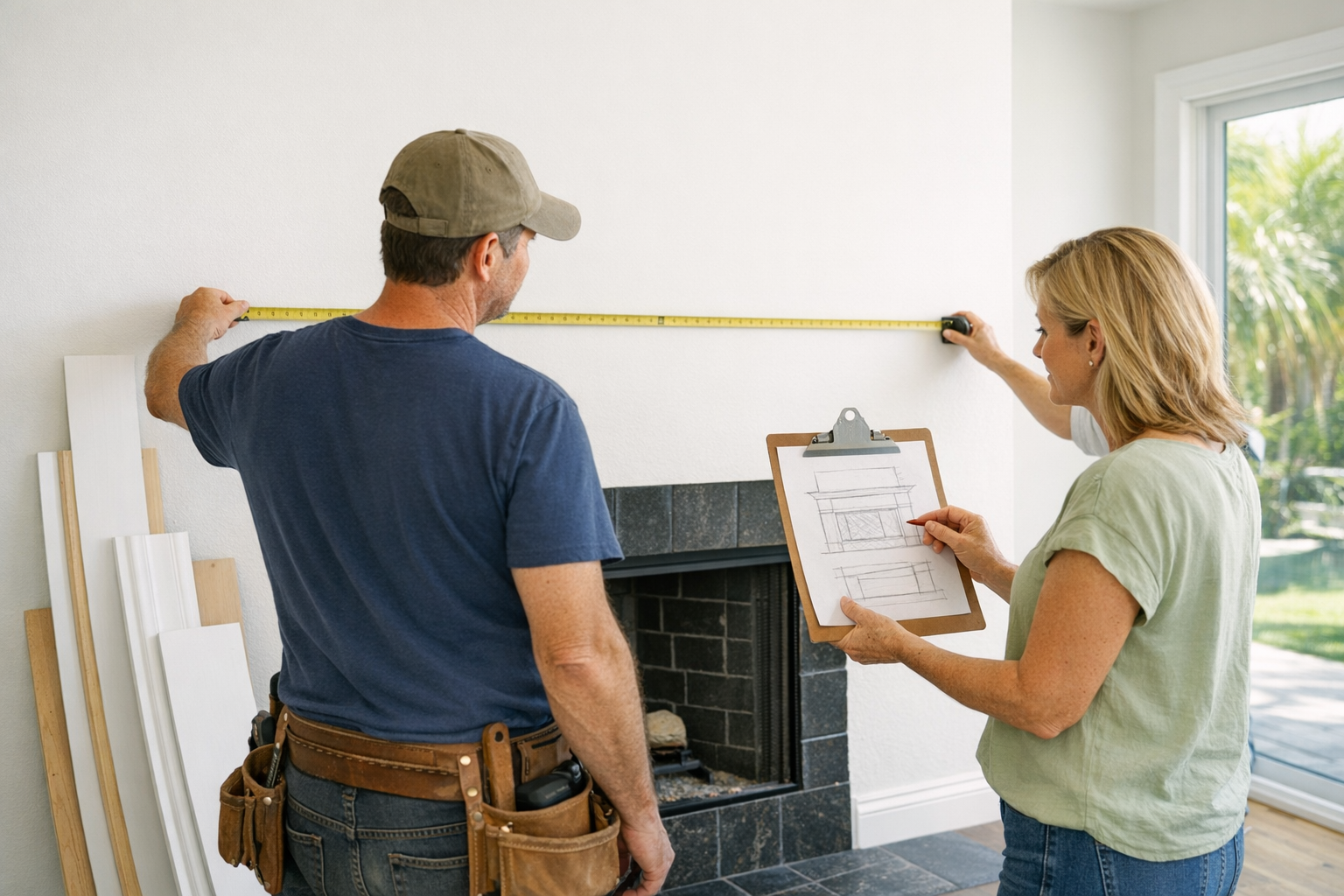
MDF is a smooth engineered panel material that can work well for painted overmantel panels, shiplap-style fields, and flat trim layouts because it gives a very even surface. Its tradeoff is edge and moisture sensitivity, so exposed edges, seams, and lower areas that may see wet mopping or heavy cleaning need thoughtful finishing. Primed mouldings and finger-jointed pine are common paint-grade options for profiles and built-up mantel details; they take paint well, but the finished look depends on tight joints, primer, flexible caulk at wall transitions, and a durable enamel or trim paint that can be wiped clean.
Stain-grade wood is different because the grain is the finish, not something to hide. A stained oak, maple, walnut, or similar mantel can add warmth in a room with wood floors, ceiling beams, or darker built-ins, but it needs better board selection and more precise color planning than painted trim. In lighter Sarasota and Venice FL interiors, a full stained surround can feel heavy unless the profile is simple; a single stained mantel shelf paired with painted surround trim often gives the room warmth without overpowering it.
The area closest to the firebox deserves separate attention from the decorative wall field. Depending on the fireplace type, heat output, existing insert, and surround configuration, noncombustible material or specific clearances may be required before wood trim, MDF, shiplap, or a mantel can be placed nearby. For fireplace mantel installation Sarasota County homeowners are planning around an active fireplace, the safe zone should shape the design first; the paint color, moulding profile, and stain choice come after that boundary is understood.
Planning a Custom Fireplace Mantel and Trim Project
By the time you are ready to ask for an estimate, the most useful question is what the fireplace wall needs to solve. A simple mantel shelf may be enough when the wall is narrow and the existing tile already looks good; a custom build starts to make more sense when the wall is unusually wide or tall, the fireplace is highly visible from an open living area, the TV needs to be integrated cleanly, nearby built-ins have to line up, or the existing trim does not match the rest of the room.
- Gather straight-on photos of the full fireplace wall, plus angled photos that show nearby windows, baseboards, crown, built-ins, flooring, and furniture. These images help show whether the new mantel should feel light and coastal, more transitional, or closer to the existing cabinetry and trim.
- Measure the wall width, ceiling height, firebox opening, mantel height if one exists, and the size of any tile, stone, or hearth that will remain. Those dimensions affect shelf depth, leg width, panel spacing, and how much trim can be added without crowding the fireplace.
- Know the fireplace type and what surrounds it now. A gas insert, electric fireplace, masonry opening, stone face, tile border, or non-working decorative firebox can each change where wood trim, MDF, shiplap, or a mantel can reasonably be placed.
- Decide early whether a TV is part of the plan. The size, outlet location, bracket style, and viewing height can determine whether the overmantel needs a framed TV zone, a simpler panel, or no upper trim at all.
- Save a few inspiration images, but label what you actually like: the thick shelf, the vertical shiplap, the panel moulding spacing, the painted finish, or the way the mantel connects to built-ins. That helps a finish carpenter translate the style instead of copying a layout that may not fit your wall.
Professional finish carpentry fireplace work is less about adding more pieces and more about making the pieces look inevitable. Good results usually show up in proportion, consistent reveals, clean seams, smooth caulk lines, filled nail holes, paint-ready surfaces, and trim build-up that looks intentional from across the room. For homeowners comparing fireplace mantel installation Sarasota County options, that is the difference between a decorated firebox and a finished focal wall.
Bring the Fireplace Wall Into the Room’s Overall Design
A helpful final test is to view the fireplace from the main seating area and trace the lines around it: mantel shelf to baseboard, side trim to window casing, upper panel to crown or TV frame. The mantel, surround, wall treatment, and upper detail should relate to the flooring, baseboards, crown, windows, furniture layout, and any TV or built-ins nearby, not read as a nice feature attached after everything else was finished.
That balance will look different from house to house. A high-ceiling Sarasota County living room may support taller overmantel trim or vertical shiplap; a narrower condo or updated ranch wall may look cleaner with a simple shelf and restrained surround moulding. If built-ins flank the fireplace, the mantel height, stile widths, and panel lines should feel related to the cabinetry. If a TV is part of the layout, the trim should frame it calmly instead of making the screen look squeezed between decorative pieces.
Before discussing a custom fireplace mantel Venice FL project or a broader finish carpentry fireplace plan, gather the practical pieces that shape the design: full-wall measurements, firebox dimensions, photos of existing tile or stone, TV size, nearby cabinetry details, and a few inspiration images marked with what you actually like. The best fireplace wall is not the busiest one; it is the one where proportion, materials, trim profiles, and room connections work together so the finished mantel feels natural from every seat in the room.