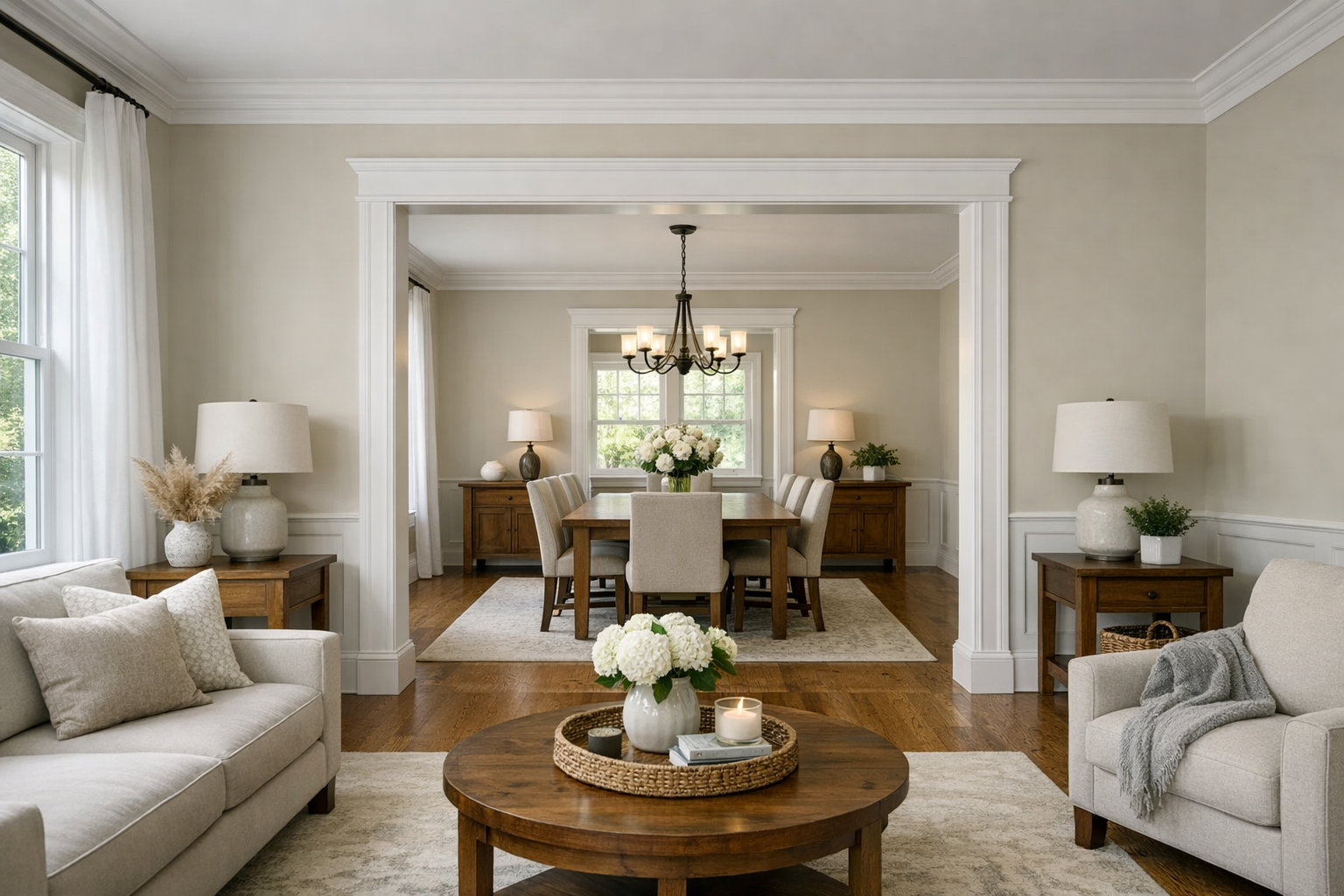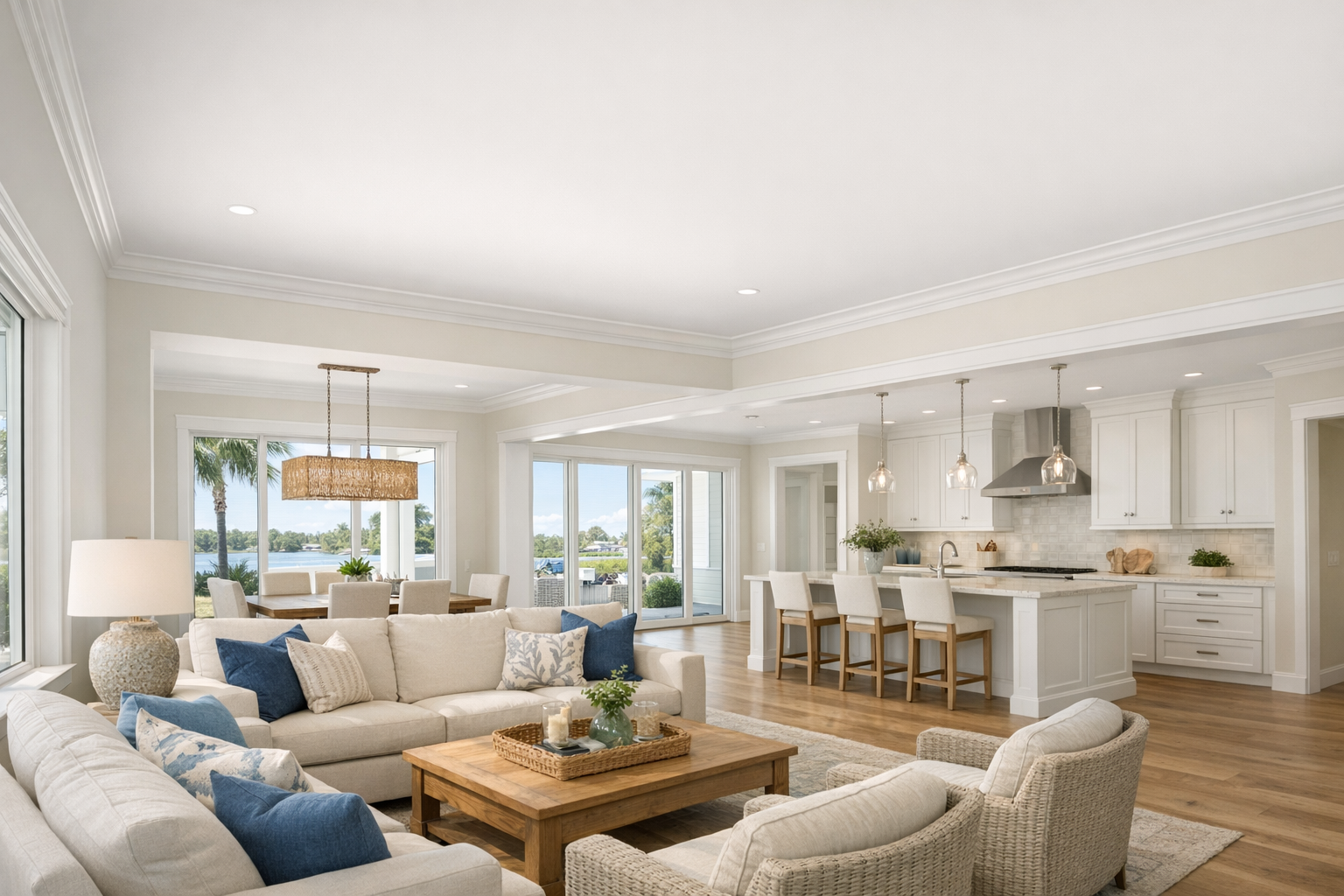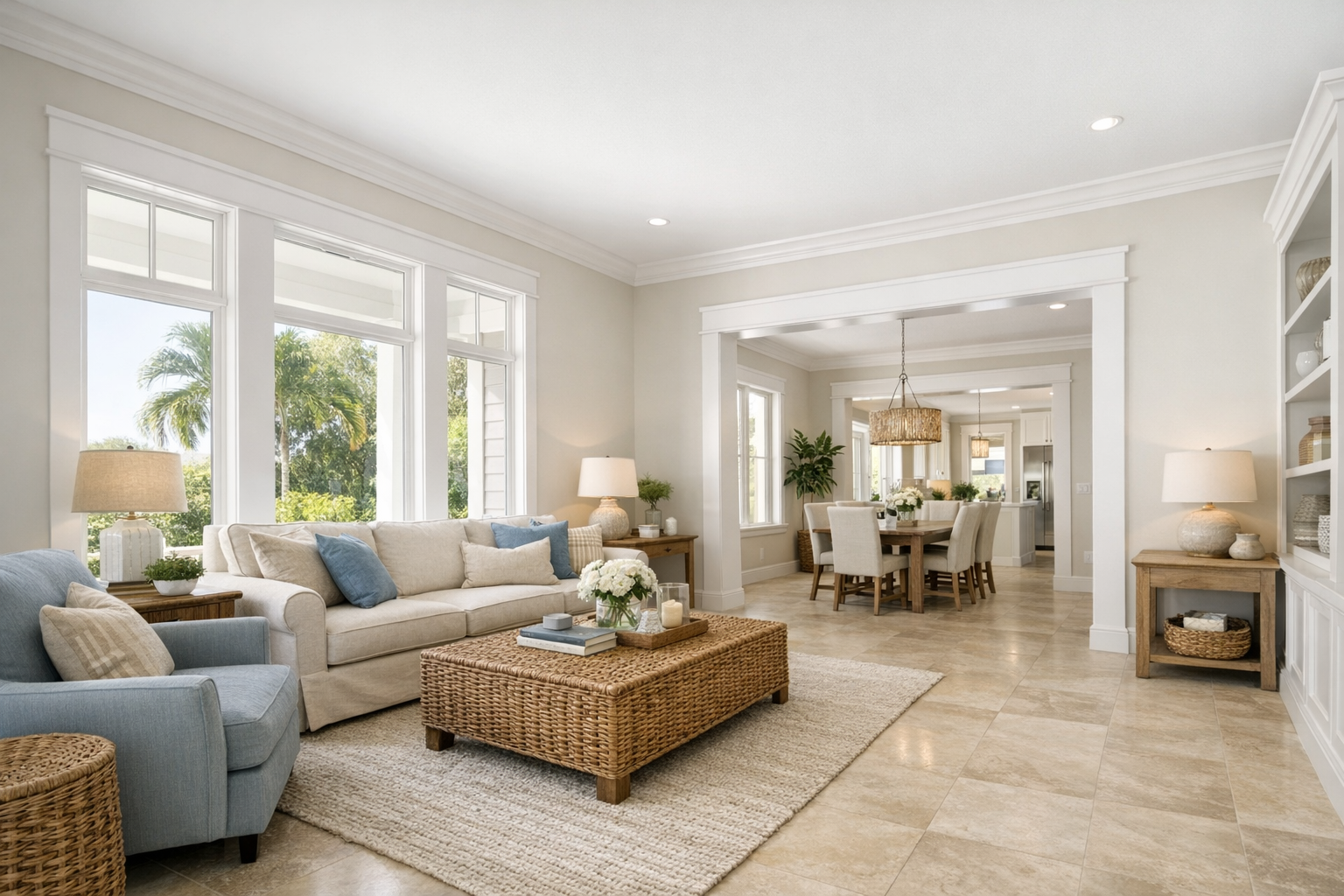
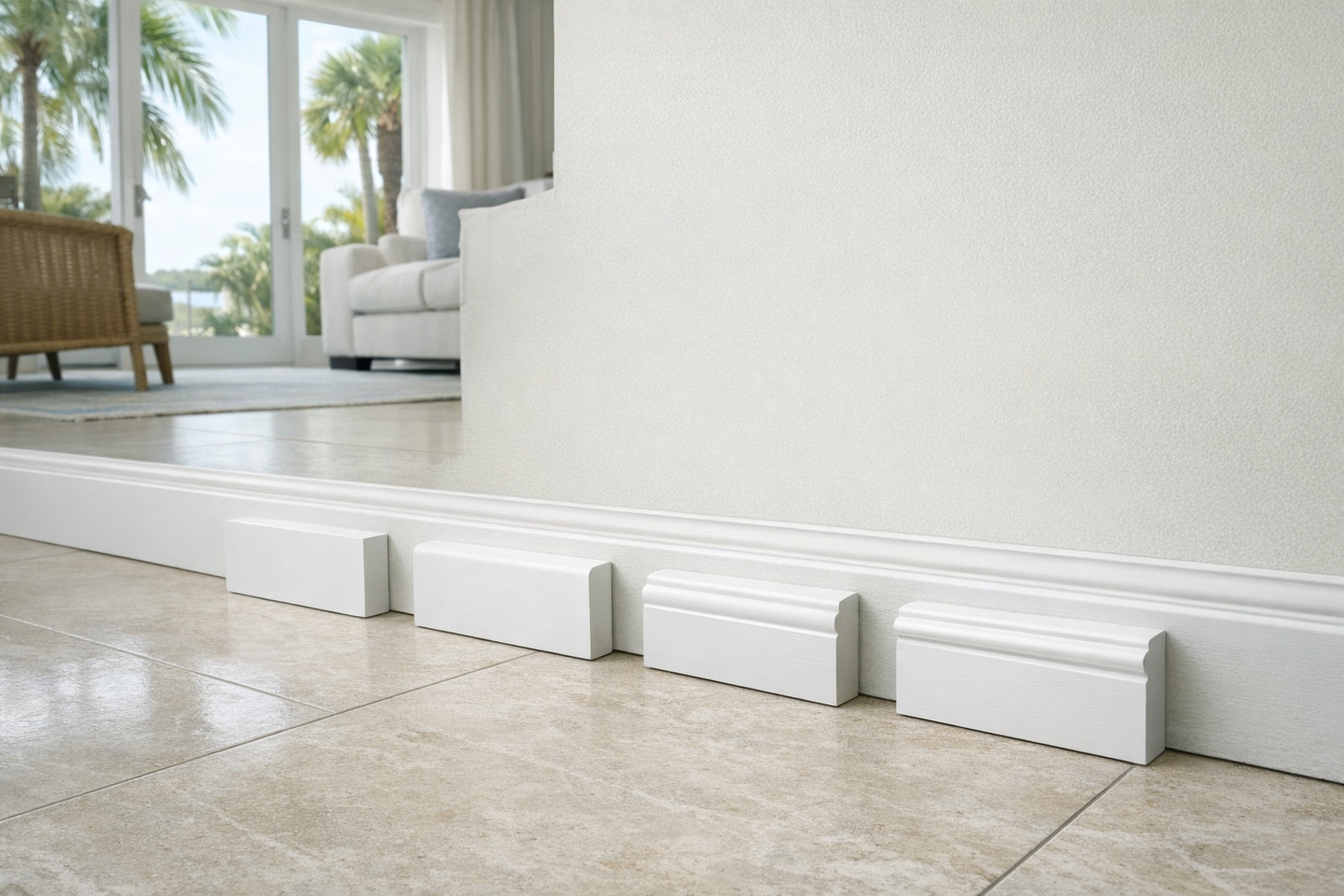

A baseboard is easy to treat as the last trim detail, but its profile does more visual work than most homeowners expect. The profile is the shape you see on the face and top edge of the board, and it changes how the wall meets the floor. A crisp, flat line can make a room feel cleaner and more contemporary, while a curved or layered shape can make the same room feel more traditional, formal, or finished.
For a Sarasota County home, the best choice usually starts with context: flooring, wall proportions, door casing, paint color, and the overall style of the house. Tile, LVP, and wide open living areas often look better with simpler trim shapes, while Mediterranean-inspired, transitional, or older Florida ranch homes may need a profile with more shape so the baseboard does not look too plain against the rest of the interior.
This guide compares four common baseboard styles in practical terms. Square-edge profiles are flat and crisp; eased-edge profiles keep the simple look but soften the top edge; decorative profiles add routed lines, curves, or shadow details; and traditional profiles use more familiar shaped caps or layered contours. Height still matters because it affects proportion, but the shape is what usually determines whether the room reads coastal, modern, classic, or overly busy.
Start With the Room: Flooring, Walls, Casing, and Interior Style
Before you fall in love with a sample, look at the room as a set of connected lines. The floor creates the bottom plane, the walls set the vertical scale, and the door casing tells the baseboard how formal or simple the trim package already is. Good baseboard profiles look like they belong to that group; weak ones look pasted on, even if the board itself is well made.
Start with the flooring. Large-format tile, smooth luxury vinyl plank, and simple engineered wood usually pair well with cleaner baseboard trim profiles because the floor already has broad, uninterrupted lines. Carpet can visually swallow a very thin or delicate profile, so it often needs a shape with enough face and edge definition to still read clearly above the flooring. The practical takeaway: the busier or heavier the floor transition feels, the more carefully the baseboard needs to balance it rather than compete with it.
Next, compare the baseboard to the wall and ceiling proportions. A low, simple room can feel crowded if the trim has too many ridges and curves, while a taller wall can make an overly plain strip look under-scaled. This is not just a height issue; it is about visual weight. A profile with shadow lines, stepped edges, or a shaped cap appears heavier than a flat board of similar size.
Door casing is the best reality check. If the casing is flat and modern, a very ornate baseboard may feel disconnected. If the casing has a shaped edge or more traditional detail, a plain square board may look unfinished beside it. Painted trim also changes the effect: white trim against colored walls emphasizes every edge and shadow, while trim painted closer to the wall color makes the profile feel quieter.
Finally, match the profile to the home's overall style. A coastal remodel with slab doors and pale flooring may call for simple interior baseboard profiles, while a Mediterranean or transitional room with arched openings, heavier casing, or more detailed cabinetry can support a shaped profile. The goal is not to pick the fanciest option; it is to choose the one that makes the flooring, walls, doors, and trim feel like they were planned together.
Square-Edge Baseboards: Best for Clean, Modern Lines
Square-edge trim is the cleanest choice when you want the room to feel edited rather than embellished. These are flat stock baseboards with a plain face, crisp 90-degree edges, and little or no routed detail, so the line where the wall meets the floor stays sharp and quiet. In the family of baseboard profiles, this is the option that puts the least visual "movement" on the wall.
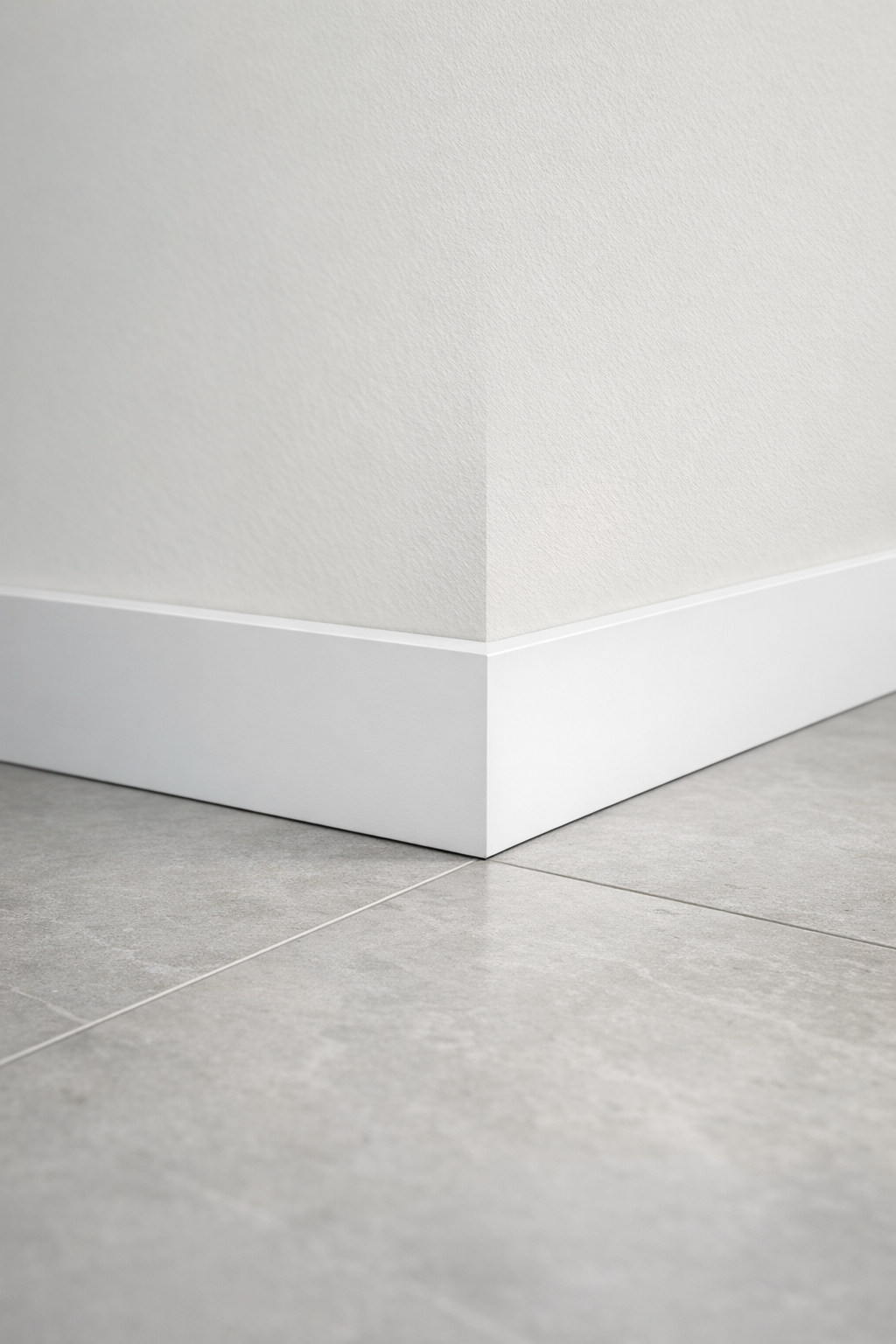
That simplicity works especially well in contemporary Sarasota homes, coastal-modern interiors, condos with open living areas, and remodels with slab doors or simple flat casing. Picture pale LVP running through a great room, smooth white walls, and square casing around the doors: square edge baseboards continue that same straight-line language instead of adding curves that do not appear anywhere else.
The practical effect is a calmer perimeter. Modern baseboards like these do not fight patterned tile, wide plank flooring, or a view-focused room where the design goal is to keep attention on natural light, furniture, or the outdoor connection. They are a strong signal when the rest of the home already leans minimal: flat cabinet fronts, simple hardware, clean drywall returns, and trim painted in one consistent color.
The tradeoff is that crisp trim is less forgiving. Sharp corners can make wavy walls, uneven flooring lines, and imperfect outside corners more noticeable, so installation precision matters more than it would with a softened or more detailed profile. Square edge baseboards can also feel too stark in a highly traditional room with arched openings, shaped door casing, or heavier built-ins. If the room already has classic detail, a simple square board may look more unfinished than intentionally modern.
Eased-Edge Baseboards: A Softer Version of Simple Trim
If square trim gives the room a little too much edge, eased edge baseboards keep the same simple trim idea but relax the top line. The face is still mostly flat, but the upper corner is slightly rounded, softened, or sometimes shaped with a small beveled edge, so light rolls over it instead of stopping at a hard 90-degree corner.
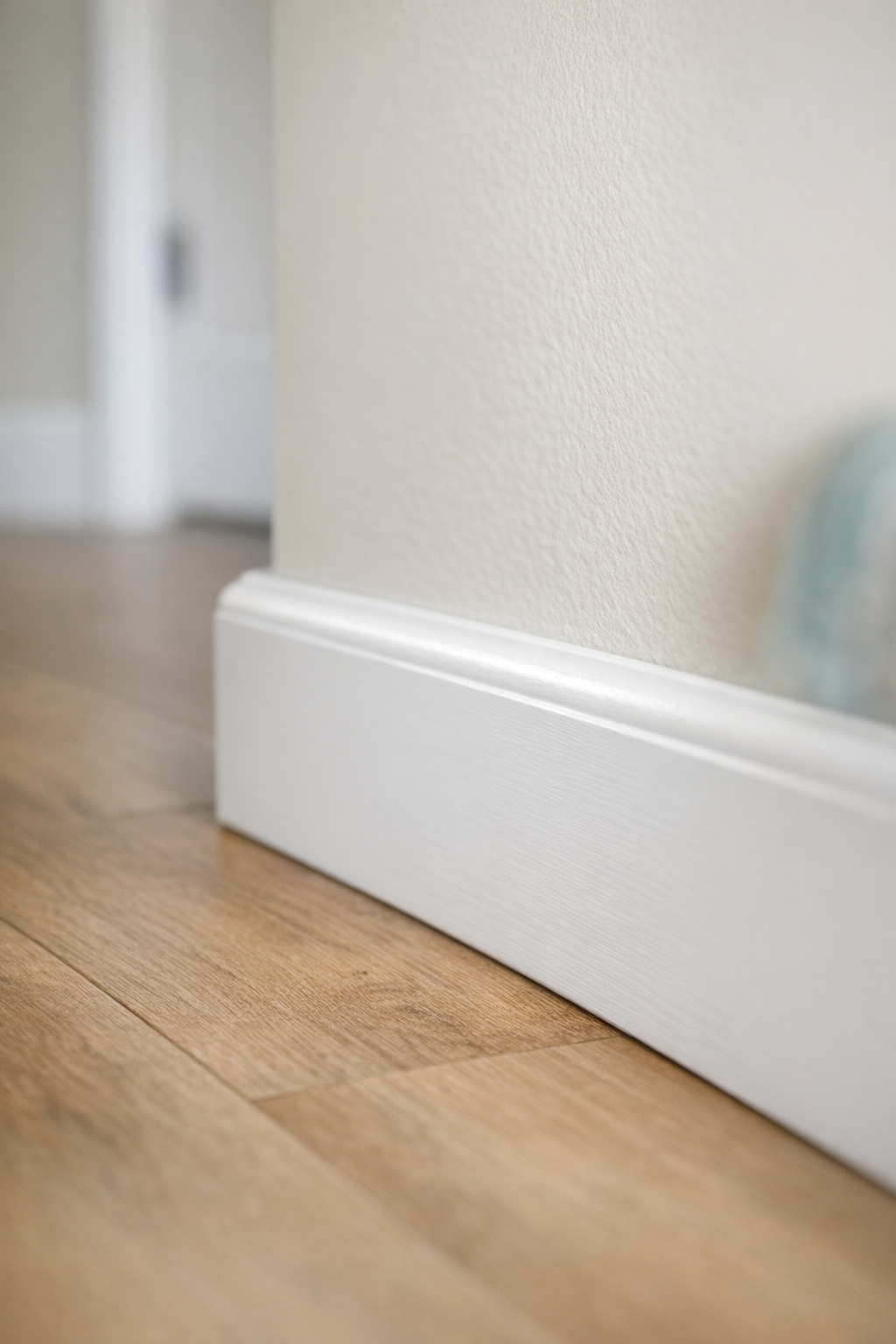
That makes an eased-edge profile a useful middle ground. It is not decorative in the sense of having curves, grooves, or layered molding, but it also does not feel as strict as a square-edge board. In a casual coastal interior, a family room with LVP, or a transitional Sarasota remodel where the doors and cabinets are simple but not ultra-modern, this profile can feel more natural than a sharp flat board.
The practical difference shows up in daily use, too. A crisp square corner highlights chips, scuffs, and slight installation flaws more quickly, while a softened top edge can be a little more forgiving visually because small dings do not interrupt such a precise line. It still needs clean finishing, but it is less demanding than the sharpest modern baseboard profiles.
Choose eased edge baseboards when you want the room to stay clean and unfussy, but you do not want the trim to look severe. A good signal is a home with light tile or plank flooring, relaxed furnishings, simple casing, and a warm coastal or transitional style. A weaker signal is a room with heavy crown molding, arched openings, and ornate door trim, where this profile may look too plain for the rest of the architecture.
Decorative Baseboards: When a Room Needs More Detail
Rooms with more built-in character can usually carry more movement at the floor line. Decorative baseboard profiles add shape to the face or top of the board through a routed detail, small curves, cove-like dips, stepped bands, or shadow lines. Instead of reading as one flat strip, the baseboard catches light in layers, which makes it feel more connected to detailed casing, crown molding, raised-panel cabinetry, or a formal dining room with a more finished trim package.
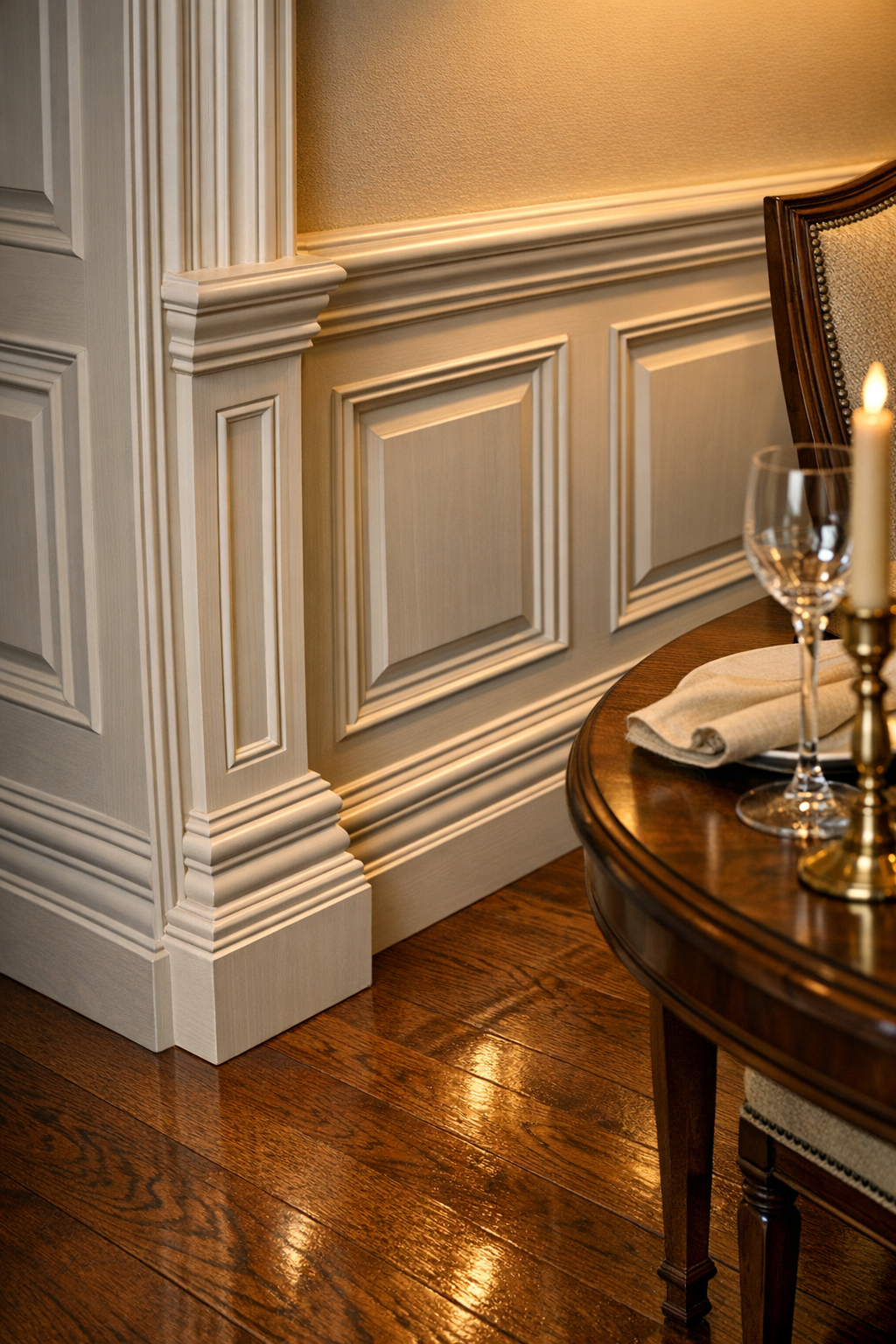
The key is coordination, not decoration for its own sake. A Sarasota County home with Mediterranean touches, arched openings, traditional kitchen cabinetry, or heavier door trim may look underdressed with a very plain board, especially in the main living areas. In that setting, decorative baseboard profiles can help the bottom of the wall hold its own against the other architectural details already in the room.
The options differ by how much shadow and curve they create. A small stepped line is still fairly restrained and can work in a transitional remodel. A deeper cove or layered face feels more formal and needs other trim details nearby so it does not look random. When comparing baseboard molding profiles, look at the door casing first: if the casing has shape, the baseboard can echo it; if the casing is flat and modern, a busy baseboard may feel disconnected.
Use restraint in very minimalist interiors, rooms with active stone-look tile, high-variation LVP, patterned rugs, or spaces where the floor is already doing a lot visually. More grooves also mean more edges to dust and repaint, so a highly detailed profile may be a poor fit for a low-maintenance beach condo or a busy family entry. The takeaway: choose decorative trim when the room needs depth, but avoid it when it would compete with the floor, cabinets, or cleaner architectural lines.
Traditional Baseboards for Classic, Transitional, and Older Florida Homes
A traditional profile earns its name from the way it finishes the top edge, not from being fussy. Traditional baseboards often have a shaped cap, an ogee-like curve, a small layered band, or a fuller face that gives the wall a more settled bottom line. The effect is less "look at this detail" and more "this room has a complete trim package."
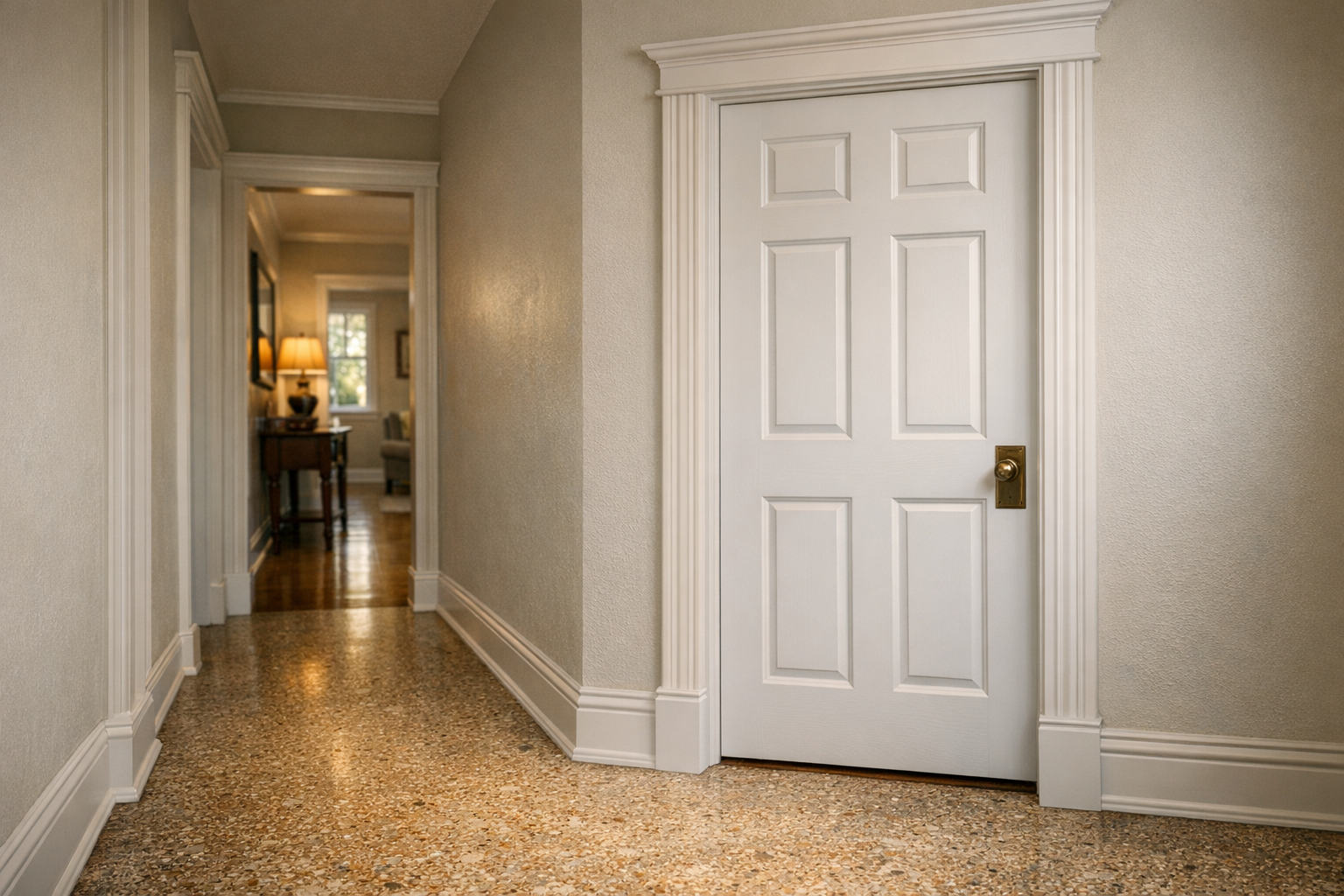
That makes traditional baseboard profiles a natural fit for Sarasota County homes with Mediterranean influence, older Florida interiors, and transitional remodels where the room already has arched openings, raised-panel doors, warm wood floors, or classic cabinetry. A plain square board can sometimes feel too abrupt in those settings because the doors, cabinets, and openings are speaking a softer, more shaped design language.
Traditional does not have to mean ornate. A restrained profile with one curved top cap can pair beautifully with simple colonial-style casing and white paint, while a taller layered base with deeper curves belongs better beside heavier casing, crown molding, or more formal built-ins. If the casing is modest, choose a modest base. If the casing has depth and shadow, the baseboard can carry more shape without looking out of place.
Finish changes the read, too. Painted traditional baseboards usually blend into the wall and let the profile show through light and shadow; stain-grade wood baseboards make the trim itself more noticeable because the grain and color become part of the design. The takeaway is to choose tradition by degree: enough curve and substance to respect the home's character, but not so much detail that the floor line becomes busier than the room around it.
Match the Profile to Tile, Wood, LVP, Carpet, and Floor Transitions
Flooring is where the baseboard profile either settles in or starts to fight the room. Large-format tile, porcelain plank, and clean luxury vinyl plank usually look best with a quieter edge because the floor already creates long, straight lines. A square-edge board keeps that line crisp; an eased-edge board gives the same simple read with a slightly softer top, which can feel more relaxed in a coastal or transitional space.
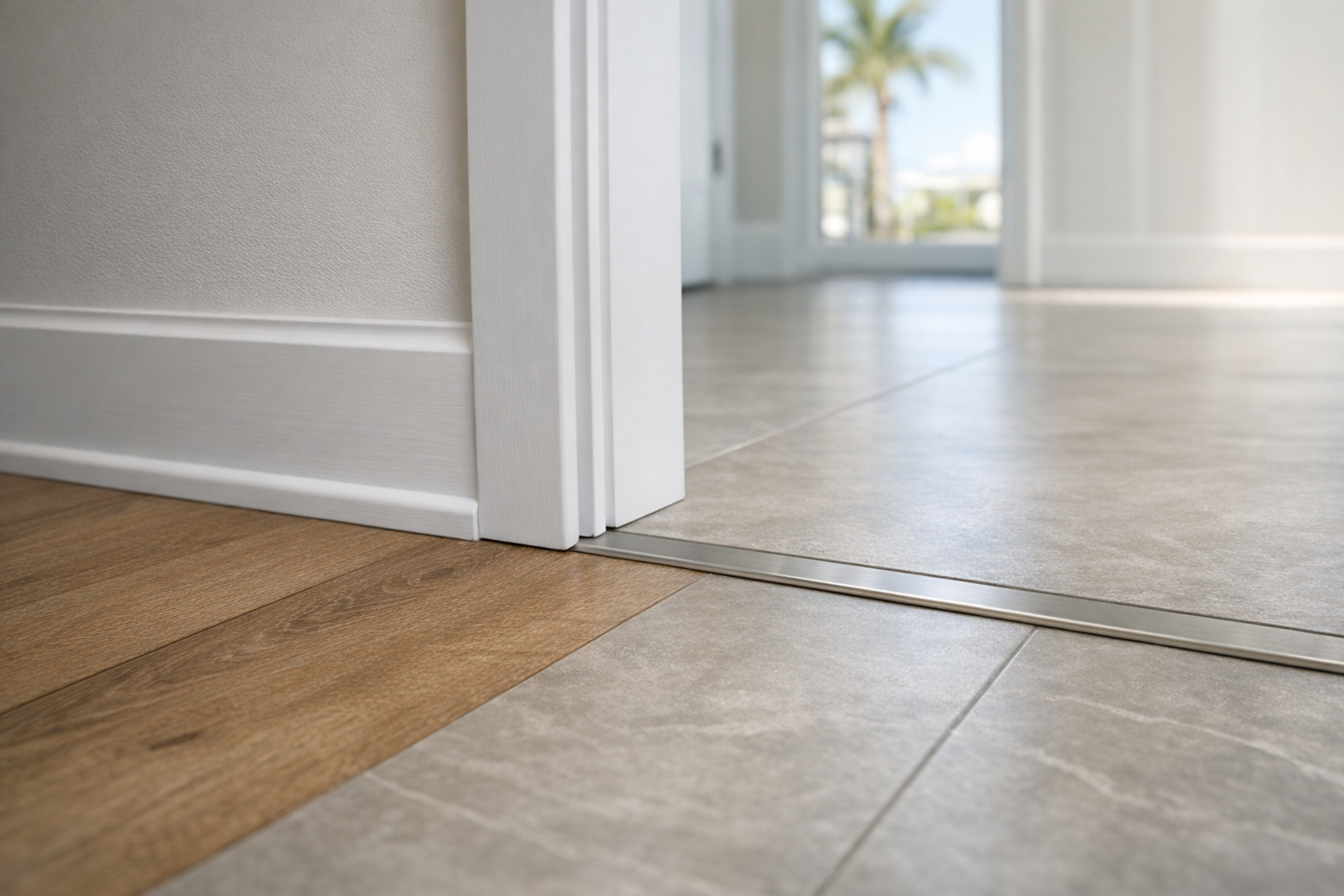
The cleaner the floor, the more visible the trim line becomes. Against smooth tile or pale LVP, a square baseboard can look sharp and intentional, especially in open Sarasota layouts with simple casing. The tradeoff is that uneven floor lines and imperfect corners stand out more, so an eased edge can be a safer visual choice when the room is modern but not perfectly crisp.
Wood-look floors, engineered hardwood, and warmer plank flooring can often carry more shape. A traditional or lightly decorative profile adds a top line and shadow that balances the movement in the grain, especially in classic, Mediterranean, or transitional interiors. The weak signal is pairing a busy routed base with a high-variation floor, patterned rug, and plain slab doors; too many competing lines can make the perimeter feel restless.
Floor changes also affect the small transition piece at the bottom. Shoe molding is a narrow strip used where the baseboard meets the floor, while quarter round has a fuller rounded face and reads more visibly. If new flooring leaves a small gap under existing trim, one of these pieces can help finish the edge without replacing every baseboard, but it changes the look: no shoe molding feels cleaner, shoe molding feels subtle, and quarter round feels more noticeable.
For carpeted bedrooms, the baseboard is usually read more as wall trim than as a hard floor transition, so the profile can follow the door casing and room style more closely. The practical takeaway is simple: let hard floors guide how crisp or detailed the bottom edge should be, then use transition trim only when it supports the overall look rather than calling attention to a flooring change.
Consider Material, Moisture, and Maintenance Before Finalizing the Shape
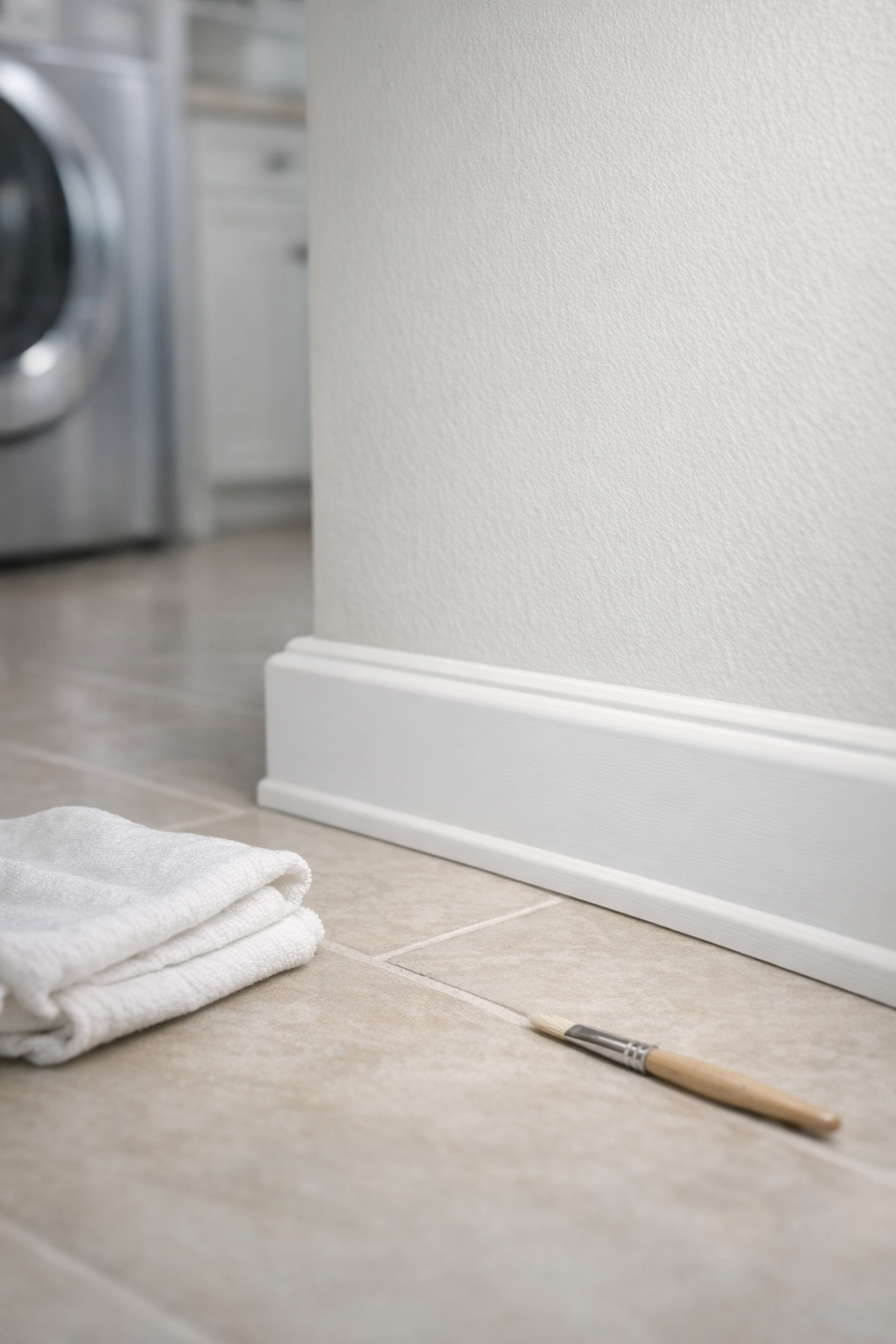
Material will not choose the profile for you, but it can decide how practical that profile feels after a few years of cleaning, repainting, and daily traffic. MDF baseboards are commonly chosen for painted trim because they give a smooth, uniform face, which works well with square-edge, eased-edge, and many decorative painted looks. The tradeoff is that sharper corners and tiny routed grooves can show wear or swelling more noticeably in damp-prone spots, so a simpler profile is often the better pairing near baths, laundry areas, and entry doors.
Wood baseboards, including paint-grade pine or stain-grade hardwood, bring more natural structure to the trim. They can suit traditional and decorative profiles because carved or shaped edges tend to feel more substantial, especially in older, transitional, or Mediterranean-style rooms. If the wood is stained rather than painted, the grain becomes part of the design, so the profile should be calmer unless you want the trim itself to stand out.
PVC trim is worth considering where moisture and maintenance matter more than a furniture-like finish, such as coastal entries, bathroom-adjacent hallways, or slab homes where hard flooring meets exterior doors. It often makes the most sense with square or eased profiles because those shapes keep the look clean and reduce the number of little ledges that collect dust.
The takeaway: choose the shape for the room first, then choose a material that helps that shape hold up. A detailed profile in the wrong material can become fussy to maintain, while a simple profile in a practical material can look intentional instead of plain.
A Practical Checklist for Choosing the Right Profile
Before you order trim for one room or the whole house, run the choice through a simple filter:
- Name the home's style. Coastal-modern, transitional, Mediterranean, condo-simple, and older Florida interiors do not need the same visual weight. The style tells you whether the profile should stay quiet or add shape.
- Compare it with the door casing. Plain casing usually points toward square-edge or eased-edge trim; shaped casing can support decorative or traditional baseboard profiles without looking mismatched.
- Hold samples against the actual flooring. A profile that looks good in your hand may feel busy against patterned tile or too plain beside warm plank flooring.
- Choose the level of detail on purpose. Flat and eased profiles simplify the room; routed or traditional shapes create more shadow, which makes the trim more noticeable.
- Look at wall proportions. Taller, open rooms can often handle a stronger profile, while compact rooms may look cleaner with fewer lines at the floor.
- Decide whether shoe molding belongs. It can help finish the floor line, but it also adds another small profile, so keep it simple when the baseboard already has detail.
- Review material last. MDF, wood, and PVC change maintenance expectations, so choose the shape first and the material that best supports it afterward.
Hiring a finish carpenter is worth considering for whole-home trim updates, baseboard installation Sarasota County projects tied to new flooring, highly visible mitered corners, uneven walls, or custom matching to existing casing. Good finish carpentry Sarasota County work is especially noticeable where profiles turn corners, meet door trim, or continue from room to room.
The best profile is not the fanciest one; it is the one that looks like it was always meant to live with your floors, doors, walls, and overall home style.
Choosing a Baseboard Profile That Fits the Whole Home
Think of the final choice as a trim package, not a single board. The age and character of the home tell you how much detail feels natural; the flooring tells you whether the bottom line should stay quiet or carry more shape; the casing shows whether the baseboard should be plain, softened, routed, or more traditional; and the material and maintenance expectations decide whether that shape will still feel practical after daily cleaning and wear.
Before committing to baseboard profiles for a room or an entire Sarasota County home, compare samples where they will actually be used. Hold them against the tile, LVP, wood, or carpet edge; place them beside the door casing; and look at them against the wall color in the room's real light. A sample that feels refined on a display rack can look too busy at a floor transition, while a simple profile may look stronger once it is seen beside clean casing and hard flooring.
If the profile depends on crisp corners, long uninterrupted runs, difficult floor transitions, moisture-prone areas, or matching trim from room to room, professional finish carpentry Sarasota County help can make the difference between "nice material" and a finished look. The right takeaway is simple: choose the profile in the actual space, then treat the cuts, joints, transitions, and material choice as part of the design rather than an afterthought.