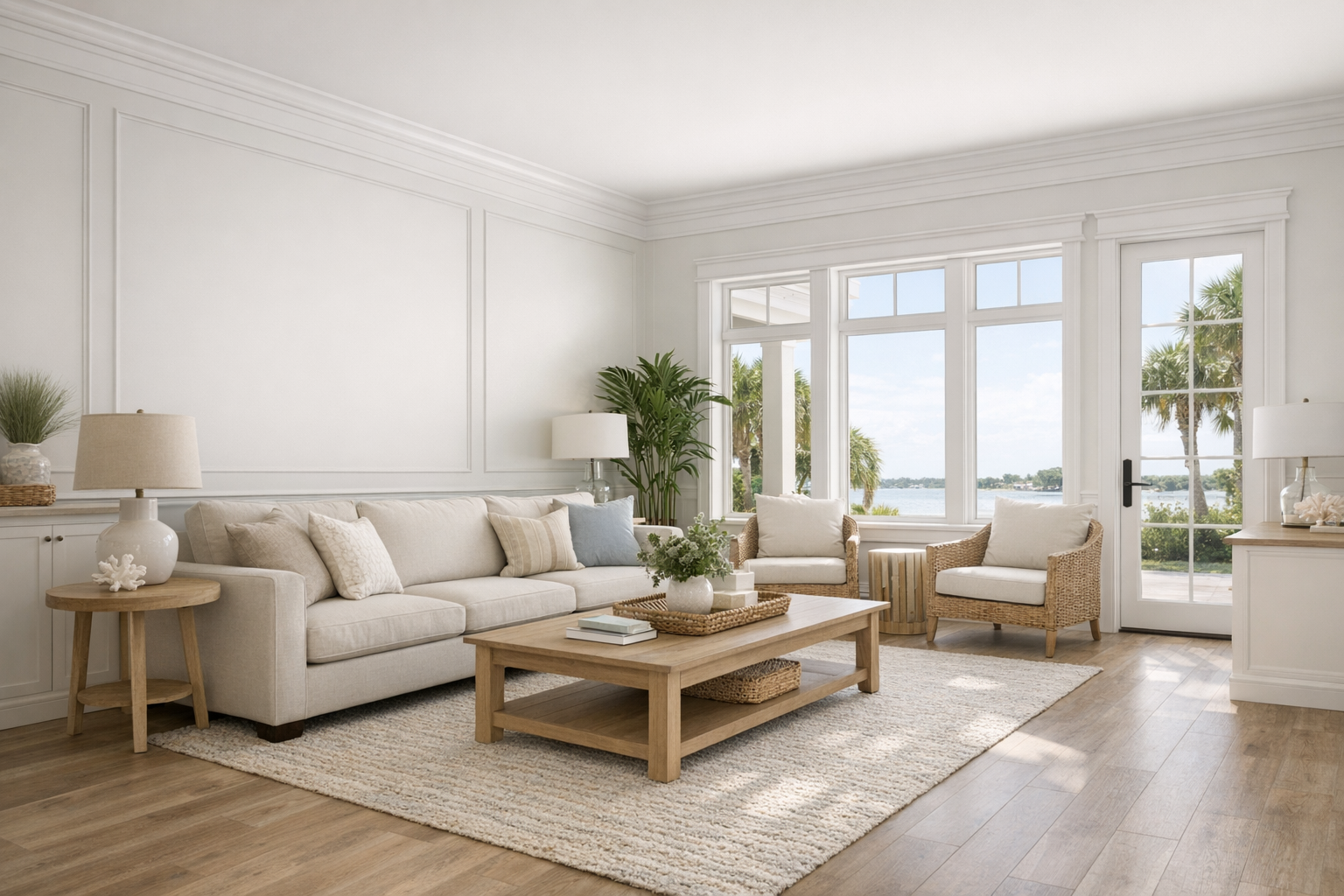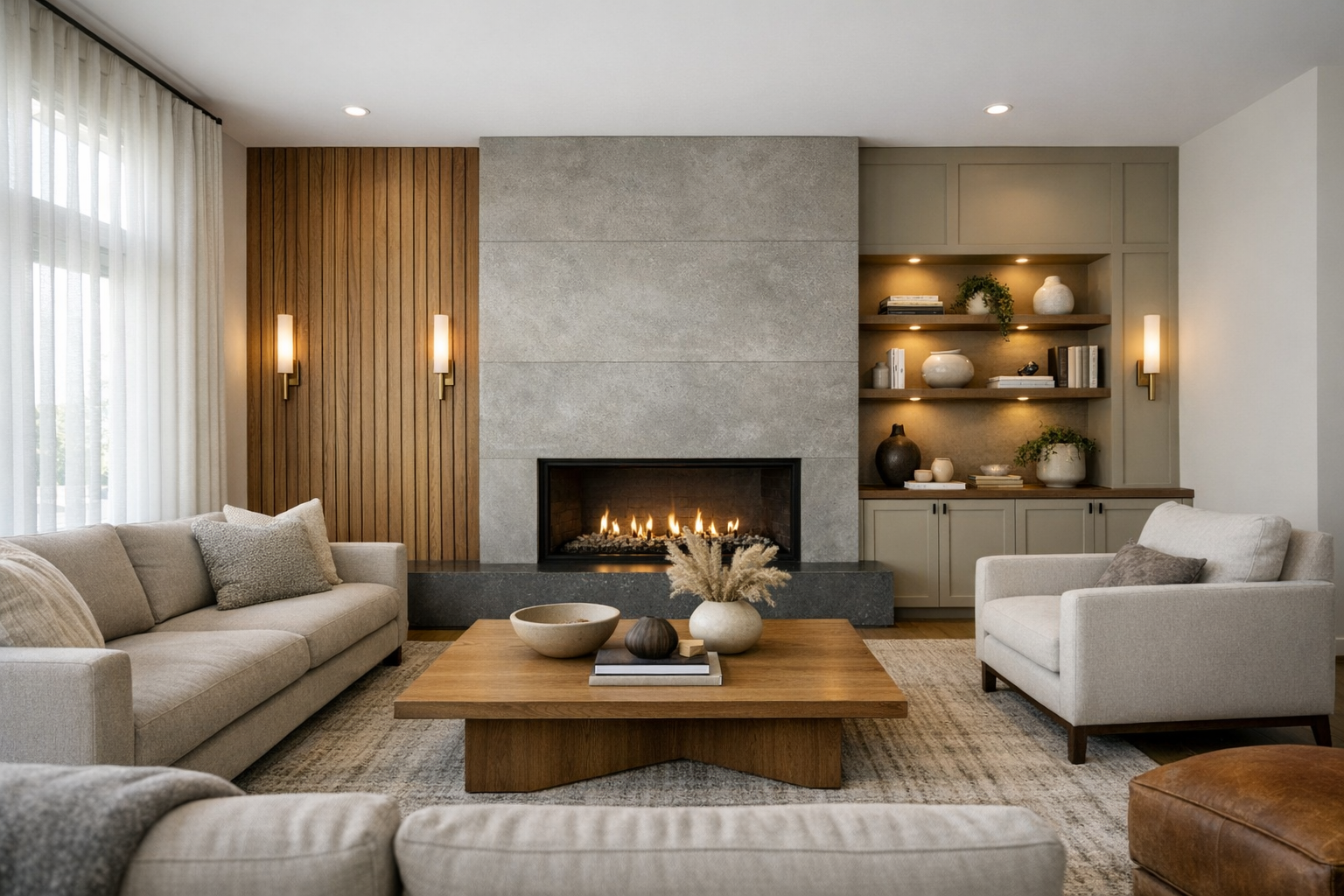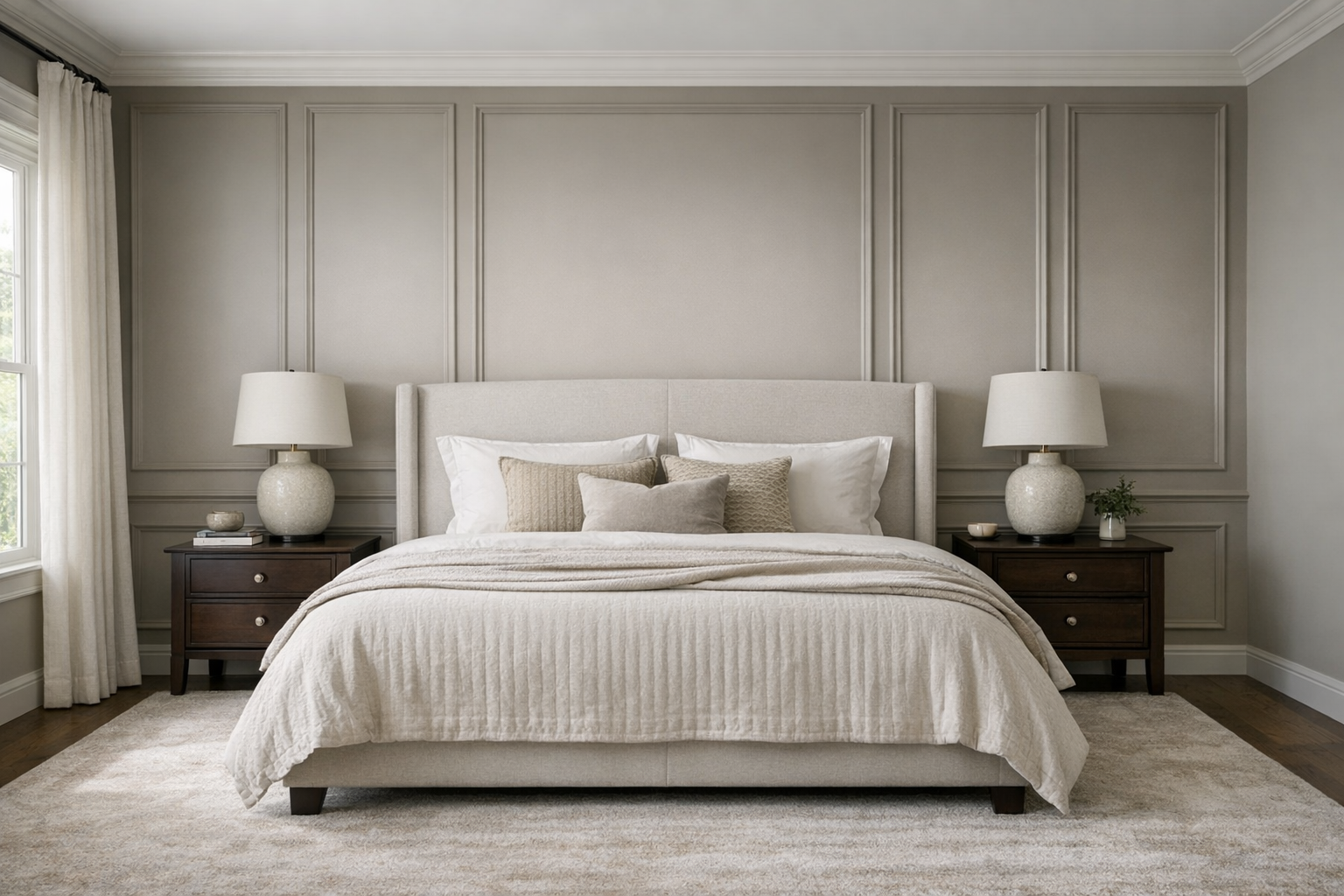
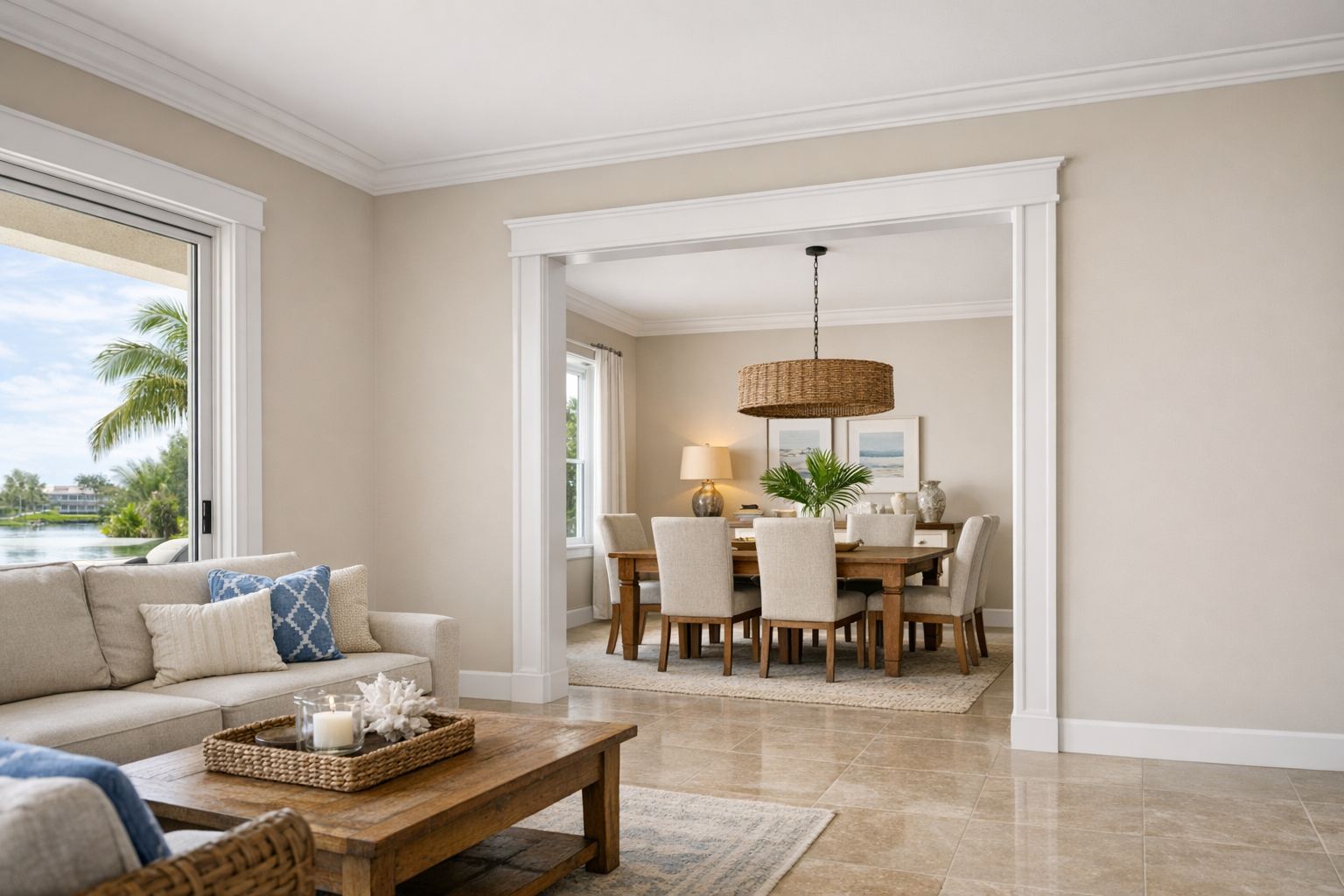

Start with the places where the trim meets in plain view: the baseboard running into a door casing, the casing turning a corner into the next room, or crown moulding stopping at an open-plan transition. Those junctions are where a collected look starts to feel patched together if the mix has no clear logic. Mixing trim styles works best when the pieces relate in detail level, thickness, and visual weight, rather than trying to make every baseboard, casing, crown, and wall detail identical.
Think of the trim as part of the home's visual rhythm. Profile complexity is how plain or detailed a moulding is; a square-edge modern baseboard reads cleaner than a curved colonial casing. Scale is the size and weight of the trim in the room; wider or deeper pieces feel more formal and need enough wall and ceiling height to breathe. Paint continuity helps different profiles feel related, while room hierarchy lets more detailed trim appear in formal spaces without forcing the same treatment everywhere.
For example, a flat 5-inch baseboard can pair nicely with a modest traditional door casing if both are painted the same white and neither one visually overpowers the other. The same baseboard may feel disconnected beside a heavy, layered crown in a low-ceiling room because the mass and detail no longer feel balanced. That is the heart of good interior trim design: coordinate the language, repeat a few cues, and let each room have the right amount of character.
Start by Reading the Trim Language Already in the Home
Before choosing anything new, walk the house like you are reading clues. The point is not to give every piece a perfect style label; it is to understand what the home is already saying through its interior trim design: where the trim is thin or heavy, plain or shaped, quiet or formal.
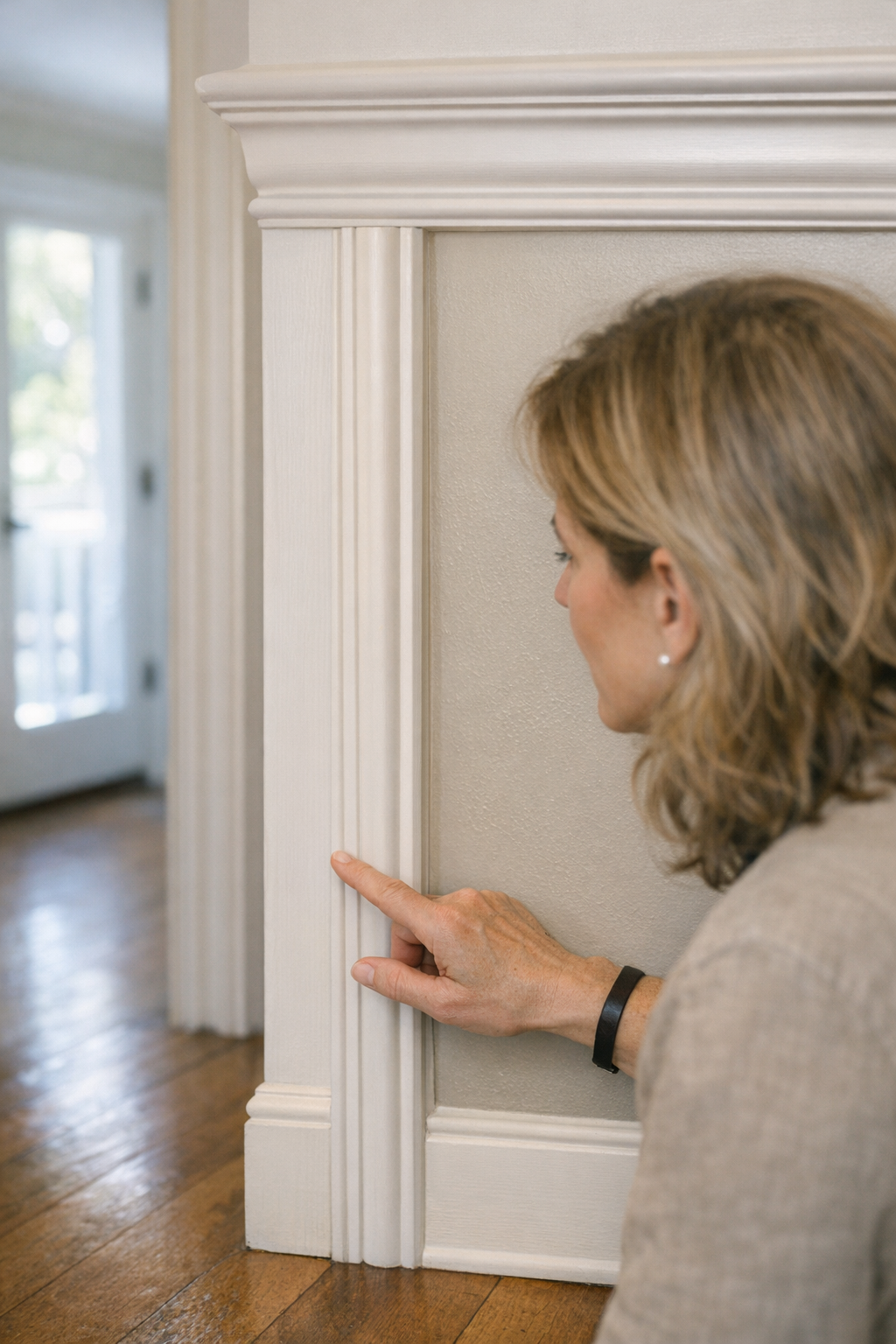
- Start with the everyday pieces: baseboards at the floor, door casing around openings, and window casing around windows. These are the trim elements people notice constantly, so your baseboard and casing styles should be the first clues you compare.
- Then look at the "character" pieces: crown moulding at the ceiling, chair rail at mid-wall height, wainscoting on the lower wall, picture frame moulding used as decorative rectangles, and panel moulding used to create larger wall-panel effects. These details usually change how formal or custom a room feels.
As you look, compare height, thickness, profile depth, shadow lines, and ornament level. Modern interior moulding profiles usually read flatter and cleaner, with square edges, shallow reveals, and fewer curves. Traditional profiles tend to show more movement: beads, curves, ogees, steps, and layered build-ups that cast deeper shadows.
Builder-grade trim often feels light and generic because it is narrow, shallow, and not very detailed. Coastal trim often leans simple but slightly relaxed, with clean boards, bright paint, and enough width to feel finished without becoming ornate. Transitional trim sits between the two: it may use a classic casing shape, for example, but keep the baseboard cleaner and less fussy.
Takeaway: do not start by asking, "Is this modern or traditional?" Start by asking, "How strong is this trim's voice?" If the existing interior moulding profiles are slim, flat, and quiet, new heavy details will need restraint. If the home already has deeper shadows and shaped casing, a completely flat replacement may need another repeated cue to feel connected.
Pick a Dominant Style, Then Let the Other Style Support It
Once you know which pieces speak the loudest, choose one trim language to lead. That does not mean every profile has to match. It means the home needs a main point of view, while the secondary style shows up as a controlled accent instead of a competing theme.
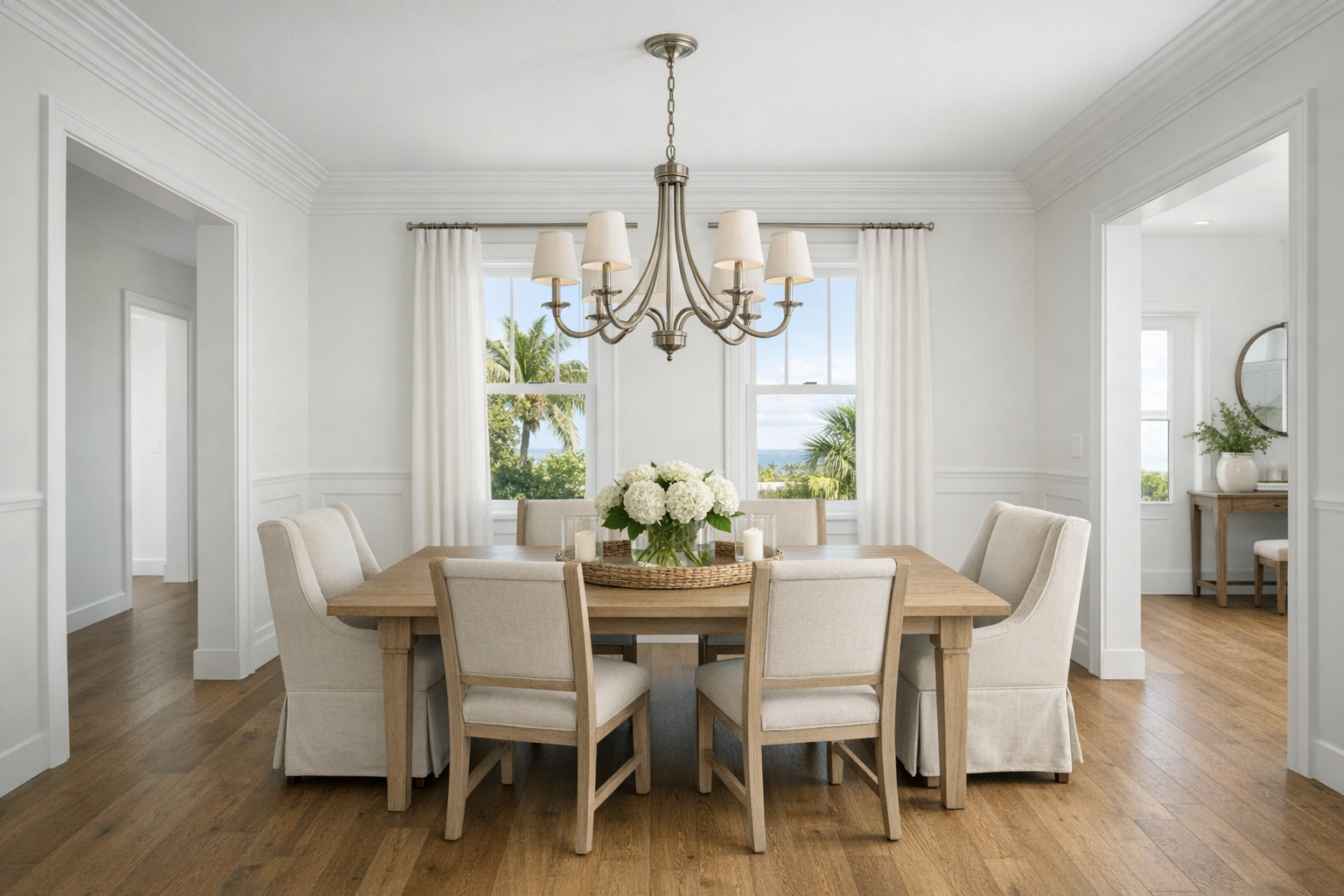
- If the home leans clean and updated, let simple baseboards be the anchor and use classic door casing for warmth. The baseboard keeps the rooms feeling fresh and unfussy, while the casing adds shape around openings without making the whole house feel formal.
- If the main living or dining areas already have traditional crown moulding, let that detail be the special feature and keep nearby baseboards and casing cleaner. Crown draws the eye upward and makes a room feel more finished, so it can carry the traditional note without requiring ornate trim in every hallway and bedroom.
- If you like wall detail but want a lighter look, pair flat baseboards with subtle panel moulding. The baseboard gives the room a modern edge, while the wall rectangles add rhythm and depth in a quieter, more transitional way.
- If the home has shaped, classic casing that you want to keep, simplify the baseboard rather than fighting it. A cleaner baseboard can calm the overall look, as long as its height and thickness do not feel too flimsy next to the casing.
A weak mix usually happens when both styles demand attention in the same sightline. Ultra-thin modern casing beside a heavy, ornate crown can look less like modern traditional trim and more like two remodels meeting at the same doorway. The issue is not that the styles differ; it is that the visual weight, shadow depth, and level of detail are pulling in opposite directions.
A good rule when you mix trim styles is to repeat one anchor element across connected spaces. That anchor might be the same white paint, the same casing thickness, or the same simple baseboard profile. With one repeated cue, individual rooms can have character without feeling like they were designed in isolation.
Balance Profile Weight, Scale, and Ceiling Height
Proportion is where a good trim idea either settles in or starts shouting. When baseboards, casing, crown, and wall moulding are different styles, their trim scale matters as much as their shape. A simple profile can still look substantial, and a traditional profile can still feel calm, as long as the pieces have a compatible sense of height, thickness, and visual weight.
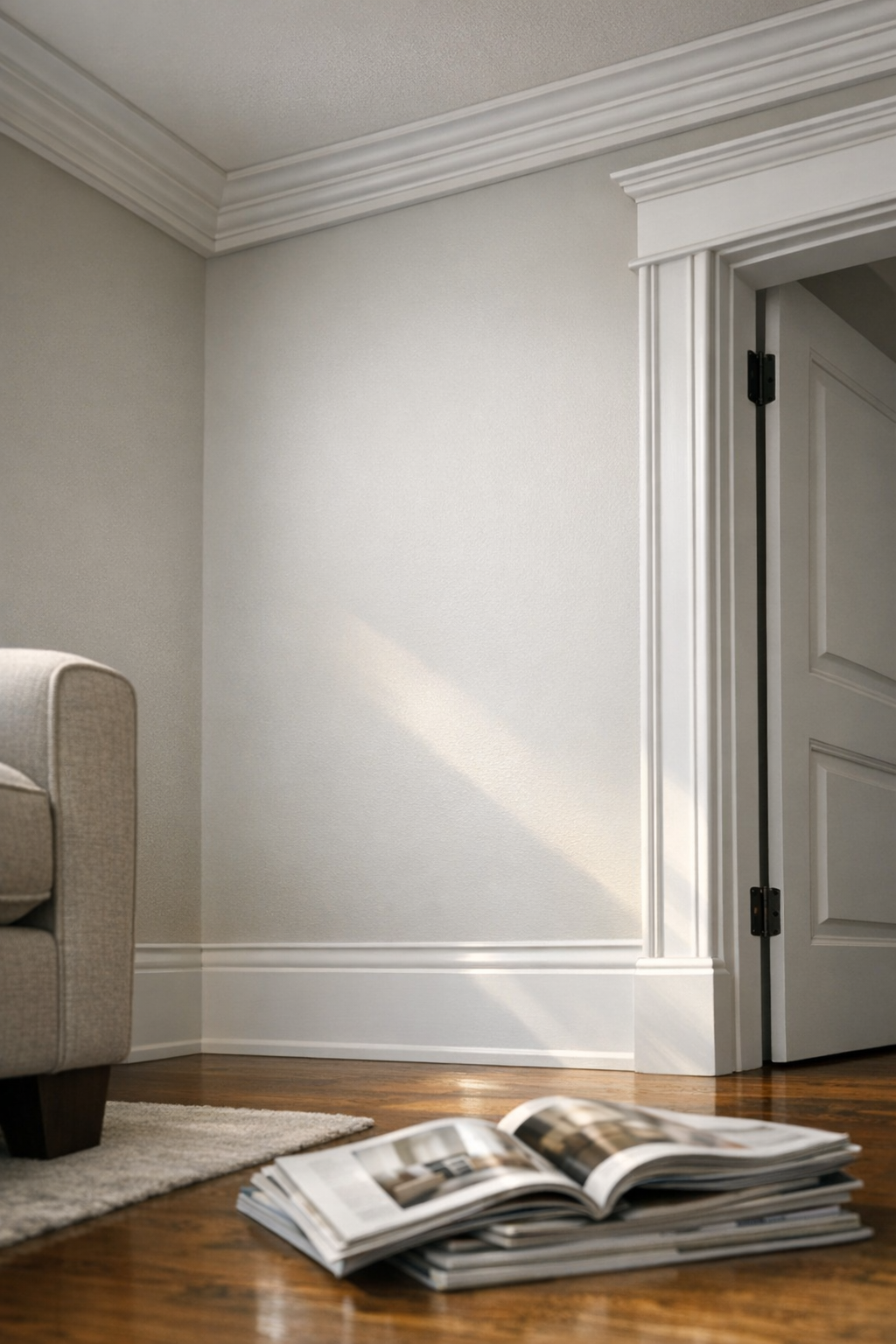
Baseboard height changes how grounded a room feels. Taller baseboards can help a room with higher ceilings or larger walls feel finished, while very short baseboards may disappear beside wider traditional door casing. In a smaller room or a home with lower ceiling height, a cleaner baseboard with moderate height often works better than a chunky, stacked profile that makes the wall feel squeezed.
Casing width works the same way around doors and windows. Narrow casing reads lighter and more modern, while wider casing creates a stronger frame and usually feels more traditional. If the casing is wide and shaped, the nearby baseboard should not look paper-thin by comparison. If the casing is slim and square, a heavily carved baseboard can feel out of balance unless the room has enough size and formality to support it.
Crown moulding is especially sensitive to profile depth because it projects from both the wall and ceiling, creating shadow lines overhead. Tall ceilings can usually handle deeper or layered crown because there is more wall area and air space around it. In lower rooms, a shallow crown or no crown at all may look cleaner than forcing a formal cap onto a room that cannot visually carry it.
Wall moulding should also match the room's scale. Large panel rectangles can look elegant in a dining room or entry, but the same pattern squeezed into a short hallway may feel busy. The takeaway: when mixing trim styles, do not judge each profile by itself. Judge how much space it occupies, how deep its shadows are, and whether it feels too loud, too slight, or just right for the room around it.
Coordinate Baseboards, Casing, and Crown Without Making Them Identical
Think of baseboards, casing, and crown as a set of relatives, not triplets. They should look like they belong at the same table, but they do not need the exact same profile. The key is to coordinate detail level, thickness, and visual weight so one piece does not feel flimsy while another feels overly dressed.
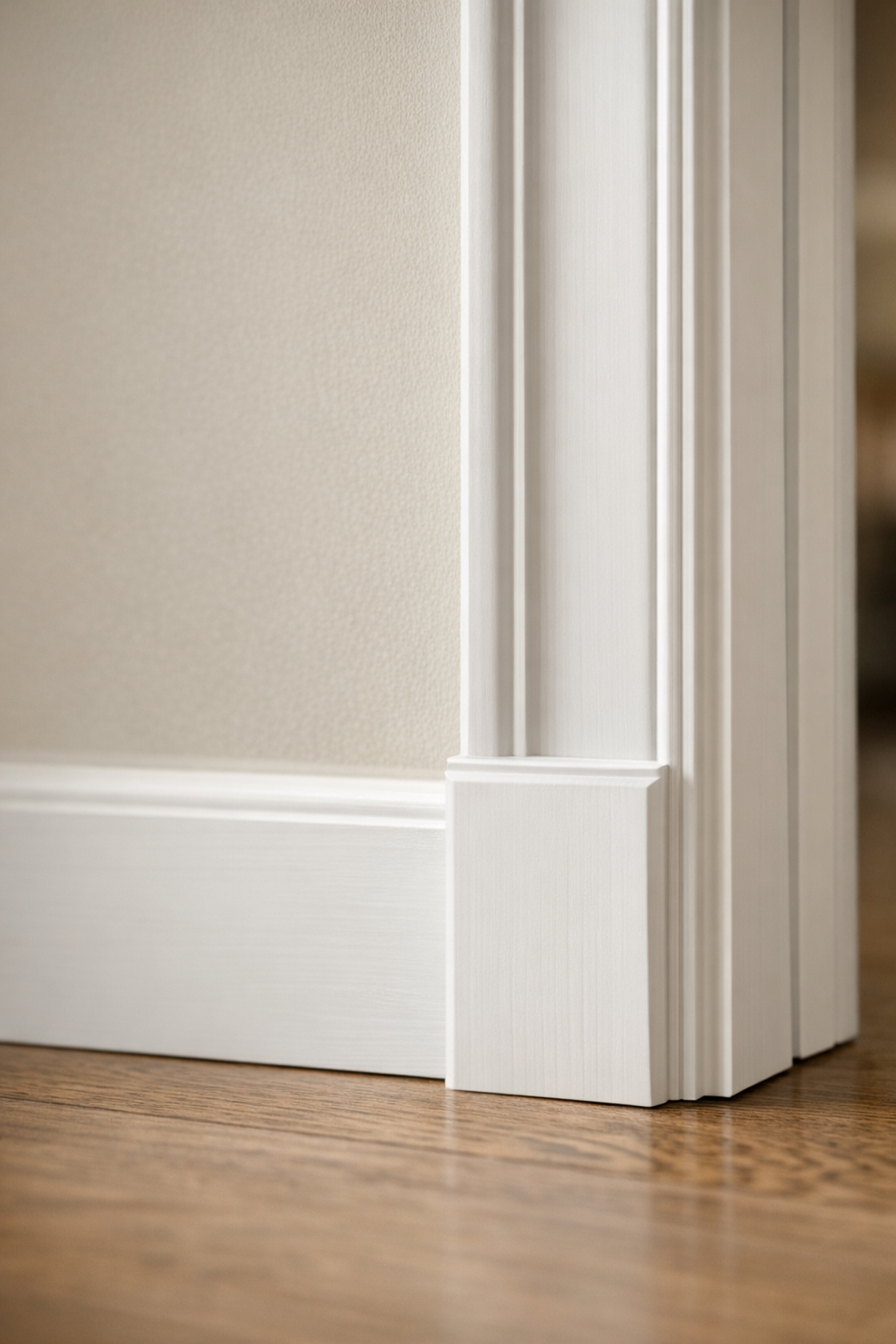
A square, flat baseboard can work with slightly traditional door casing when both pieces are similar in substance. For example, a plain baseboard with a crisp top edge can sit comfortably beside eased-edge or modest colonial casing because the baseboard stays clean while the casing adds just enough softness around openings. That kind of pairing is often stronger than forcing matching modern profiles everywhere.
The reverse can work too: clean modern casing can handle a restrained crown if the crown is shallow, simple, and not packed with layers. This is usually the safest way to use crown moulding with modern trim, because the crown gives the ceiling a finished edge without turning the room formal. A weak version would be very narrow flat casing paired with bulky ornate crown; the eye jumps to the ceiling because the upper trim has far more weight than the openings below.
Traditional casing does not require an equally traditional baseboard. If the door casing has curves or a backband, a simpler baseboard with a small base cap can calm it down while still feeling connected. The practical takeaway for baseboard and casing styles is this: let one element carry the shape, and let the other support it with similar thickness and a cleaner line.
Crown moulding also does not have to run through every room. Use it throughout only when the ceilings, room sizes, and existing trim can carry a consistent overhead line. Use it selectively in entries, dining rooms, living rooms, or primary bedrooms when those rooms are meant to feel more finished than casual spaces. Skip it where ceilings are low, rooms are tight, or several unrelated profiles already meet in the same opening; in those cases, restraint will look more intentional than adding one more detail.
Use Room Hierarchy So Style Changes Feel Planned
A style change is easiest to accept when the room itself explains it. Room hierarchy means deciding which spaces should feel more dressed and which should stay quieter. An entry, dining room, living room, or primary suite can usually carry more traditional casing, crown moulding, or wall panels because those rooms are meant to feel more finished. Secondary bedrooms, hallways, laundry rooms, and casual flex spaces often look better with simpler baseboards and cleaner casing, especially when the ceiling height or room size is modest.
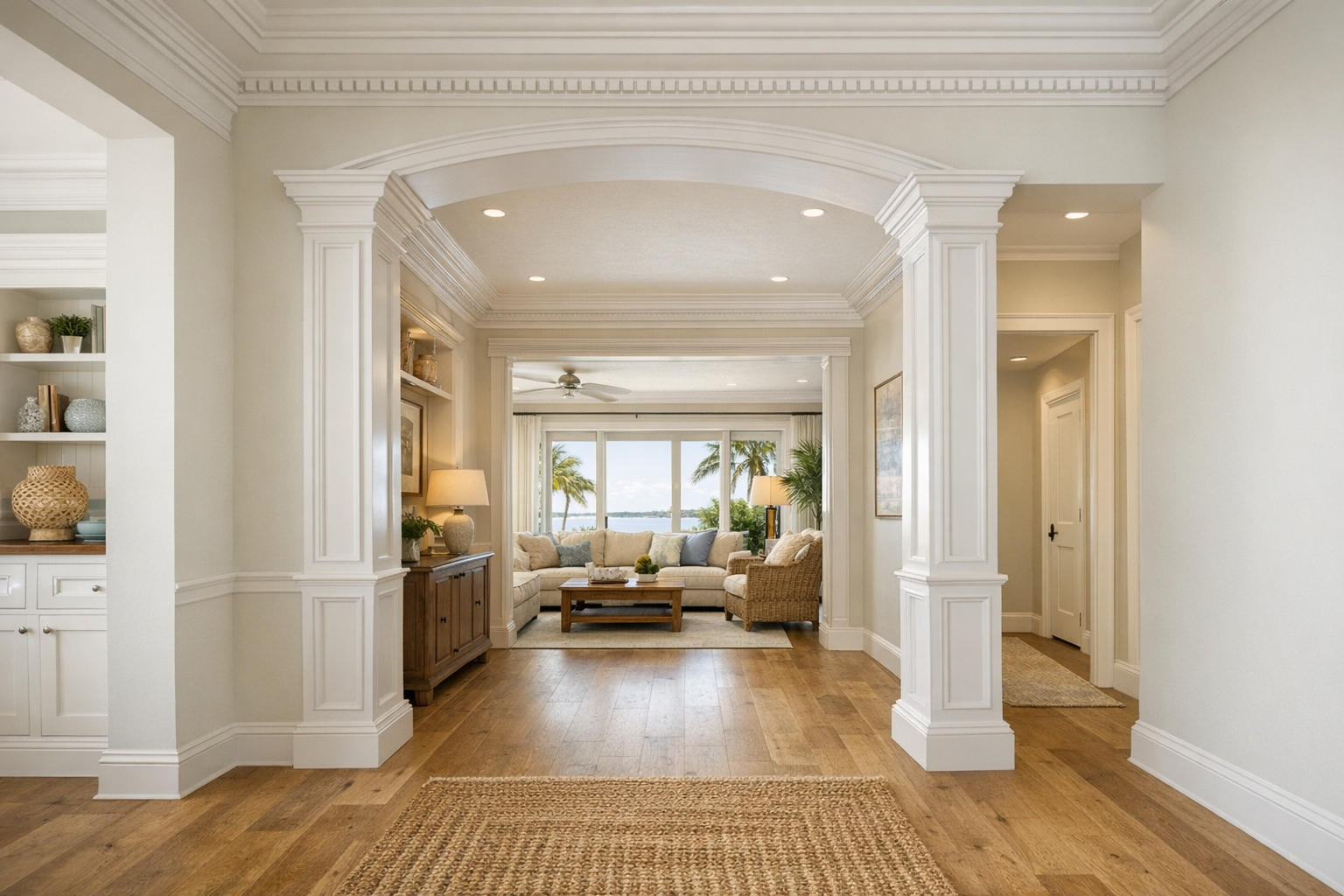
This is one of the most useful ways to combine different trim styles without making the house feel random. For example, a dining room might have crown moulding and picture-frame wall moulding, while the nearby bedrooms use the same baseboard height and a simpler door casing. The architectural style shift feels planned because the formal room gets the extra detail, while the supporting rooms keep the same basic proportions.
The risk is highest where two rooms are visible at the same time. In an open floor plan, a heavily layered crown in one area and a flat, ultra-modern ceiling edge in the next can look abrupt if there is no transition. Cased openings, short hallways, ceiling beams, or a natural room break can help separate one trim treatment from another. Without that pause, the two profiles compete in the same view.
For transitional interiors in Southwest Florida homes, this matters because remodel phases often leave newer finishes beside older layouts. If the kitchen was updated first and the living room still has more traditional trim, use the connection point as the checkpoint: stand where both rooms are visible and compare casing width, baseboard height, crown depth, and paint continuity. If the shared sightline feels calm, the room-by-room variation is working. If your eye keeps stopping at the doorway, the transition needs simplification or one repeated detail to tie it together.
Repeat a Few Unifying Details Across the Home
Small repeated details can do a lot of quiet work. If one room has flat modern baseboards and the next has more traditional casing, the connection feels smoother when the trim shares a few constants: the same white or soft off-white, a similar paint finish, comparable casing thickness, or a repeated baseboard height. These cues tell the eye that the profiles are different on purpose, not because each room was chosen in isolation.
Reveal width is one of the easiest details to overlook. A reveal is the narrow setback or exposed edge where casing meets a door jamb or where trim steps back from another surface; it creates small shadow lines that make the trim look crisp. If one doorway has a tight, clean reveal and another has a much wider, uneven-looking reveal, the profiles may feel unrelated even if they are painted the same color. Keeping those shadow lines consistent helps modern and traditional pieces feel like part of the same finish plan.
Decorative blocks can also act as bridges, but only when used with restraint. Plinth blocks are thicker blocks at the bottom of door casing, and rosettes are square or round blocks at the upper corners. They lean traditional, but they can work with simpler trim when their size matches the casing and they repeat in the right places, such as a main hallway or formal entry. If they appear randomly on one door and nowhere else, they start to look like leftover parts instead of a design cue.
Paint continuity helps when mixing trim styles, but it is not magic. The same color cannot make a thin, flat baseboard feel balanced beside a deep, multi-layer crown in a room that cannot visually carry that much overhead detail. Scale and profile complexity still have to make sense together, especially where multiple trim elements meet in one view.
Use wall moulding ideas as intentional accents, not as random decoration. Picture frame moulding creates framed rectangles on the wall, panel moulding adds raised or shaped borders, and wainscoting covers the lower portion of the wall with a more architectural treatment. Any of these can blend modern furniture with classic trim when the spacing lines up around doors, windows, and corners. The strongest signal is consistency: panels that align, inside corners that resolve the same way, and details that repeat just enough to feel connected.
Plan Home Trim Upgrades in the Right Order
Treat home trim upgrades like a sequence, not a shopping trip. Start with the places that make the whole house feel inconsistent: door and window casing in main sightlines, baseboards that change abruptly between connected rooms, and transitions where a renovated space meets an older hallway or living area. Casing usually deserves early attention because it frames every doorway you walk through; baseboards come next because they create the continuous line around the room.
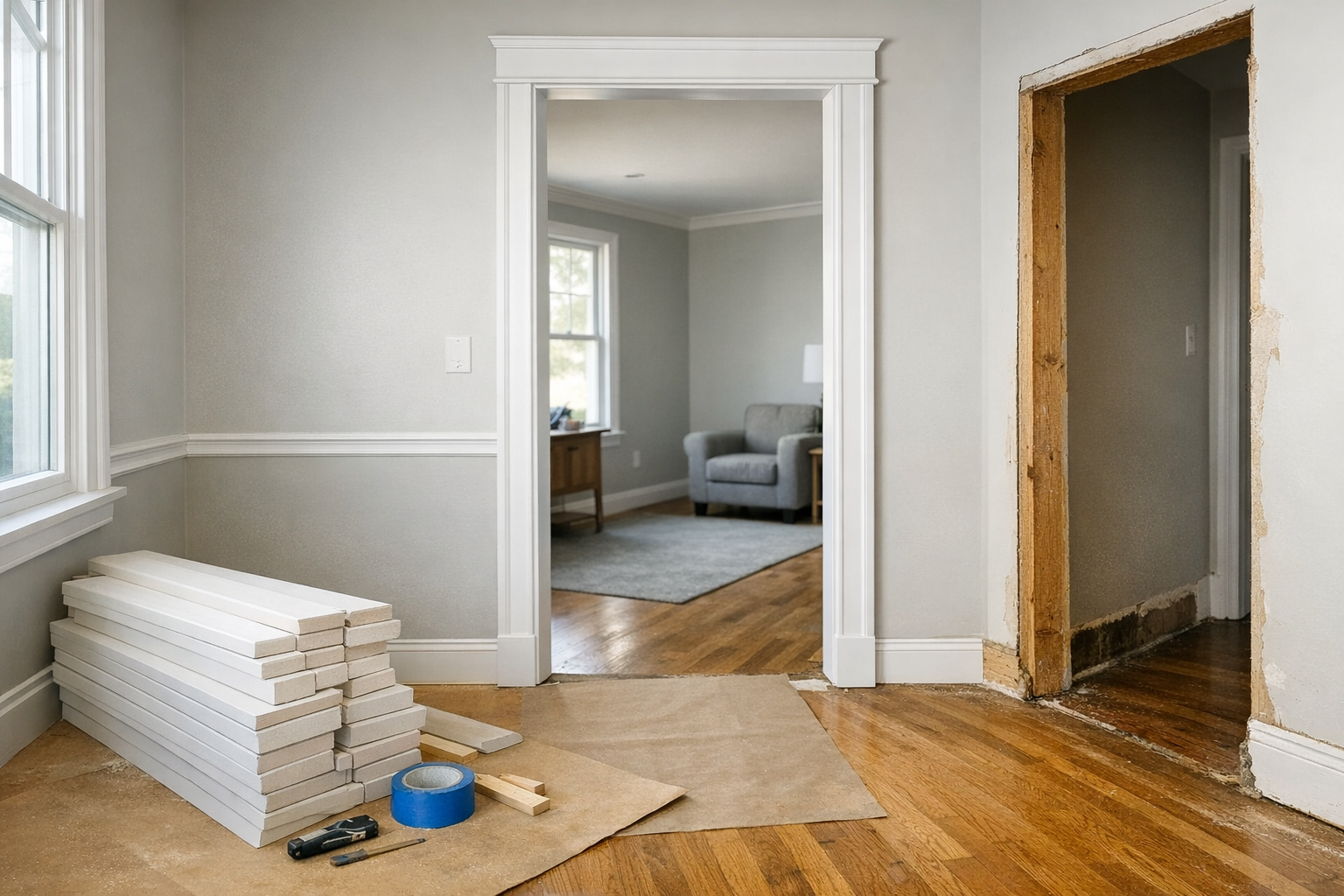
Custom moulding work can be useful when standard profiles almost work but not quite. It may help match an older casing profile, simplify a traditional shape so it sits better beside modern baseboards, or create a bridge profile with enough detail for classic rooms and enough restraint for updated spaces. The goal is not to make every piece fancy; it is to solve the spots where thickness, profile depth, or visual weight would otherwise clash.
Be cautious about jumping straight to crown moulding or wall panels before the basics are settled. Decorative additions look best when the room has the ceiling height, scale, and existing trim strength to support them. A feature wall in a dining room may be a smart upgrade if it relates to the casing and baseboards already there; the same treatment in a narrow hall can feel crowded if the surrounding trim is thin and quiet.
A practical order is: fix the most visible mismatches first, strengthen main sightlines second, replace damaged or undersized trim third, and save purely decorative details for last. That approach keeps mixing trim styles manageable over time and protects the budget from a whole-house replacement that may not be necessary. Let the home's architecture, room scale, and strongest existing profiles decide where the next dollar should go.
Make Mixed Trim Feel Intentional, Not Accidental
The final test is whether a guest can sense a pattern, even if they cannot name the profiles. A mixed trim plan feels intentional when the home has a lead style, the secondary style plays a supporting role, and the same few cues show up again: paint color, similar trim thickness, repeated casing proportions, or a consistent baseboard line.
Use the existing trim as the starting point, not the obstacle. If the home already has classic door casing in the main living areas, simple modern baseboards can still work when they have enough height and substance to stand beside it. If a renovated bedroom has clean flat casing, a modest crown can feel connected when it stays shallow and restrained instead of suddenly becoming the most ornate feature in the house.
The weak signal is random contrast: thin casing beside oversized crown, tiny baseboards under detailed wall panels, or style changes that happen in the middle of an open sightline for no clear reason. The stronger signal is controlled contrast, where room hierarchy, ceiling height, profile depth, and visual weight explain why one space is quieter and another is more dressed.
That is the practical takeaway for mixing trim styles: make each choice look connected to the next one. Home trim upgrades do not have to happen all at once, and they often look better when handled in phases. Start with the pieces that affect the most rooms, solve awkward transitions as you go, and save custom moulding work for the spots where a bridge profile would make the whole mix feel deliberate.