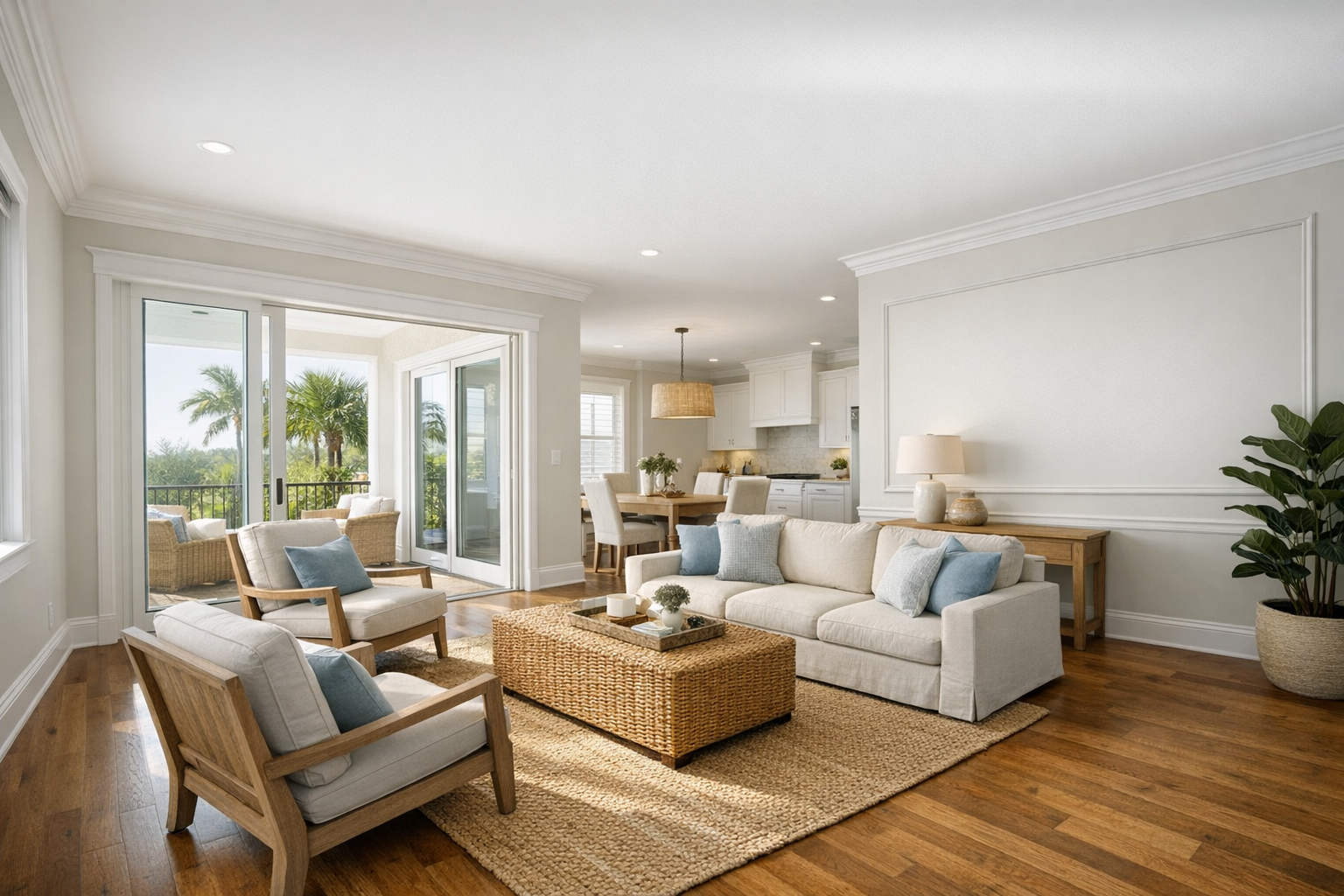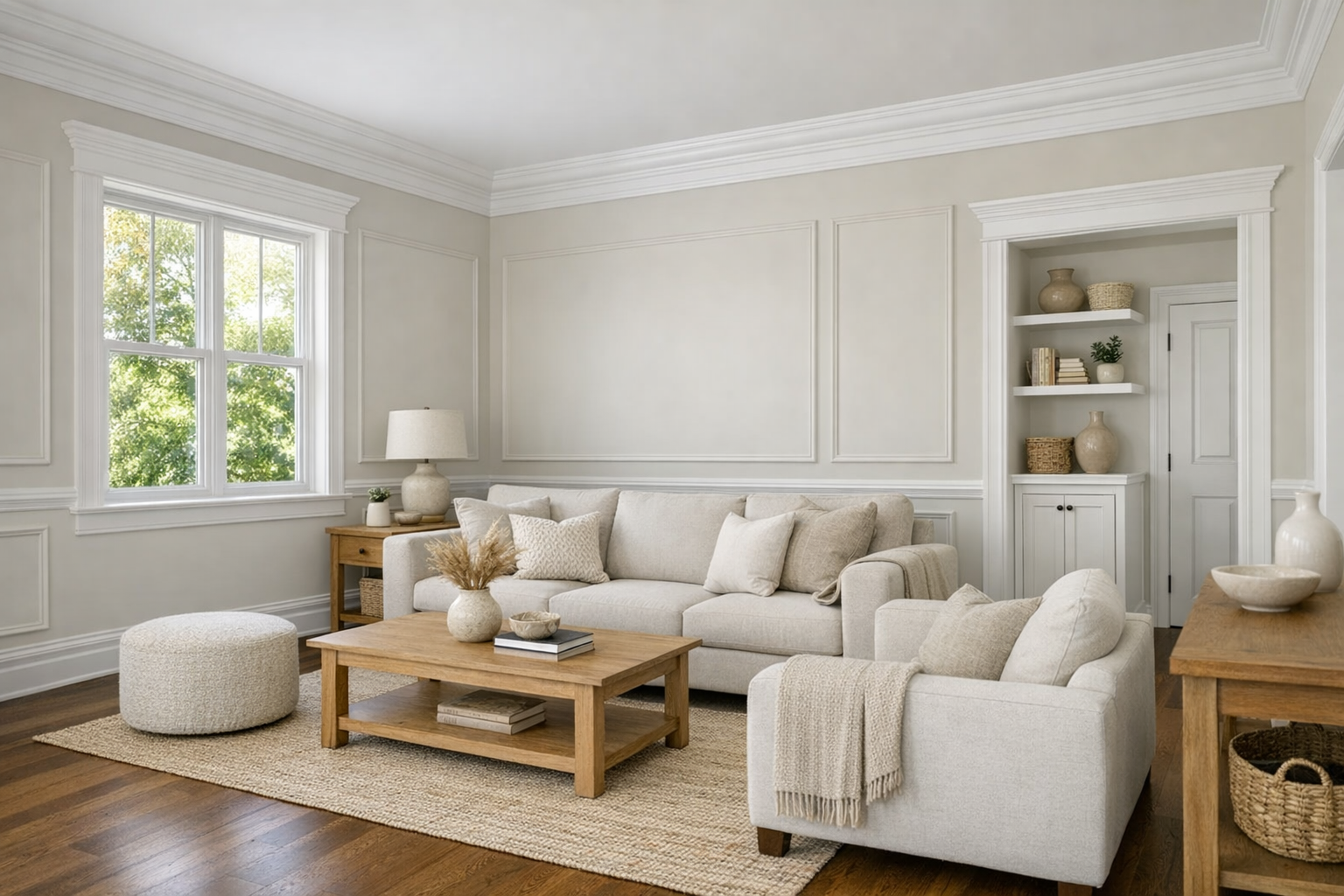
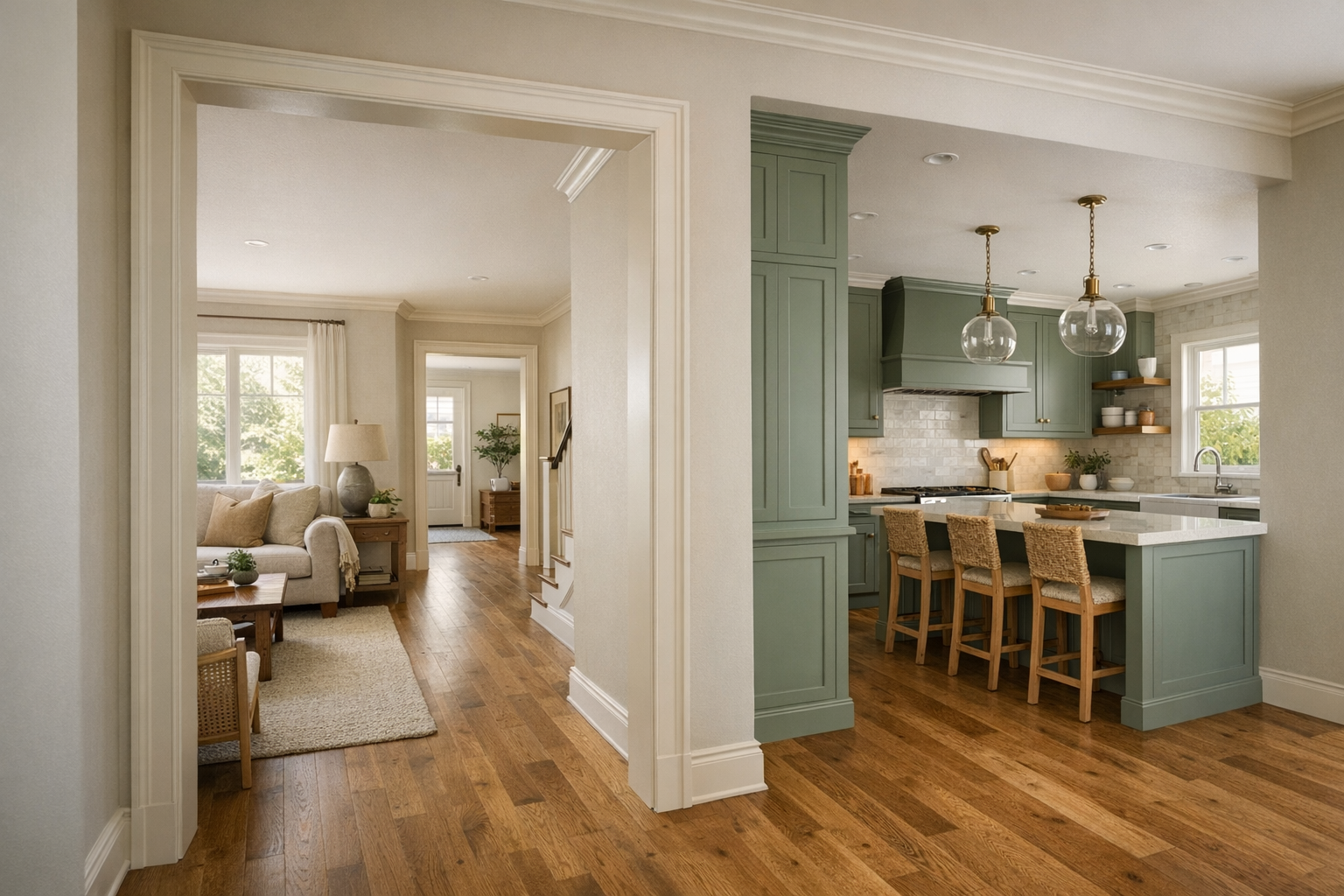

Trim does not have to obey one house-wide rule. It can match the walls, relate to the cabinets, blend into the ceiling, or stand apart as its own accent color, as long as the choice feels intentional with the room's architecture, finishes, and mood.
Think of interior trim colors as a design tool, not just a default paint decision. Wall-matched painted trim creates fewer visual breaks, which can make a room feel smoother, calmer, or more tailored. White or off-white trim gives edges a clearer outline and often makes doors, baseboards, and casing feel more defined. Cabinet-coordinated trim can help a kitchen, bath, laundry room, or built-in area feel more connected, even when the colors are not exact matches.
Ceiling-related trim decisions matter most with crown molding: matching crown to the ceiling can soften the transition overhead, while a separate trim color makes the molding more noticeable. Contrast trim works differently again; it turns casing, doors, or millwork into a feature rather than a background detail. When choosing interior trim color, the strongest clues are contrast level, undertones, existing cabinets and flooring, natural light, architectural style, and how much attention you want the trim to draw.
Start With the Room: What Should the Trim Do Visually?
Before you compare paint chips, decide what job the trim should do in that specific room. If the walls, floor, and furniture already have a lot going on, the trim may need to quiet the room by blending in. If the room has handsome casing, tall baseboards, paneled doors, or built-ins, the trim may deserve more definition so those details read as architecture instead of background.
Use the fixed finishes as your strongest clues: flooring, cabinet color, stone, tile, and any surfaces you are not planning to replace. A warm oak floor, creamy stone counter, and beige tile usually point toward softer whites or warm neutrals. Cooler gray tile, black hardware, or crisp painted cabinets may support cleaner whites or stronger contrast. The takeaway is simple: trim colors for interiors should relate to what is staying in the room, not just what looks good on a small swatch.
Next, look at scale and light. In a small room with several doors and windows, high contrast can create many visual outlines; a closer wall-and-trim relationship can feel calmer. In a bright room with simple walls, more contrast can add shape. Ceiling height matters too: crown molding can either soften the upper edge or make it more pronounced, depending on whether it blends with the ceiling, walls, or trim package.
Undertones and sheen are where many near-misses happen. Two "white" paints can look mismatched if one leans creamy and the other feels blue-white, especially beside cabinets or tile. Sheen changes the read as well: glossier trim reflects more light than a flatter wall, so the same color can appear slightly different across surfaces. When gathering interior trim color ideas, compare samples beside the actual wall color, cabinet finish, flooring, and daylight in the room.
An inspiration photo is a useful starting point, but it is a weak signal by itself. The photo may have different window exposure, edited lighting, smoother walls, or trim with a different sheen. A better test is to ask: should the trim disappear, frame the room, connect to cabinetry, support the ceiling line, or become a feature? That answer will make the next color strategy much easier to choose.
Option 1: White or Off-White Trim for Classic Definition
White or off-white trim is the classic "frame the room" choice. It makes baseboards, casing, doors, and crown molding read as clean edges, which is why it works so well in traditional rooms, coastal interiors, and spaces with medium or dark wall colors. If the room has navy, charcoal, deep green, or saturated blue walls, crisp white trim can keep the color from feeling heavy while giving the architecture a sharp outline.
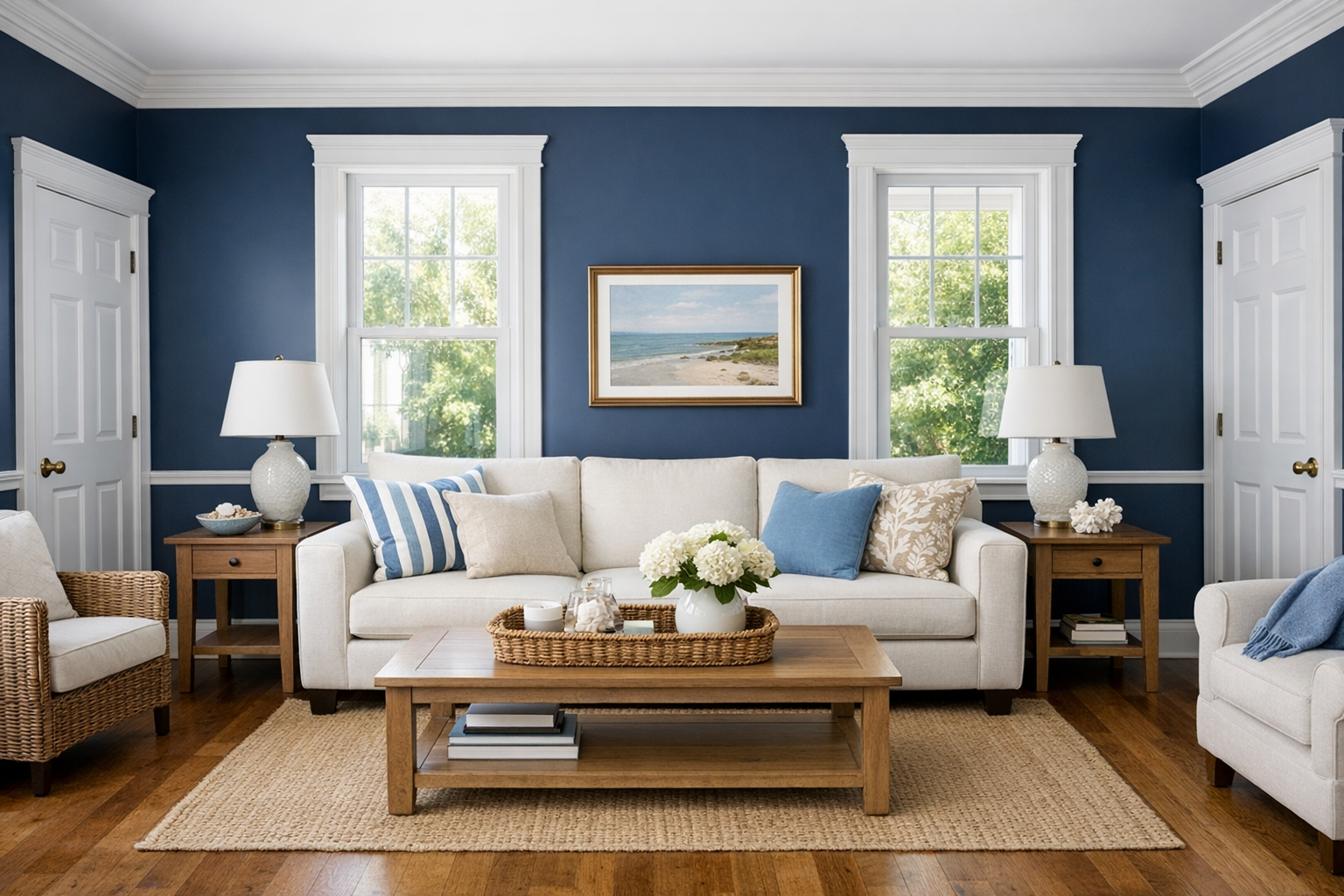
The important distinction is that "white" is not one color. A crisp white feels cleaner and more graphic, especially beside cooler wall colors or black accents. A warm white has a creamier undertone and usually feels softer beside greige walls, warm wood floors, woven textures, or relaxed coastal furnishings. Off-white sits between white and neutral; it still gives definition, but with less glare and less contrast than a bright white.
For practical white trim ideas, think in pairings rather than paint names. Soft greige walls with warm white trim can feel calm and finished without looking stark. Navy walls with crisp white trim can feel tailored and high-contrast. A sandy beige wall with a gentle off-white may suit a softer coastal palette better than a blue-white trim that jumps forward too much.
White trim is still popular because it is flexible, familiar, and good at creating architectural definition, but it is not automatically the safest answer. It can fail when the white is too stark next to creamy cabinets, travertine floors, warm beige walls, or stone with gold and tan undertones. In those rooms, the trim may look accidentally cold instead of intentionally fresh. The takeaway: choose white or off-white trim when you want contrast and clarity, but let the room's fixed finishes decide whether that white should be crisp, warm, or softened.
Option 2: Matching Trim to the Walls for a Seamless Look
A wall-matched trim color takes the "frame" away and lets the room read as one continuous surface. Baseboards, door casing, and window trim are still there, but they stop creating repeated outlines around every edge. That is why this approach often feels quieter, more modern, and more tailored than a high-contrast trim scheme.
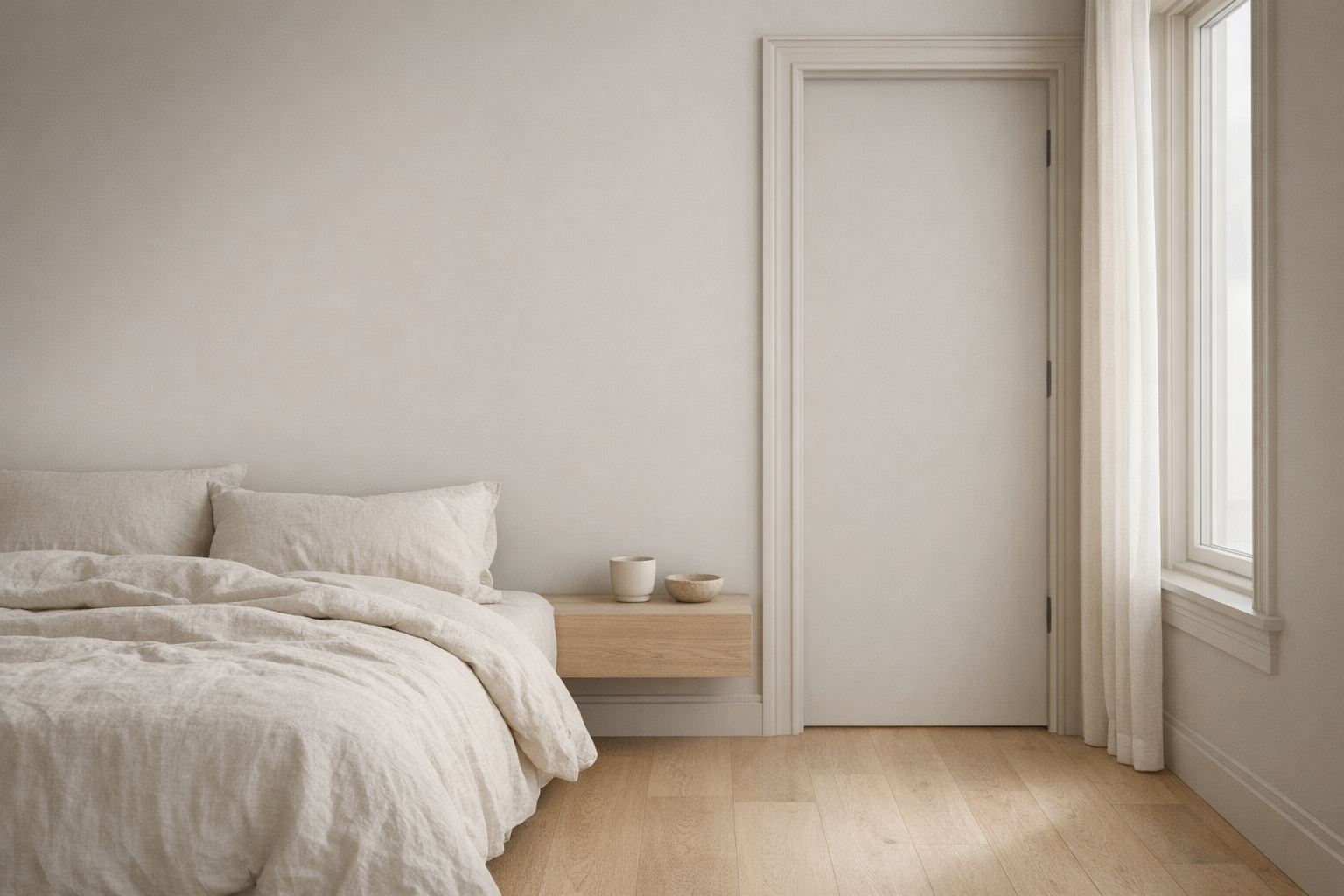
If you have been wondering, "should trim match walls in this room?" look at how busy the room already feels. Same-color trim works especially well in low-contrast interiors, small bedrooms, narrow hallways, compact powder rooms, and open floor plans where too many trim lines can visually chop up the space. By reducing those breaks, the walls can feel taller and the room can feel less interrupted.
The trick is that "same color" does not have to mean "same flatness." One of the most useful wall and trim color combinations is a shared color with a subtle sheen change: for example, warm taupe walls in a matte or eggshell finish with warm taupe trim in a satin finish or semi-gloss. The color stays seamless, while the trim still catches a little light and feels finished rather than forgotten.
This is a strong choice when the trim itself is simple: square baseboards, plain door casing, clean slab doors, or a minimal new-build profile. In that setting, matching the walls can make interior trim colors feel intentional without asking the trim to become the star of the room.
Where it can fall flat is in rooms with beautiful millwork that deserves attention. If you have layered crown, paneled walls, wide casing, carved details, or historic molding, painting everything the wall color may hide the very architecture that gives the room character. In those rooms, a slight contrast or a carefully chosen off-white may serve the trim better than making it disappear.
Option 3: Coordinating Trim With Cabinets and Built-Ins
Cabinetry is often the strongest fixed finish in a kitchen, bath, mudroom, laundry room, or living room with built-ins, so it can be a smart anchor for trim. The question is not only "should trim match cabinets?" but whether the trim should make the cabinetry feel more integrated with the architecture. When casing, crown, toe-kick trim, or adjacent millwork touches the cabinetry, a related trim color can make those pieces feel planned instead of pieced together.
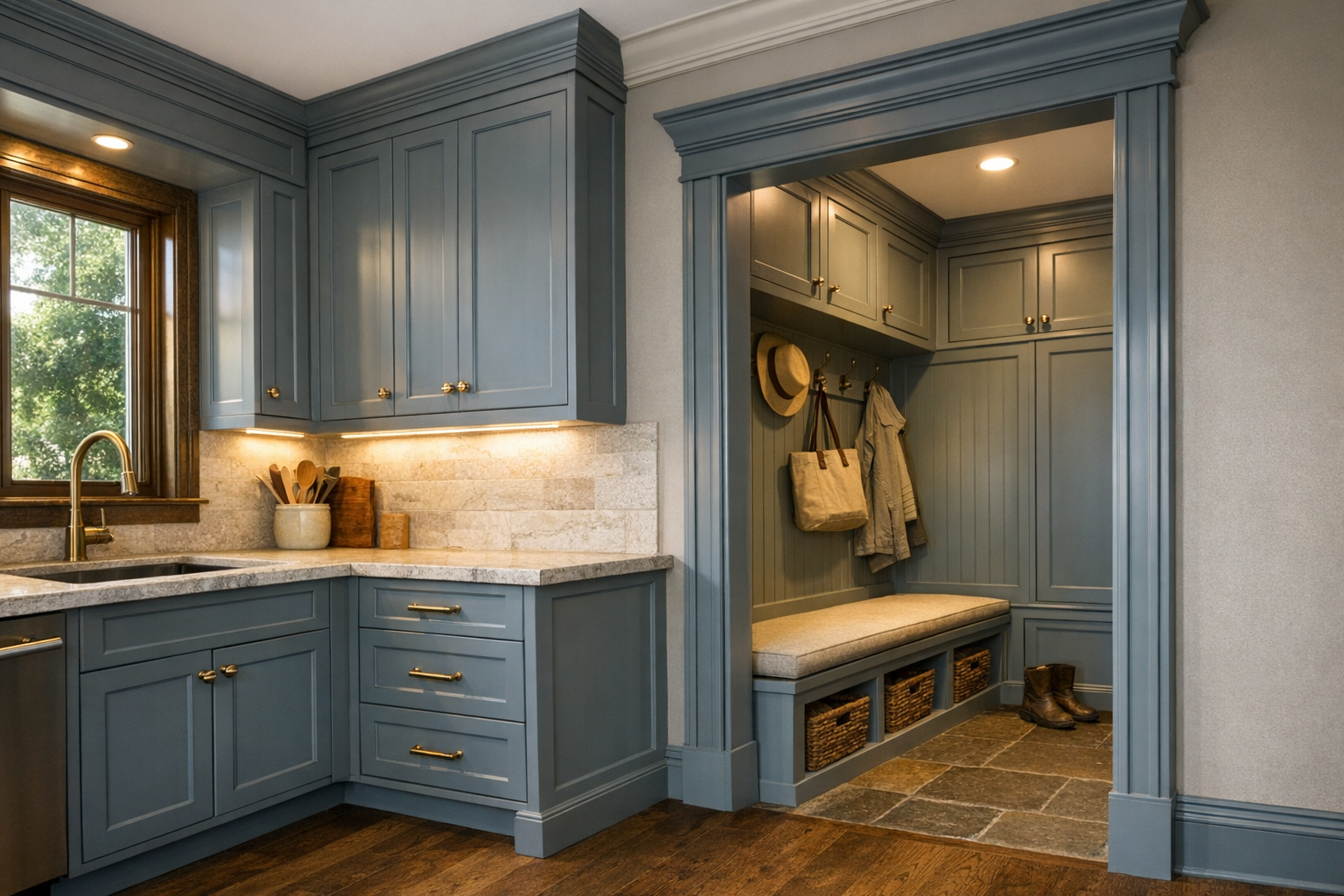
An exact match means the trim and cabinets use the same color, or at least appear identical once installed. Coordination is looser: the trim shares the cabinet's undertone, depth, and overall warmth or coolness without pretending to be the same finish. For example, creamy white cabinets usually look better with warm off-white trim than with a stark blue-white trim, because the undertones belong to the same family even if the colors are not duplicates.
Exact cabinet and trim color matching works best when the cabinets are meant to read like built-in architecture: a wall of bookcases in a living room, a mudroom bench with surrounding casing, a vanity framed by paneled walls, or kitchen cabinets that meet crown molding. In those cases, carrying the cabinet color onto nearby trim can make the whole elevation feel continuous and custom.
It can go wrong when the cabinet finish is close but not close enough. A factory-painted cabinet may have a smoother surface, different sheen, or slightly different undertone than site-painted trim, so a "match" can look like a miss once daylight, under-cabinet lighting, or bathroom vanity lights hit it. Wood-stained cabinets are even trickier; matching painted trim to a stain is rarely the goal, but the trim should still respect the stain's warmth, depth, and surrounding finishes.
The practical takeaway: match when the trim physically connects to the cabinetry and you want one built-in statement; coordinate when the cabinets are nearby but separate; contrast only when you want the trim to stand apart. Before committing, compare samples vertically in the room, not just flat on a table, because finish, sheen, and light can change how close the colors appear.
Option 4: Matching Crown Molding to the Ceiling or the Walls
At the ceiling line, the choice is usually between three strategies: match the crown molding to the ceiling, match it to the walls, or match it to the rest of the trim. Each one changes what your eye notices first. Ceiling-matched crown recedes upward, wall-matched crown blends into the room color, and trim-matched crown creates a crisp architectural outline.
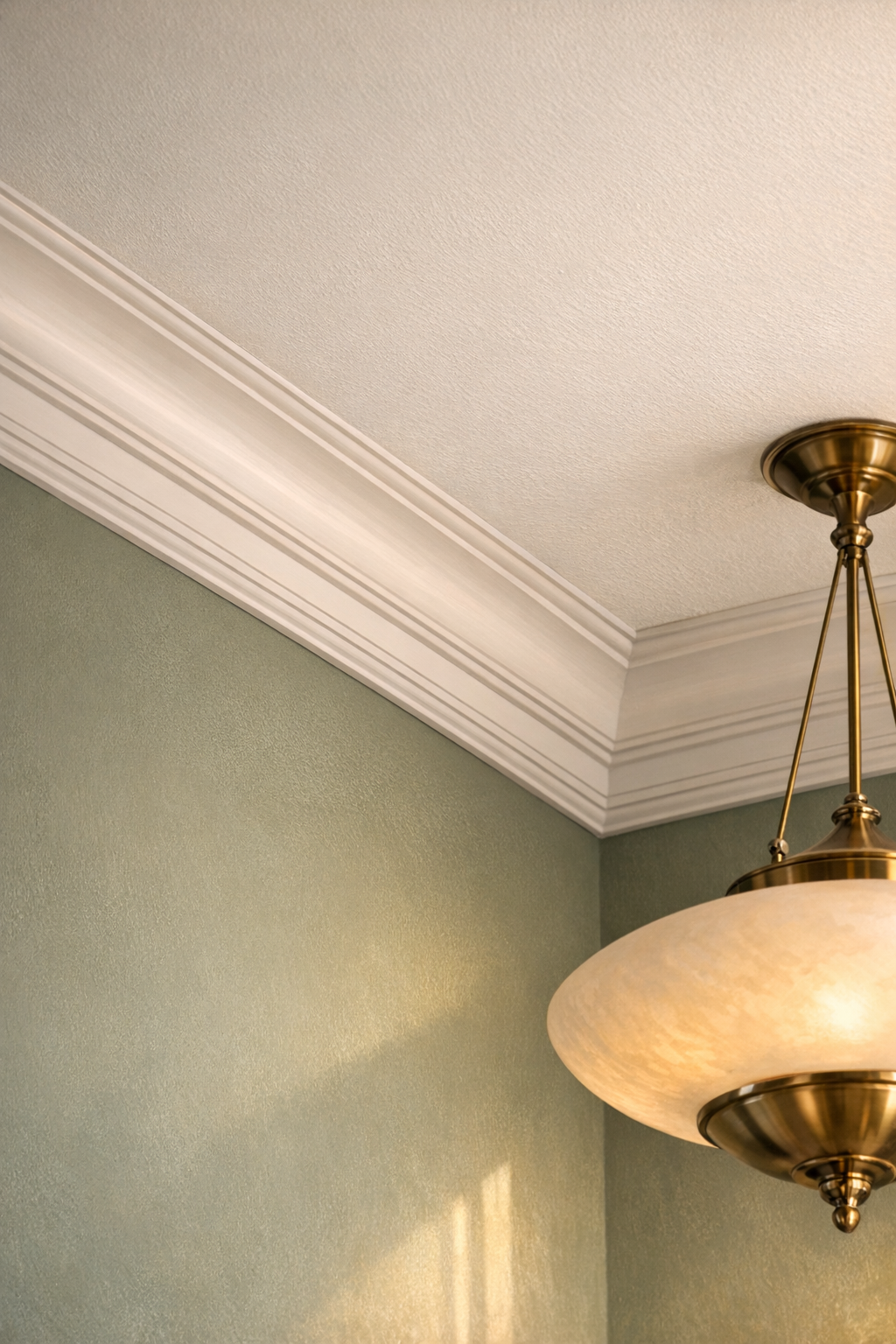
If you are wondering, "should trim match ceiling?" the answer is often yes when the crown is modest, the ceiling is low, or you want the wall-to-ceiling transition to feel smoother. Painting crown molding the ceiling color can make the ceiling plane feel a little higher and keep a small profile from looking like a busy stripe around the room.
Matching the crown to the walls works best when the room is intentionally color-drenched or when the wall color is dramatic enough that a white band at the top would interrupt the mood. A deep green study, a plaster-toned dining room, or a moody blue bedroom can feel more enveloping when the crown continues the wall color instead of outlining the ceiling.
Matching crown molding to the rest of the trim is the classic definition route. If your baseboards, doors, and window casing are a warm white or soft neutral, carrying that color onto the crown makes the trim package feel connected from floor to ceiling. Just do not assume all whites will cooperate: ceiling whites can have cool, warm, or gray undertones, and a cool ceiling white beside creamy trim can make one of them look accidental.
Option 5: Contrasting Trim as a Deliberate Design Feature
Contrast is the boldest trim move because it asks the eye to notice every edge. Instead of letting casing and baseboards recede, contrasting trim outlines doors, windows, openings, and sometimes the shape of the room itself. Darker trim can make a doorway feel more important, give plain walls more structure, and turn simple millwork into a design feature rather than a background detail.
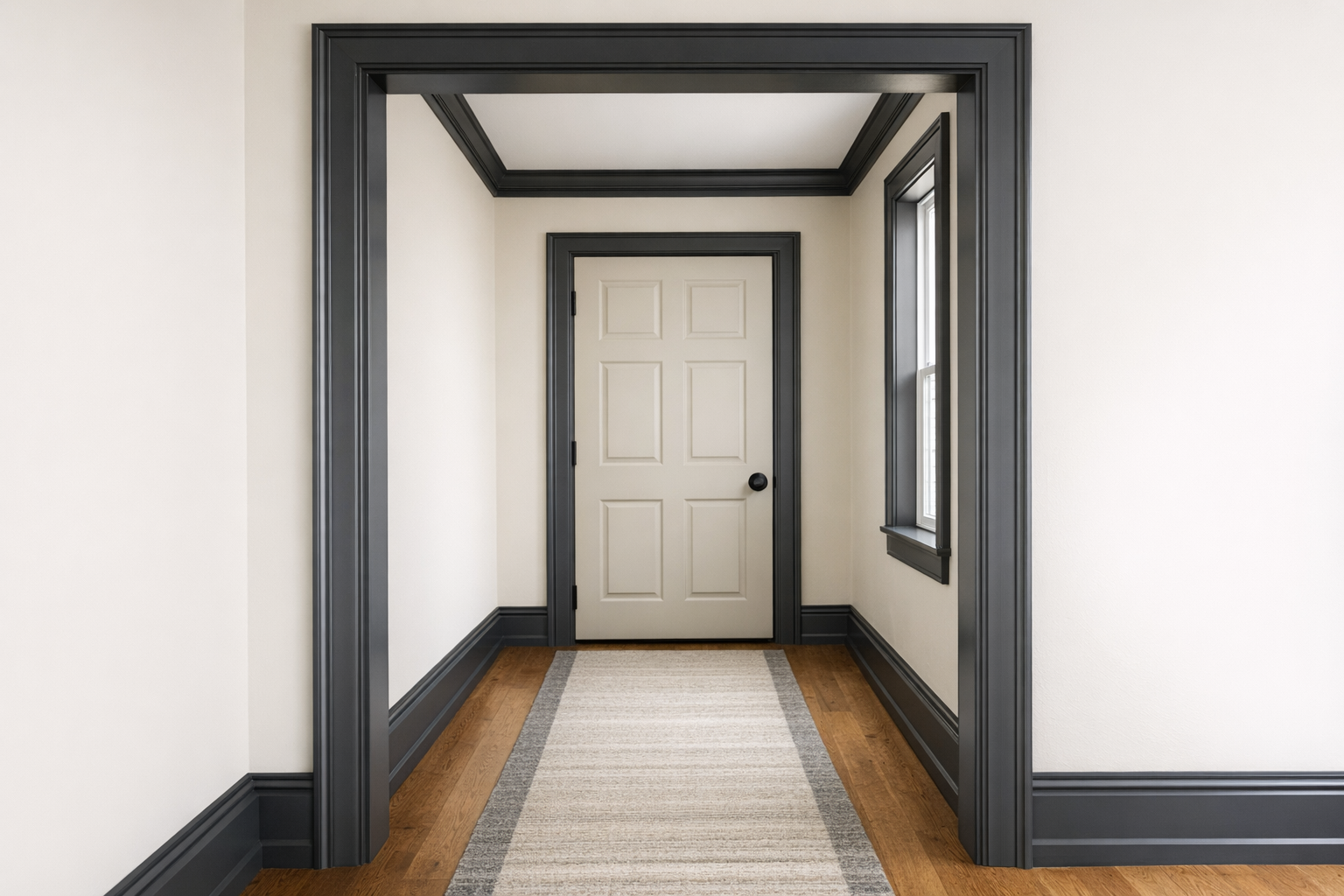
The contrast does not have to be harsh. Creamy walls with taupe trim, warm white walls with greige casing, or pale plaster-toned walls with mushroom baseboards can create a softer, layered look. Black or charcoal doors and casing feel sharper and more graphic, especially against clean white or very pale walls. Muted greens and blues work well when the room leans cottage, historic, coastal, or collected, because the painted trim feels like part of the room's character instead of a random accent.
This approach works best when the room gives the trim something worth emphasizing: tall windows, handsome door casing, paneled doors, strong baseboards, or charming older millwork. It also helps when the wall color is simple and the room has enough natural light to keep the darker edges from feeling heavy. If a room feels flat or under-designed, contrasting trim can add character without adding wallpaper, paneling, or another major finish.
The weak version is accidental contrast: one white on the walls, a different white on the trim, and undertones that fight each other. That can look like a missed match rather than a design choice. A stronger signal is repetition. If you choose charcoal trim, echo that depth in hardware, lighting, furniture legs, or a framed mirror. If you choose green painted trim, let that color relate to fabric, art, tile, or an exterior view. Contrast feels intentional when it appears in a small rhythm, not as a one-off surprise.
Should All the Trim in the House Be the Same Color?
A single trim color is often the easiest way to keep hallways, open living areas, and resale-minded updates feeling orderly. When the same white, off-white, or warm neutral runs through the main circulation spaces, the eye is not stopping at every doorway to decode a new decision. That consistency is especially helpful in open plans, homes with many connected rooms, or projects where the interior trim colors need to support several wall colors without becoming the main feature.
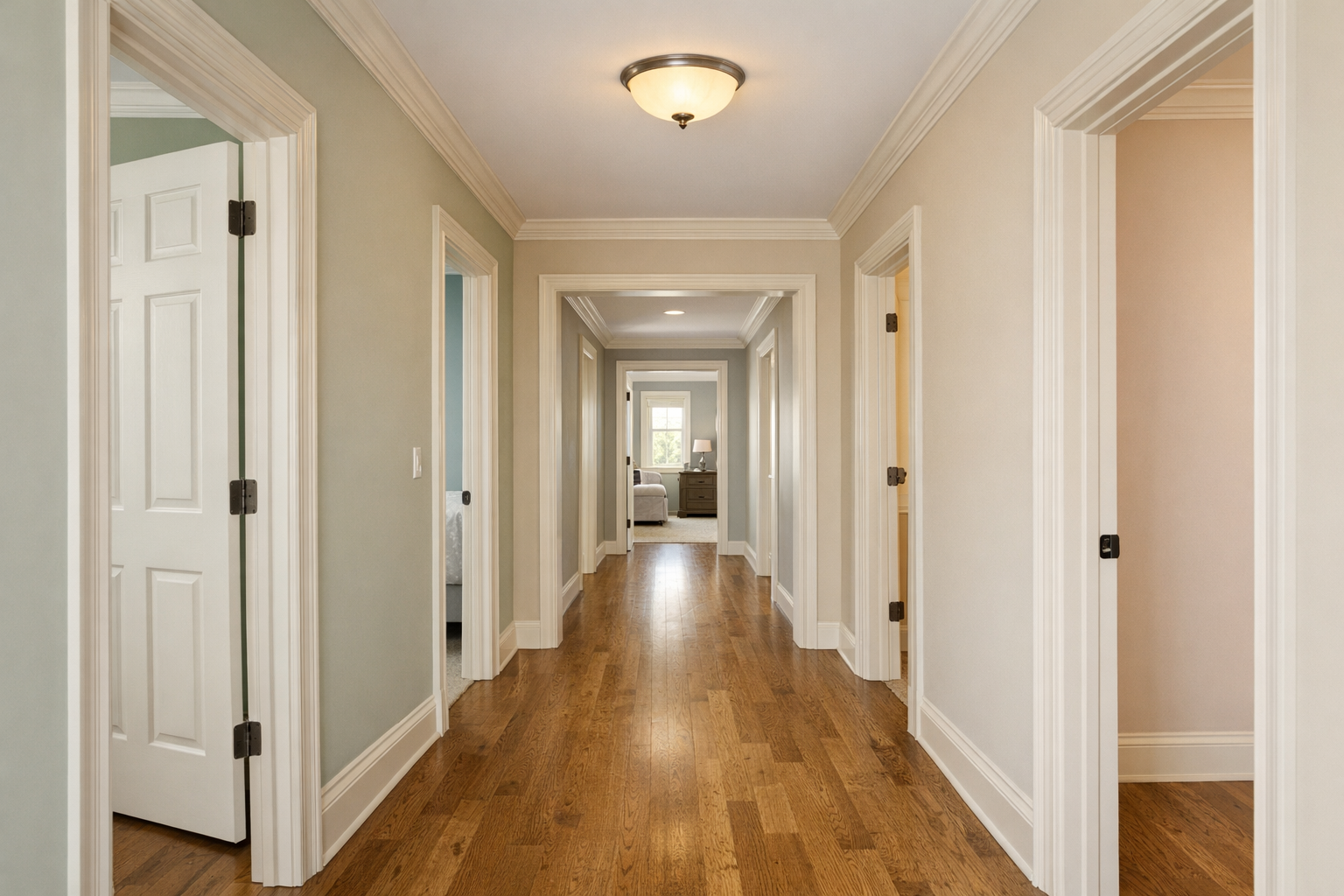
Variation makes sense when a room has a stronger reason to break the pattern. A kitchen may use cabinet-coordinated casing where the trim meets full-height cabinetry. A study can handle deeper trim if the goal is a moody, tailored room. A powder room can go fully color-drenched because it is visually separate and meant to feel special. Bedrooms may shift softer if the main trim white feels too crisp against calmer wall colors, bedding, or carpet.
For trim design Sarasota County projects, sample choices should be judged beside the home's real finishes: bright natural light, coastal palettes, tile floors, warm exterior light, and cabinet colors can all change how whites and neutrals feel in the room. This is where a paint color consultation before interior painting services begin can prevent a patchwork effect: keep the public areas consistent, then make exceptions only where the room has its own finish anchor or mood.
A Practical Checklist for Choosing Your Trim Color
Use this as your final pass before the color gets written into the paint plan:
- Should the trim disappear or stand out? Matching the walls softens outlines and makes transitions quieter; white, off-white, or contrast trim gives doors, windows, and baseboards more definition.
- Do cabinets or built-ins need to lead? If trim touches cabinetry, matching or coordinating can make the area feel integrated; if the cabinets are separate, a related neutral may be enough.
- Is crown molding part of the decision? Ceiling-matched crown softens the upper edge, wall-matched crown blends into color-drenched rooms, and trim-matched crown creates a clearer architectural line.
- Do the undertones agree? A creamy trim beside warm tile or cabinets usually feels calmer than a stark white that fights those finishes.
- Will paint sheen create the contrast you want? A satin finish can make wall-matched trim read slightly more polished without changing the color.
- Does it work in daylight and evening light? The best choice is the one that supports the room's architecture, finishes, and mood, not a universal rule.
The Best Trim Color Is the One That Supports the Room
At the paint-plan stage, circle the effect you want before circling a swatch. Pale trim frames the room and sharpens architecture. Wall-matched trim quiets edges and smooths visual flow. Cabinet-coordinated trim helps nearby millwork feel integrated. Ceiling-related crown can soften or define the top of the room. Contrasting trim makes doors, casing, and baseboards part of the design statement.
A strong trim choice usually has a reason you can point to: a creamy white that respects warm tile, a satin version of the wall color that keeps a compact room calm, a cabinet-related neutral that ties a built-in wall together, or a deeper accent repeated in hardware and lighting. A weaker signal is choosing leftover paint, matching color names instead of undertones, or adding contrast where the architecture is not meant to be the focus.
The takeaway: interior trim colors should be chosen intentionally, not by habit. Keep connected spaces consistent when flow matters, let special rooms earn their own treatment, and test samples in the actual space before committing. Look at the color beside the walls, cabinets, ceiling, flooring, and natural light so the final trim color supports the room instead of competing with it.