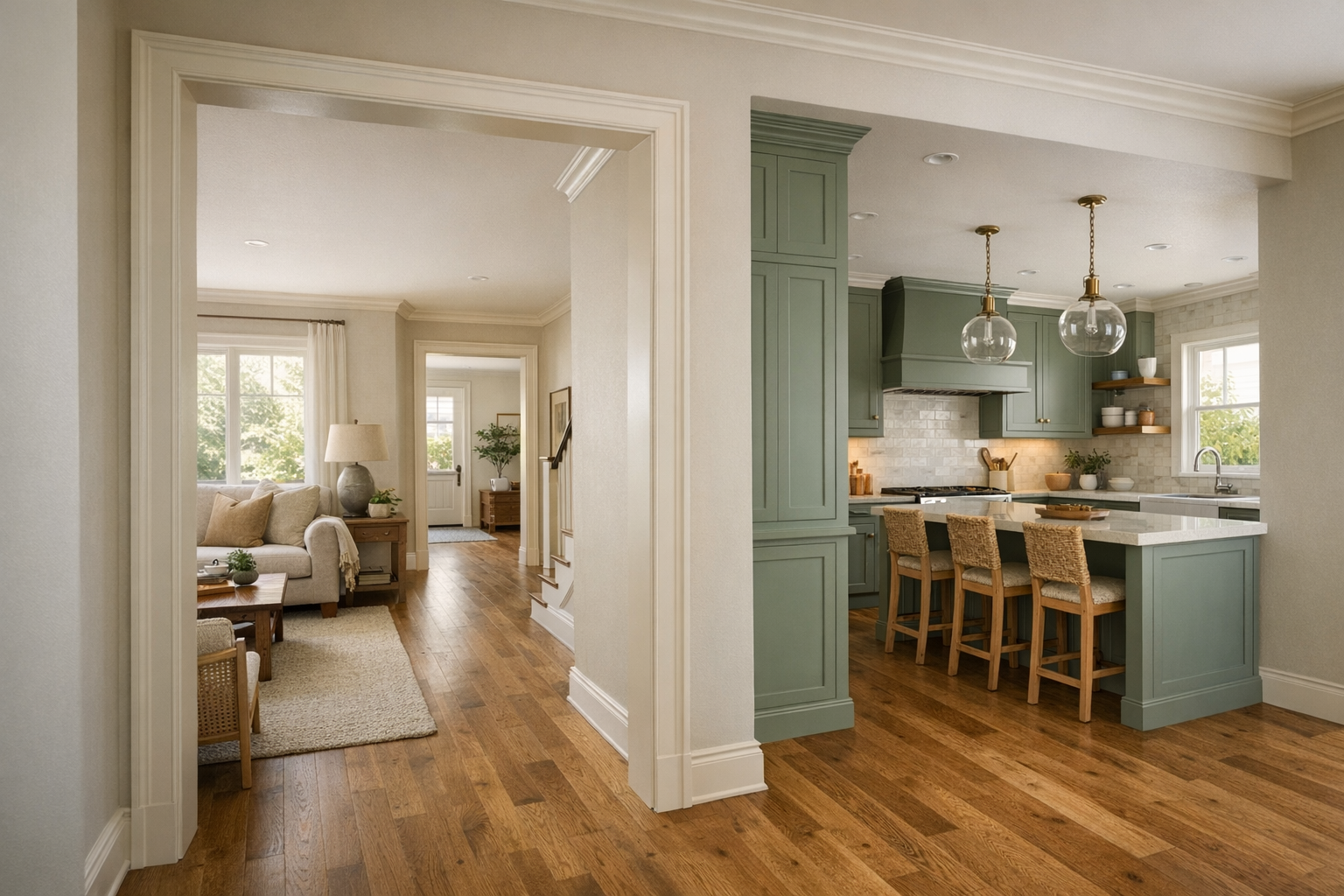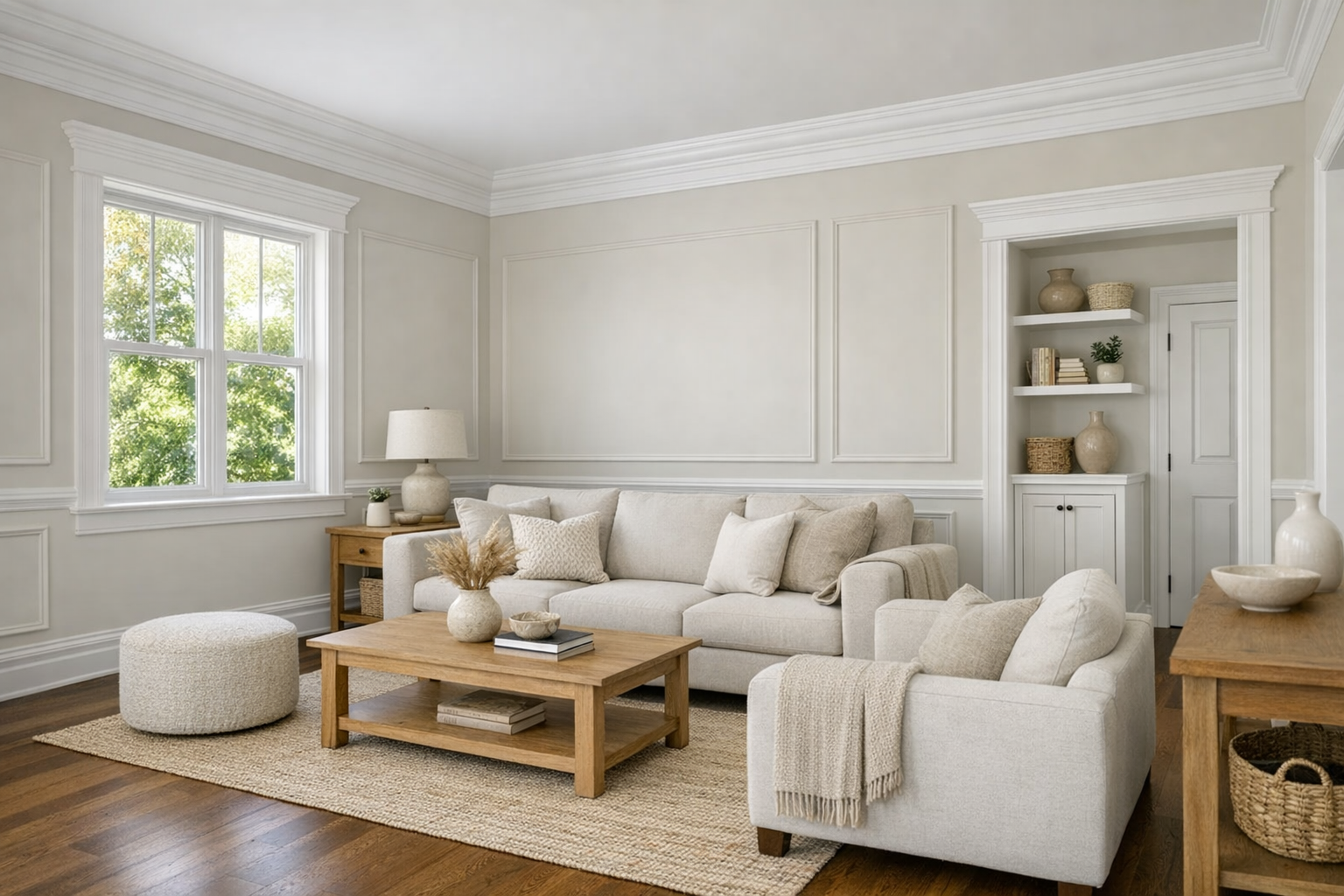
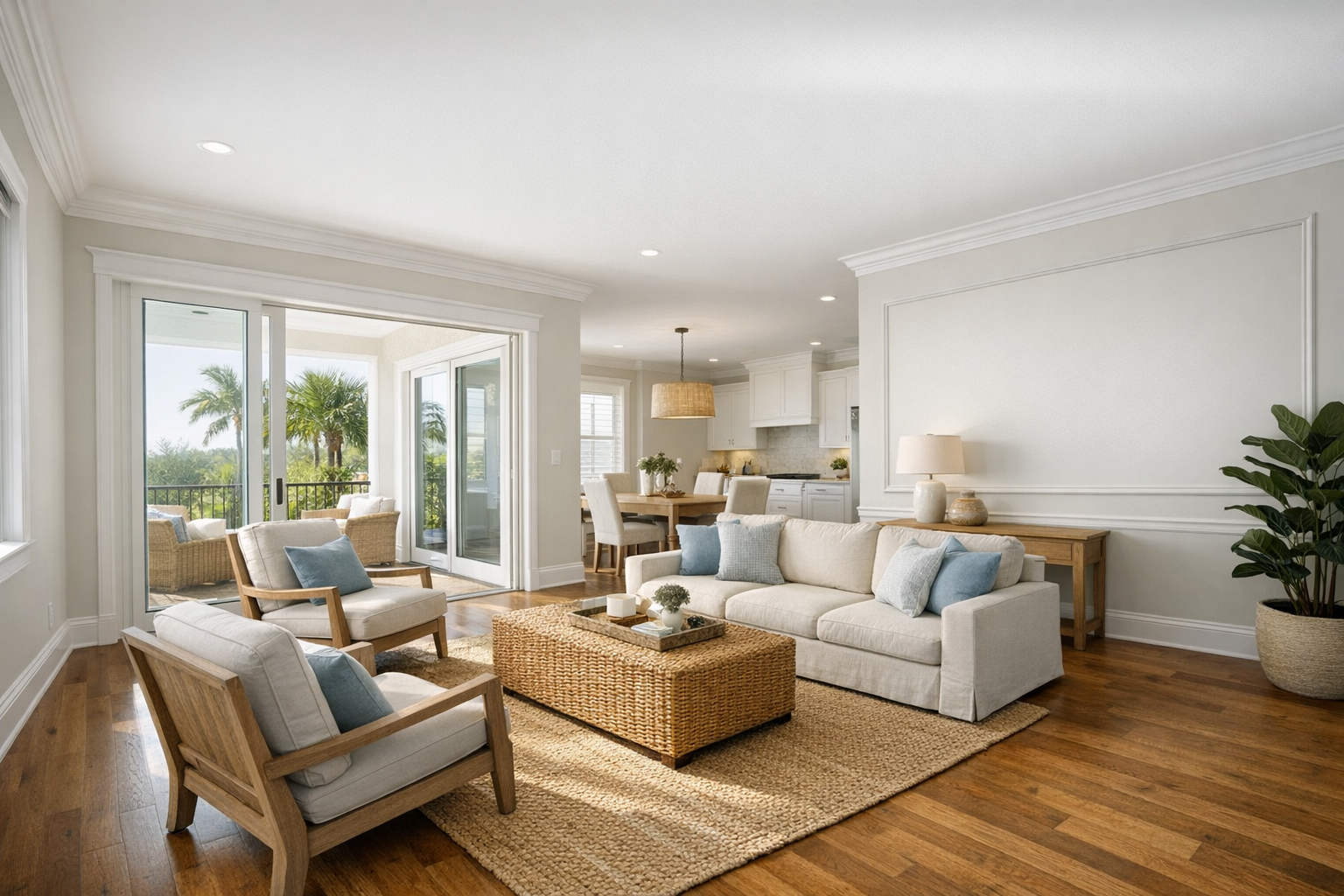

Interior trim is one of the easiest details to overlook until a room feels unfinished. For homeowners comparing interior trim upgrades in Sarasota County, the real question is not just "Which profile looks nice?" It is how the trim changes proportion, frames openings, cleans up transitions, protects busy wall areas, and gives each room a more intentional finish.
That matters in Venice, Sarasota, North Port, Nokomis, Osprey, and nearby Southwest Florida communities because homes vary widely: coastal-inspired interiors, newer subdivision homes with simple builder trim, remodeled ranch homes, condos, and open-plan layouts all respond differently to the same detail. A tall baseboard can make plain drywall feel grounded. Door and window casing can make openings look more substantial. Crown moulding can soften the line where walls meet ceilings. Wainscoting and wall moulding can add structure to long walls that otherwise feel empty.
Good trim choices depend on scale, height, and lighting, especially when the upgrade moves toward ceiling details or more architectural features. A profile that looks balanced in a high-ceiling great room may feel heavy in a smaller bedroom, while a simple clean-lined casing may be the better fit for a modern Florida interior than an ornate moulding package.
This guide is meant to help you think through those choices before hiring a finish carpenter. It is not a pricing sheet or a step-by-step installation manual. Instead, it focuses on what each trim upgrade does visually, where it works best, and how to choose details that feel consistent with your home rather than added on after the fact.
How Sarasota County Architecture and Florida Living Shape Trim Choices
A trim profile that feels right in one region can feel too formal, too heavy, or too plain in a Sarasota County home. Coastal interiors usually favor lighter, cleaner lines; transitional rooms can handle a little more detail without becoming ornate; modern spaces often need crisp, minimal trim; and Mediterranean-influenced or craftsman-inspired homes may call for stronger profiles that give the walls more weight. The takeaway: Sarasota County interior trim upgrades should start with the home's style language, not a catalog photo.
Open floor plans also change the decision. In a great room where the kitchen, dining area, and living space share long sightlines, trim has to create continuity instead of chopping the space into unrelated pieces. A baseboard or casing profile that repeats cleanly from room to room can make the layout feel calmer, while a very decorative crown or wall treatment may work better as a focused accent than as a whole-house choice.
Ceiling height is one of the biggest checkpoints. Higher ceilings can usually carry taller baseboards, wider casing, crown moulding, beams, or tray details because there is enough vertical space for the trim to breathe. Lower ceilings often benefit from simpler profiles, cleaner shadow lines, and restraint; the goal is to sharpen the room, not make the ceiling feel lower.
Flooring matters too. Tile and luxury vinyl plank create strong horizontal lines at the base of the wall, so the baseboard needs enough height and thickness to look intentional against the floor edge. In rooms with white walls, pale cabinets, light flooring, or large windows, small profile differences show more clearly, which makes clean joints, straight reveals, and consistent paint finish especially important.
Humidity-aware material thinking is part of residential finish carpentry in Southwest Florida, but it should not lead to overbuilding every room. The better approach is to choose paint-grade materials, profiles, and installation details that suit the space, then keep the design balanced. Trim should complement the home's natural light, ceiling height, doors, flooring, and cabinetry, adding definition without becoming the loudest feature in the room.
Baseboards, Door Casing, and Window Casing: The Foundation of a Finished Room
Look first at the floor line, then at the doors and windows: if those edges feel thin, mismatched, or unfinished, the whole room can feel less intentional. The core trim package is made up of baseboards, door casing, and window casing: one defines the bottom edge of the room, while the others frame the passages and views your eye moves through every day. Improving these three details often creates the cleanest before-and-after change without making the room feel overdesigned.
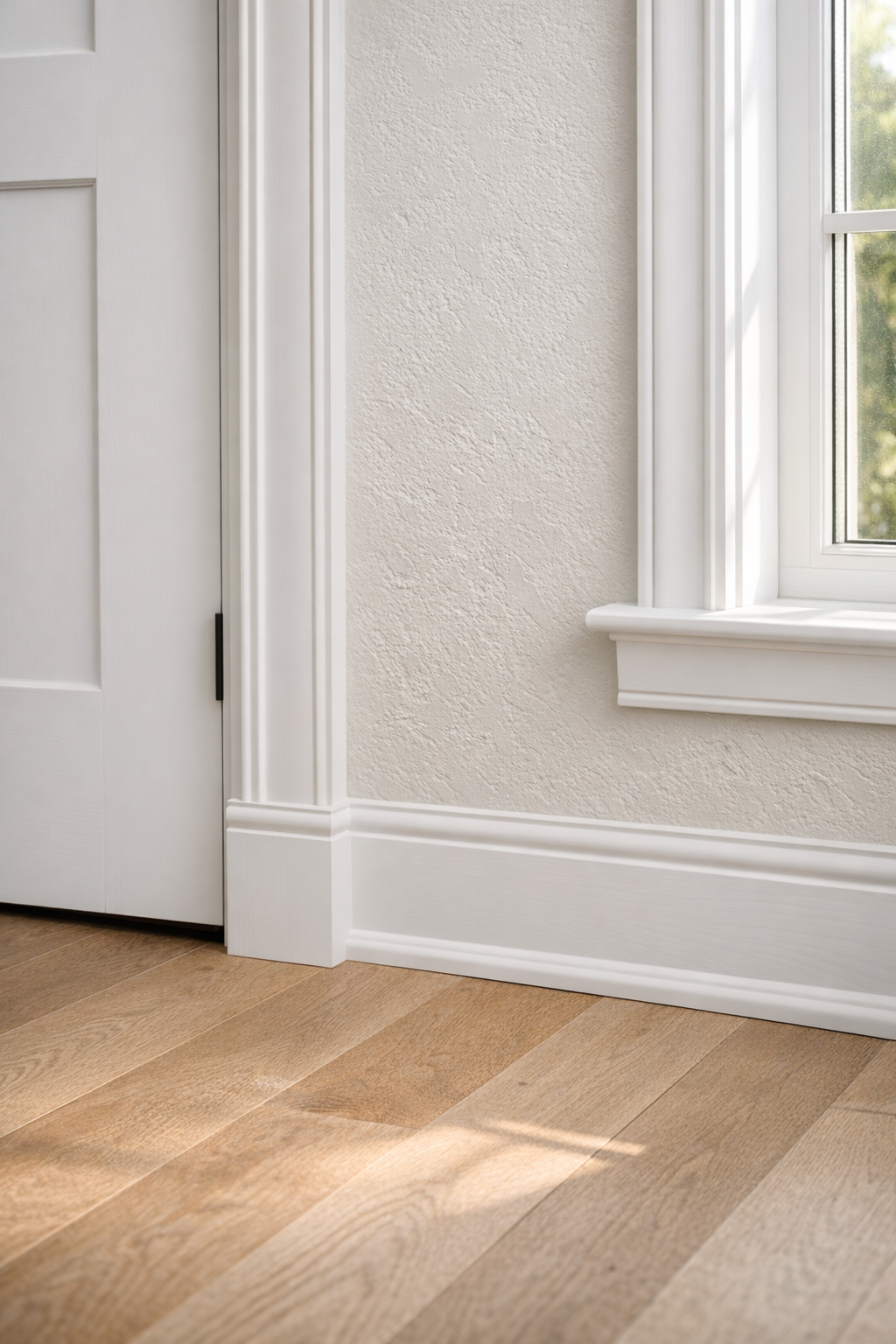
Baseboards visually anchor the wall where it meets tile, luxury vinyl plank, or another finished floor. A taller, simple profile can make a newer builder-grade room feel more proportioned, especially along long walls in living rooms, hallways, and primary bedrooms. A short, thin profile can disappear in a room with wide plank flooring or large-format tile, while an overly tall or busy one can make lower ceilings feel compressed. The useful checkpoint is balance: the trim should look intentional against the floor line without competing with doors, cabinets, or ceiling height.
Door casing frames interior openings and gives each doorway a finished edge. A clean eased-edge or square profile leans modern and coastal; a craftsman-style casing feels stronger and more architectural; colonial or more decorative profiles add curves and shadow lines that suit more traditional rooms. The profile choice changes the mood: simpler casing quiets the room, while wider or more detailed casing draws attention to the opening. It has the most impact where doors repeat in view, such as hallways, bedroom corridors, laundry entries, and open-plan transitions.
Window casing works the same way around window openings, but it also interacts with natural light. In bright rooms, even small differences in reveal, miter alignment, and paint finish become noticeable. A clean casing can make a plain drywall return look more complete, while a heavier profile can help a large window feel properly framed. In rooms with many windows, the safest move is consistency: one strong, repeatable profile usually looks more refined than mixing several decorative ideas.
The weak signal to avoid is trim that looks selected in isolation. Very ornate casing beside flat-panel modern doors, oversized baseboards in a lower-ceiling condo, or a new profile that clashes with existing window proportions can make the upgrade feel patched together. A good finish carpenter will look at the whole room package first: floor thickness, door style, wall length, ceiling height, window spacing, and how the profiles line up from one room to the next.
Crown Moulding and Ceiling Transitions: Adding Height, Shadow, and Definition
At the top of the wall, the decision becomes less about framing openings and more about how the room meets the ceiling. Crown moulding is the profile installed at that wall-to-ceiling transition, and its main job is to soften a plain corner, create a shadow line, and make the ceiling feel intentionally finished rather than simply stopped at drywall.
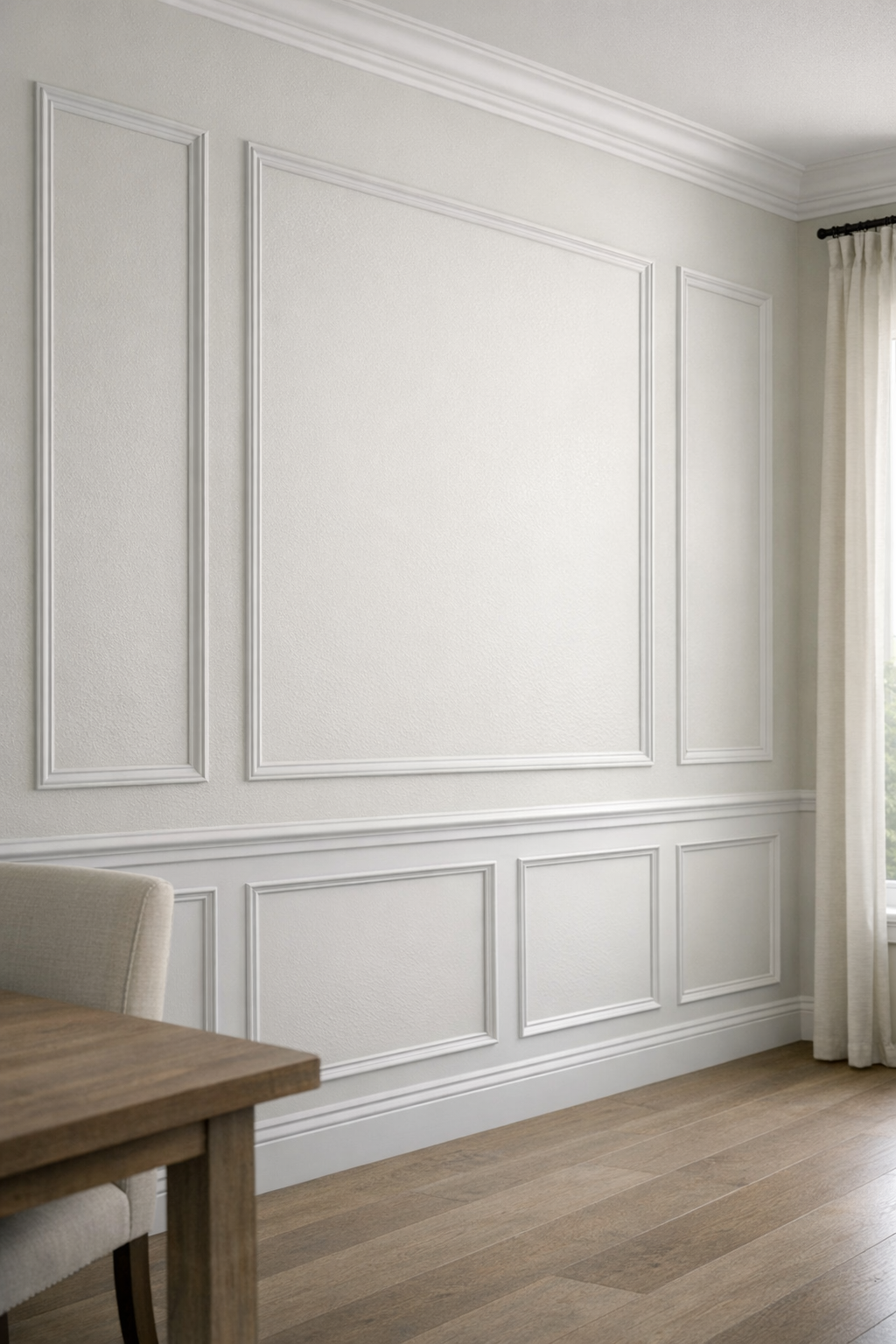
Ceiling height should guide the profile. In an 8-foot room, a slimmer, cleaner crown usually feels more comfortable because it adds definition without visually lowering the ceiling. At 9 feet, a medium profile can add more presence, especially in dining rooms, bedrooms, and living rooms with longer wall runs. At 10 feet and taller, the room can often handle a deeper build-up or layered profile, but only if the doors, baseboards, cabinetry, and furniture scale can support that extra weight.
Room style matters just as much as height. Coastal and modern Sarasota County interiors often look best with a simple cove, step, or eased profile that keeps the ceiling line crisp. Transitional homes can handle a little more curve and shadow. More traditional rooms may welcome a stronger crown moulding profile, but the goal is still proportion, not decoration for its own sake.
Open floor plans need extra judgment because one ceiling line may run through the kitchen, dining area, and living room. A profile that looks elegant in a formal dining space can feel busy when it wraps a large connected great room with multiple cabinet heights, soffits, sliders, and hallway openings. Tray ceiling trim is different: it defines the raised or recessed ceiling area itself, so it can work beautifully in a primary bedroom, dining room, or living area where the tray already creates a natural border.
Crown moulding is not always the right upgrade. Very low ceilings, sharply modern interiors, angled ceiling planes, inconsistent soffits, or rooms with awkward ceiling breaks can make crown feel forced. In those cases, a cleaner ceiling transition, improved base and casing package, or a more intentional wall treatment may create a better result. The strong signal is simple: if the profile makes the room feel taller, calmer, and better resolved, it belongs; if your eye keeps noticing the trim instead of the room, it is probably doing too much.
Wainscoting, Board and Batten, and Picture Frame Moulding for Walls
Wall treatments sit between the everyday trim package and the more architectural ceiling details. They change the face of the wall itself, so the question becomes how much texture, formality, and visual movement the room can handle without feeling crowded.
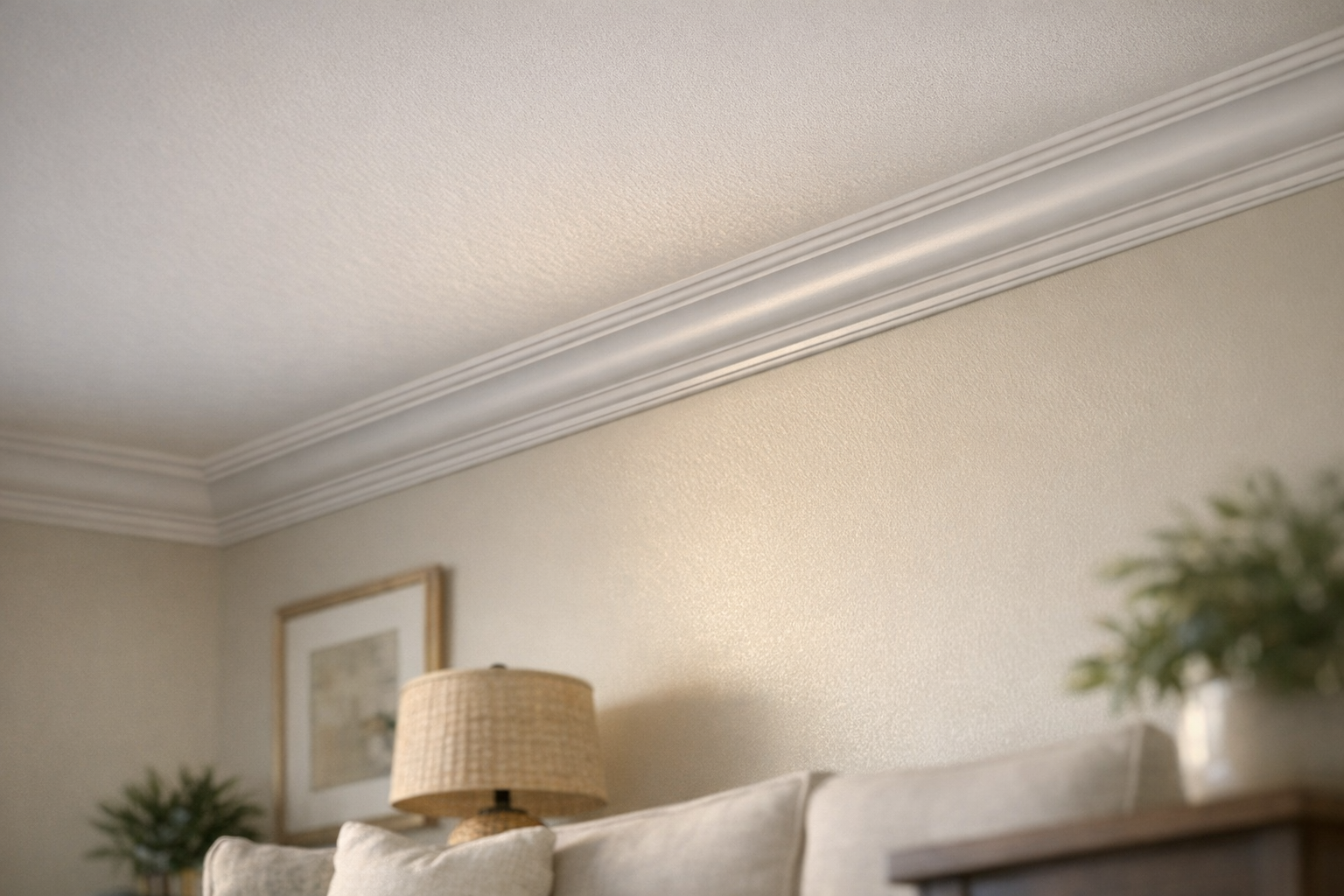
Wainscoting is a lower-wall treatment, often built with rails, stiles, panels, or applied moulding. It gives a dining room, foyer, stair wall, powder bath, or office a more finished and traditional feel, while also making the lower portion of the wall feel more durable in busy areas. A chair rail is the horizontal trim line that often caps that lower section; on its own, it can divide paint colors or add a subtle break, but paired with panels it becomes part of a more complete wall design.
Board and batten uses wider vertical boards or battens to create a stronger rhythm across the wall. Compared with picture frame moulding, it feels cleaner, more casual, and more dimensional, which is why it often works well in bedrooms, hallway accent walls, mudroom-style entries, and coastal or transitional Sarasota County interiors. The tradeoff is that the vertical pattern can become busy if the spacing fights outlets, switches, windows, or furniture placement.
Picture frame moulding, shadow boxes, and panel moulding are closely related, but they are not quite the same thing. Picture frame moulding usually means applied rectangular frames on a flat wall. Shadow boxes describe the framed sections those mouldings create. Panel moulding is the actual profile used to form those boxes or panels. This look is more formal than board and batten and fits dining rooms, foyers, stair runs, offices, and powder baths where the homeowner wants detail without building out the whole wall.
Accent walls and feature walls are broader design categories. An accent wall is one treated wall that contrasts with the rest of the room; a feature wall is the wall meant to become the focal point, such as behind a bed, in a dining room, along a hallway, or around a fireplace or media area. The trim style can be simple or detailed, but the purpose is focus: it tells the eye where to land.
The main planning checkpoints are height, spacing, and interruption points. Lower panels should relate to the room's ceiling height and furniture scale, not simply split the wall in half. Vertical patterns should be laid out around outlets and switches instead of letting those devices land awkwardly on battens or panel edges. In a smaller powder bath, one well-proportioned treatment may feel rich; in a long open hallway, the same pattern repeated too tightly can feel restless.
Restraint is often what makes these upgrades feel custom rather than heavy. A full-room wainscoting treatment can be beautiful in a dining room or office where the architecture can support it. In a bedroom, great room, or open-plan area, one feature wall may deliver enough character while keeping the rest of the space calm. The best signal is balance: the wall treatment should support the room's shape, openings, and furniture layout instead of competing with every other finish in the home.
Ceiling Details, Beams, and Coffered Looks for More Architectural Character
Look up in a large great room or primary suite, and the ceiling may be the blankest surface in the house. Ceiling-focused finish carpentry changes that by giving the overhead plane structure: lines that organize an open space, frame a dining area, or make a tall room feel more intentionally designed.
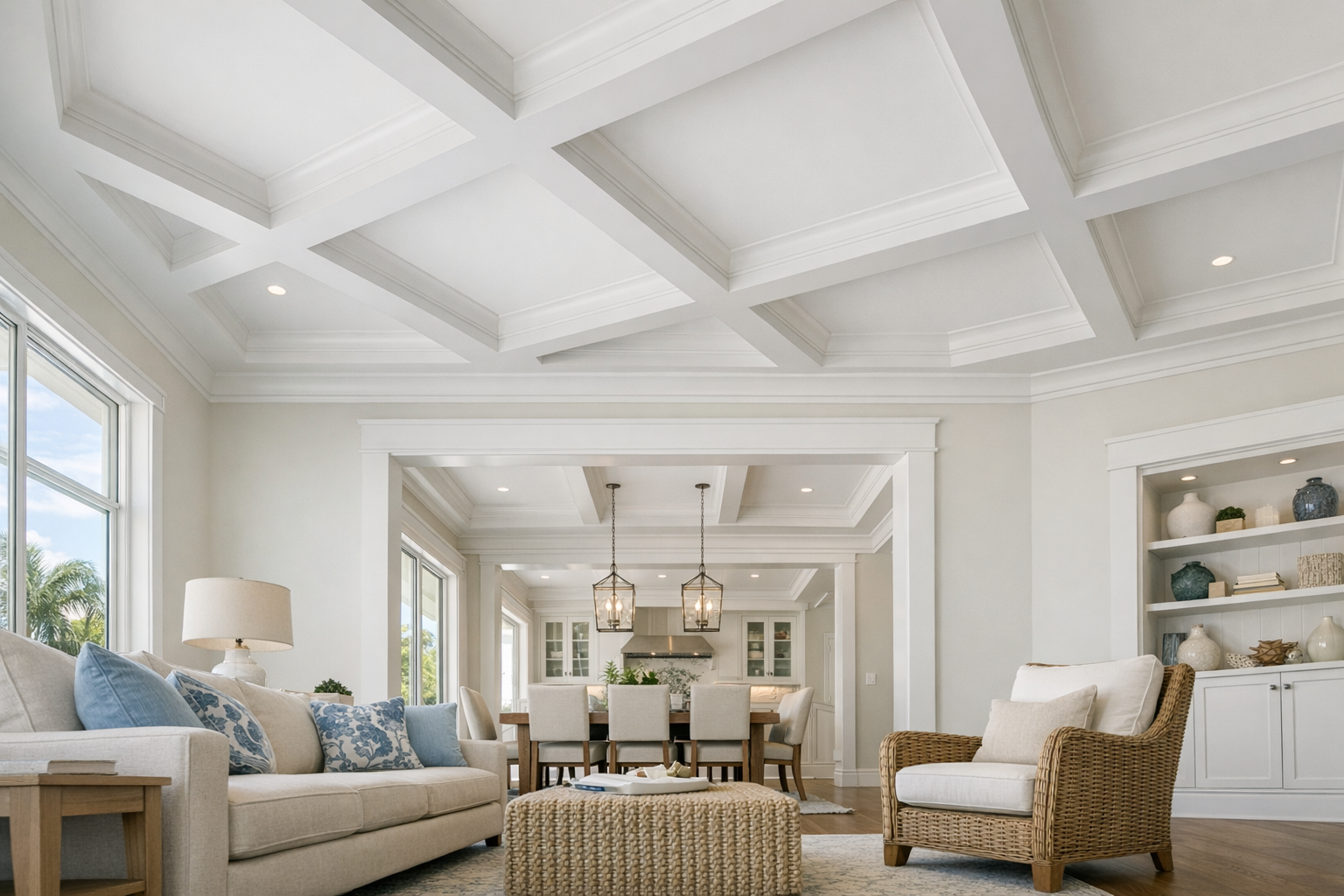
Ceiling beams are linear elements that run across the ceiling to create rhythm and direction. In a coastal Sarasota County interior, they may be painted white or kept light and simple; in a transitional room, they can add warmth and definition; in a modern Florida home, a cleaner boxed-beam look can emphasize long sightlines without feeling rustic. The key difference is visual weight: a slim, painted beam reads quiet and architectural, while a deeper or stained beam becomes a stronger feature.
A coffered ceiling uses a grid of beams or trim to create recessed ceiling panels. It works best where the room has enough height and width for the pattern to breathe, such as a dining room, office, formal sitting area, or high-ceiling living space. If the grid is too tight, too deep, or squeezed around lights and vents, the ceiling can feel busy instead of refined.
Tray ceiling trim is different because it follows the raised or stepped shape already built into the ceiling. Trim can outline the tray, add a shadow line, or make the inset area feel more finished. This is especially useful in primary bedrooms, dining rooms, and entry areas where the ceiling already has a central feature but needs sharper definition.
The practical checkpoints are ceiling height, room size, lighting, fans, HVAC vents, and open-plan sightlines. A strong ceiling detail should line up with the room's geometry and leave space for recessed lights or a fan to feel intentional. The weak signal is a ceiling treatment that looks impressive in isolation but fights the furniture layout, chops up a long open room, or makes an eight-foot ceiling feel lower than it is.
How to Match Trim Style to Your Home’s Architecture, Ceiling Height, and Existing Finishes
The safest way to choose a trim package is to work from the fixed conditions first: ceiling height, wall length, door style, flooring, cabinetry, wall texture, and paint plan. A profile that looks refined on a tall foyer wall can feel crowded in a lower hallway, while a very thin modern profile can disappear in a large open great room. The takeaway for trim upgrades for Sarasota County homes is proportion before preference.
Style direction narrows the choices. Coastal rooms usually feel best with simpler, lighter profiles that keep the walls clean and airy. Transitional interiors can handle a mix: squared baseboards, modest casing, and restrained wall moulding. Modern rooms lean toward flat, minimal trim with crisp lines and fewer stacked details. More traditional rooms can support crown, panel moulding, and stronger shadow lines when the ceiling height and room size give those details enough space.
Craftsman trim is different because it relies on flat boards, clear edges, and wider header-style casing rather than delicate curves. It can work well with shaker doors, simple cabinetry, and warm flooring, but it can feel mismatched beside highly ornate cabinets or very sleek slab doors. If a home is only lightly craftsman-inspired, a simplified version of craftsman trim often reads better than a heavy full-house treatment.
Existing finishes should act like clues. Tile or luxury vinyl plank with strong movement often pairs better with cleaner baseboards so the floor and trim do not compete. Shaker cabinets usually coordinate with square or lightly eased trim profiles, while raised-panel cabinets can support more traditional casing or crown. Heavy wall texture can soften fine moulding details, so simpler profiles and thoughtful paint sheen often create a cleaner result than very intricate trim.
Trim does not have to be identical in every room, but it should feel related. A consistent baseboard and door casing package through the main living areas helps the house feel connected, especially in open layouts. Room-by-room upgrades make sense when the room has a distinct role: a dining room with picture frame moulding, a primary bedroom with tray ceiling trim, or an office with a more tailored wall treatment.
A useful test for interior trim ideas for Sarasota County homes is to compare the new detail against what will remain. If the doors, cabinets, floors, and ceiling lines all support the same level of formality, the upgrade will look intentional. If one element suddenly becomes much more ornate than everything around it, the room may feel patched together rather than professionally finished.
What to Think Through Before Hiring a Finish Carpenter in Sarasota County
By the time you meet with a finish carpenter, the most helpful decision is not the exact profile; it is the shape of the project. A whole-home trim refresh creates the most consistent baseboard, casing, and transition language, while a room-by-room upgrade lets you focus first on the spaces people see and use most. Many homeowners start with the foyer, main living areas, dining room, or primary suite, then phase bedrooms, offices, hallways, or feature walls later.

Before a consultation for finish carpentry in Sarasota County, gather a few practical references: photos of the rooms, inspiration images, rough ceiling heights, close-up pictures of existing baseboards and casing, and notes about flooring transitions or upcoming paint plans. These details help the carpenter see what must stay, what can change, and where the new trim has to meet doors, windows, cabinets, tile, or luxury vinyl plank cleanly.
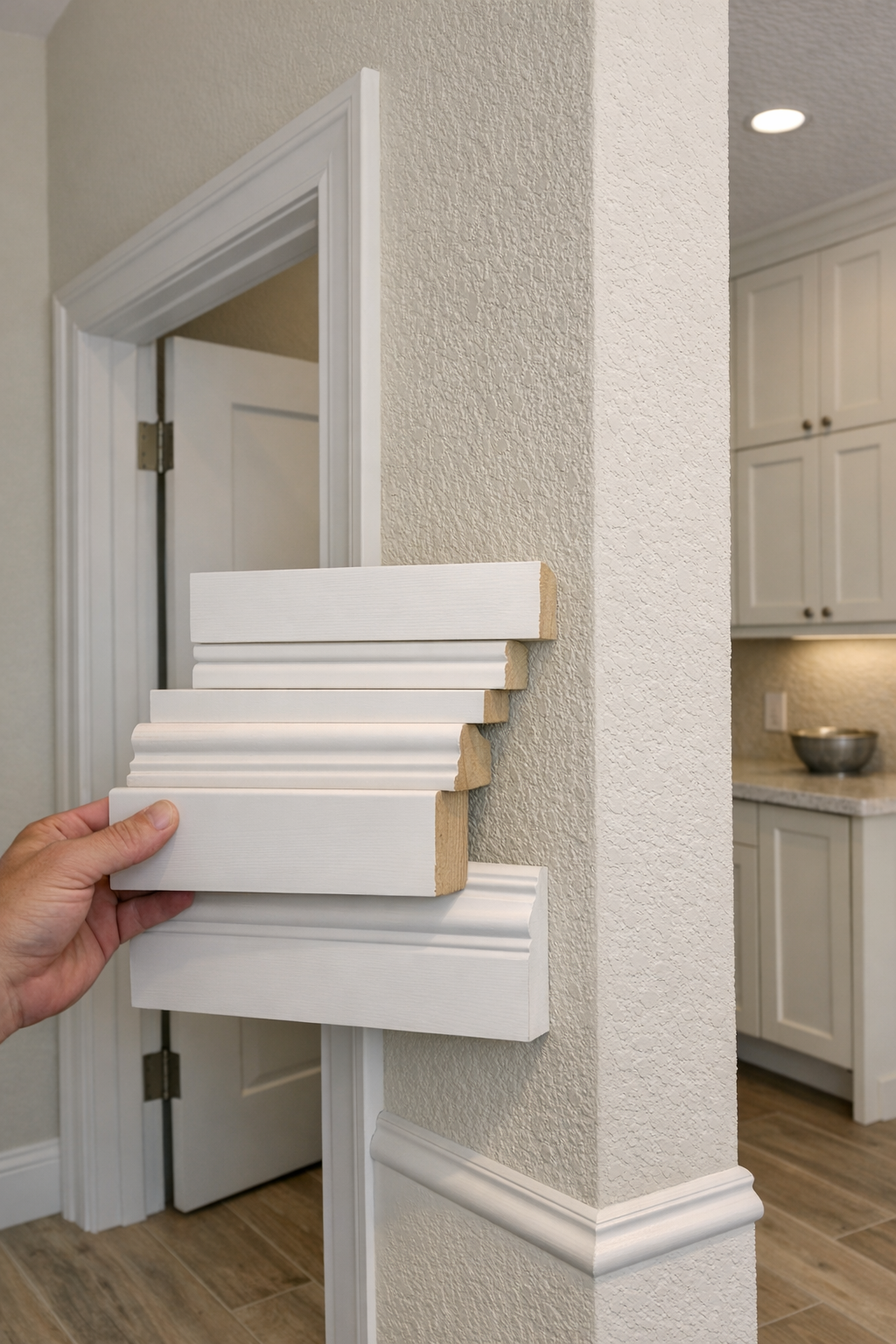
Style references are useful, but sample profiles are where the decision becomes real. A flat stock profile reads cleaner and more modern; a small eased or stepped profile adds definition without becoming formal; a larger built-up profile creates more shadow and presence. Seeing samples against your wall color, flooring, and natural light is especially helpful in coastal, transitional, and modern Florida interiors, where small changes in scale can shift the whole room.
Be clear about paint-grade versus stain-grade expectations. Paint-grade trim is intended to be caulked, filled, sanded, and painted for a smooth finished look, so the emphasis is on crisp installation and clean prep. Stain-grade work is different because the wood grain remains visible, making species selection, color matching, and board consistency more important. Most interior trim upgrades Sarasota County homeowners choose are paint-grade, but the expectation should still be a refined finish rather than "just trim on the wall."
The best quality signals are visible in the details: tight miters, consistent reveals around doors and windows, profiles that feel proportionate to the room, careful caulking, clean paint prep, and alignment with cabinets, ceiling lines, and flooring. Weak signals include trim that changes scale without a reason, casing that crowds adjacent walls, or feature details that ignore outlets, switches, fans, or lighting.
If you are comparing options for custom trim Venice FL, Sarasota, North Port, Nokomis, Osprey, or nearby communities, look for a carpenter who can explain tradeoffs instead of simply taking an order. A strong residential finish carpentry Southwest Florida partner should help you prioritize rooms, refine profiles, plan phases, and protect the overall style of the home. If you are ready to talk through ideas, a consultation is the right next step: bring photos, a few inspiration images, and an open mind about what will fit your home best.