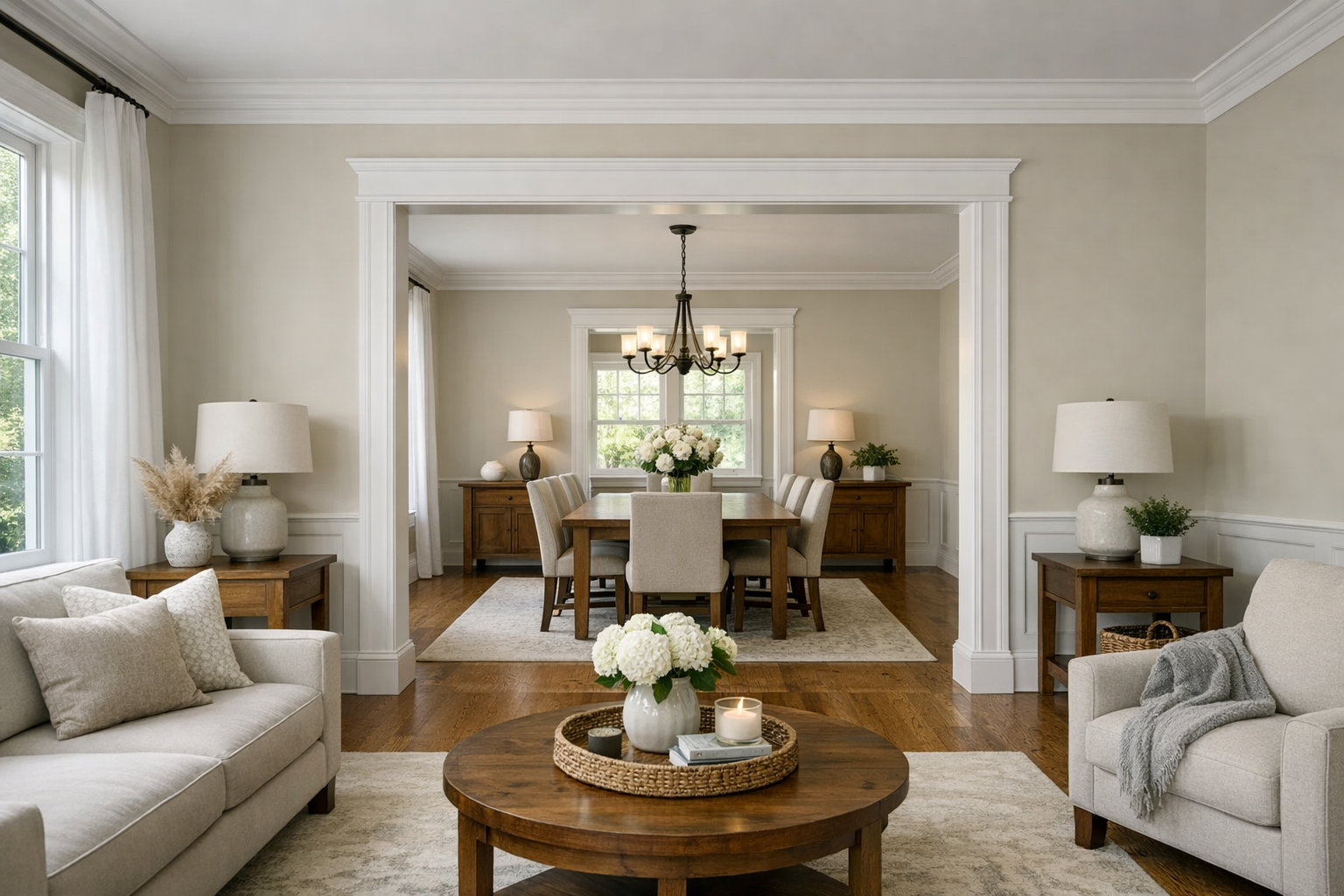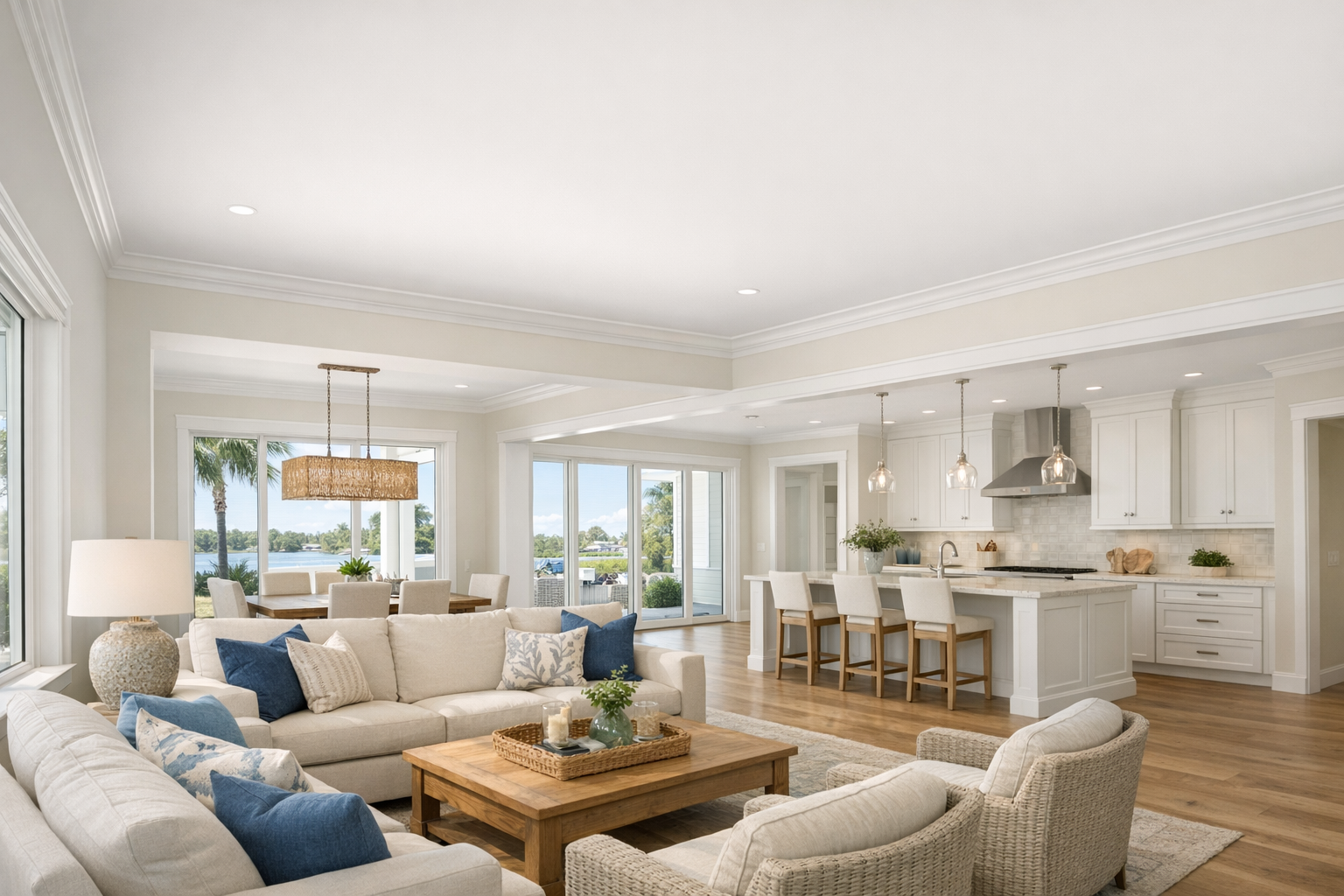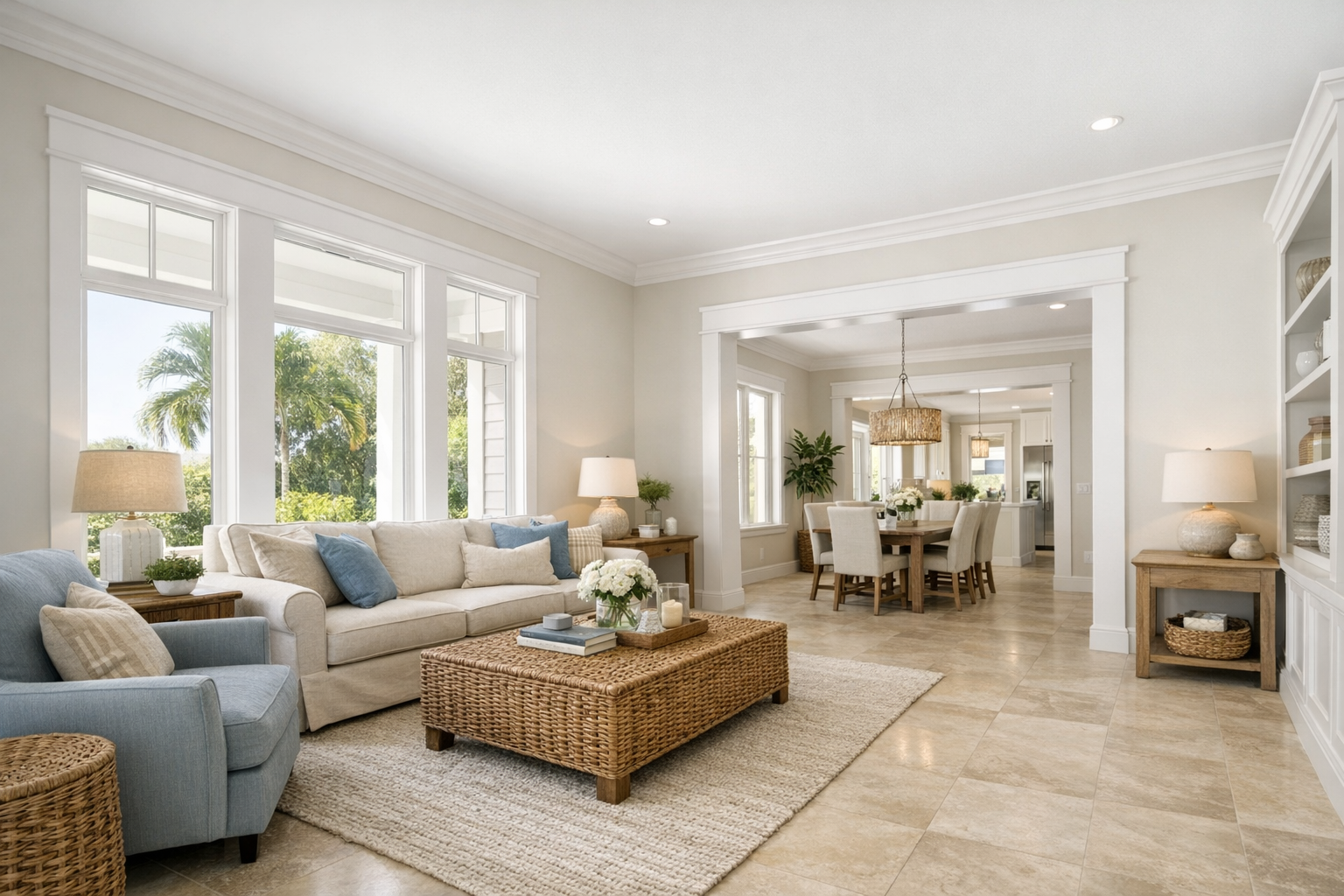


A window can have a nice view, fresh paint, and good natural light, yet still feel oddly unfinished if the opening is treated like an afterthought. That is where interior window trim earns its keep. Not because it has to be ornate, but because it gives the window a clear edge, a visual base, and a cleaner transition from glass to wall.
The pieces are small, but each one has a job. The stool, often called the interior sill by homeowners, is the horizontal ledge at the bottom of the window; it grounds the opening and gives the eye a stopping point. The apron is the trim piece below that ledge, adding weight so the bottom of the window does not look abrupt. Casing frames the sides and top, while returns are the inside surfaces between the wall face and the window unit. Together, these details decide whether the opening looks intentionally finished or simply cut into drywall.
The difference is easy to spot in living rooms, dining rooms, and bedrooms with bright Florida light. A bare drywall return can look clean in a very minimal room, but uneven corners, shallow ledges, or missing lower trim may make the window feel temporary. A simple painted stool with a proportional apron and consistent casing can make the same opening feel more settled without turning the room formal.
Good Florida home trim details usually come down to proportion and finish-carpentry quality: even reveals, tight joints, filled nail holes, smooth caulk lines, and paint that makes the trim read as one continuous detail. Those quiet cues are what make a room feel polished before anyone can name exactly why.
The Parts Homeowners Notice, Even If They Do Not Know the Names
The easiest way to read a window is from the bottom up. When a homeowner points to the "interior window sill," they usually mean the flat horizontal ledge inside the room. In finish-carpentry language, that piece is often called the window stool. The word choice matters mostly because it separates the interior ledge from exterior sill conversations, which are about the outside of the window rather than the room-facing trim detail.
Below that ledge is the window apron, the vertical trim piece that makes the bottom of the opening feel intentional instead of cut short. A well-sized apron gives the window a visual base, especially in dining rooms or bedrooms where the trim is viewed straight on. A missing, stubby, or mismatched apron can make the stool look like it is floating, even if the window itself is perfectly functional.
Around the sides and top, casing works like a frame. It defines the edge of the opening and can be simple flat stock, a more traditional shaped profile, or part of a cleaner picture-frame look. Drywall returns, by contrast, rely on the finished wall surface turning back toward the window frame; they can look modern and quiet, while casing adds a stronger border and more shadow.
Returns are the transition surfaces that connect the face of the wall to the window frame. They may be drywall, wood, or another finished material, but their visual job is the same: make the depth of the opening look clean. If the returns are uneven, the stool projects awkwardly, or the casing profile changes from one window to the next, the interior trim around windows starts to feel pieced together instead of planned.
The takeaway is not that every Sarasota County living room needs ornate trim. It is that the window stool, window apron, casing, returns, and painted finish should look like one coordinated decision. Crisp reveals, aligned edges, and smooth paint-ready seams tell the eye that the opening is complete before anyone stops to name the parts.
Stools and Interior Sills: The Horizontal Line That Grounds the Window
Look closely at the ledge under the glass, and you can usually tell whether the window was treated as a finish detail or just closed up and painted. A well-proportioned window stool gives the opening a clean horizontal stopping point. It creates a resting line for the eye, which is especially noticeable in bright Florida rooms where sunlight makes every shadow, seam, and uneven edge easier to see.
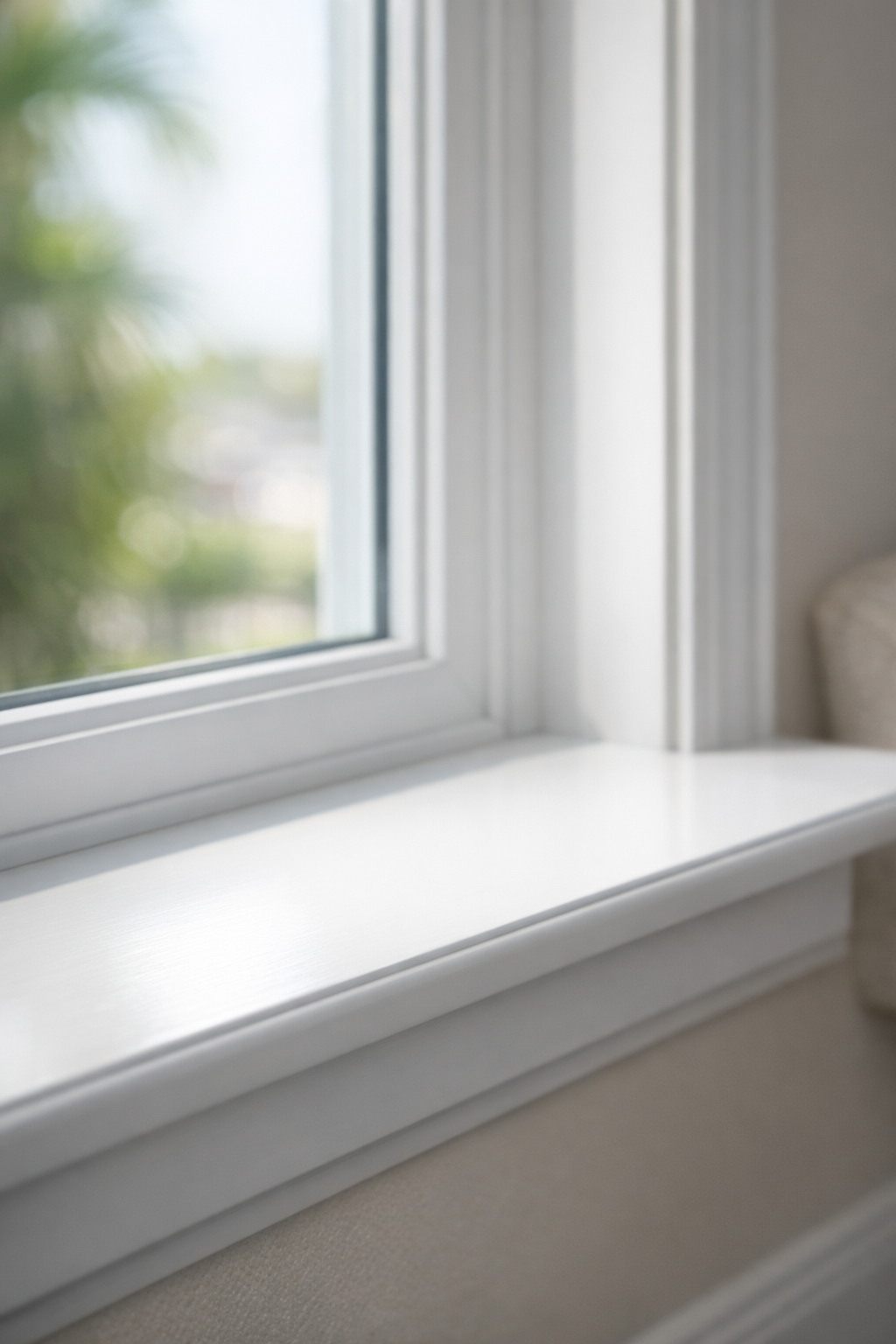
Depth and projection are what make that ledge feel intentional. A shallow stool can look timid, almost like a strip of trim was added only because something had to cover the bottom edge. A stool with a little projection beyond the wall plane and side edges feels more settled, because it gives the window a defined base without needing heavy ornament. For many coastal and transitional interiors, a simple painted stool with a crisp, eased edge is enough; the detail comes from proportion and clean finishing, not from a complicated profile.
The edge detail matters too. A square edge reads cleaner and more modern, while a slightly rounded or eased edge softens the line and tends to feel more relaxed. A decorative routed edge can work in a more traditional room, but it should relate to the rest of the trim nearby. The practical takeaway: the stool should look like it belongs with the baseboards, doors, and casing, rather than like a leftover board attached under the window.
Weak stool detailing is easy to spot once you know what to look for: a tiny projection, rough caulk, visible gaps at the returns, damaged corners, mismatched paint, or a ledge that stops short in an awkward way. Those flaws make the window look temporary even when the glass, walls, and flooring are in good shape.
Window sill installation or replacement is worth considering when repainting will not fix the proportion problem. If the stool is too short, badly fitted, visibly damaged, or out of sync with newer interior window trim, replacing it can create a cleaner foundation for the rest of the opening.
Aprons: The Small Piece That Makes a Window Look Complete
The apron is where the bottom of that ledge either resolves neatly or seems to fade into the wall. It is the vertical trim piece installed directly below the stool, and its job is simple: give the lower edge of the window a finished stopping point. Without it, a stool can look like a shelf floating on drywall, especially when the surrounding trim has more substance.
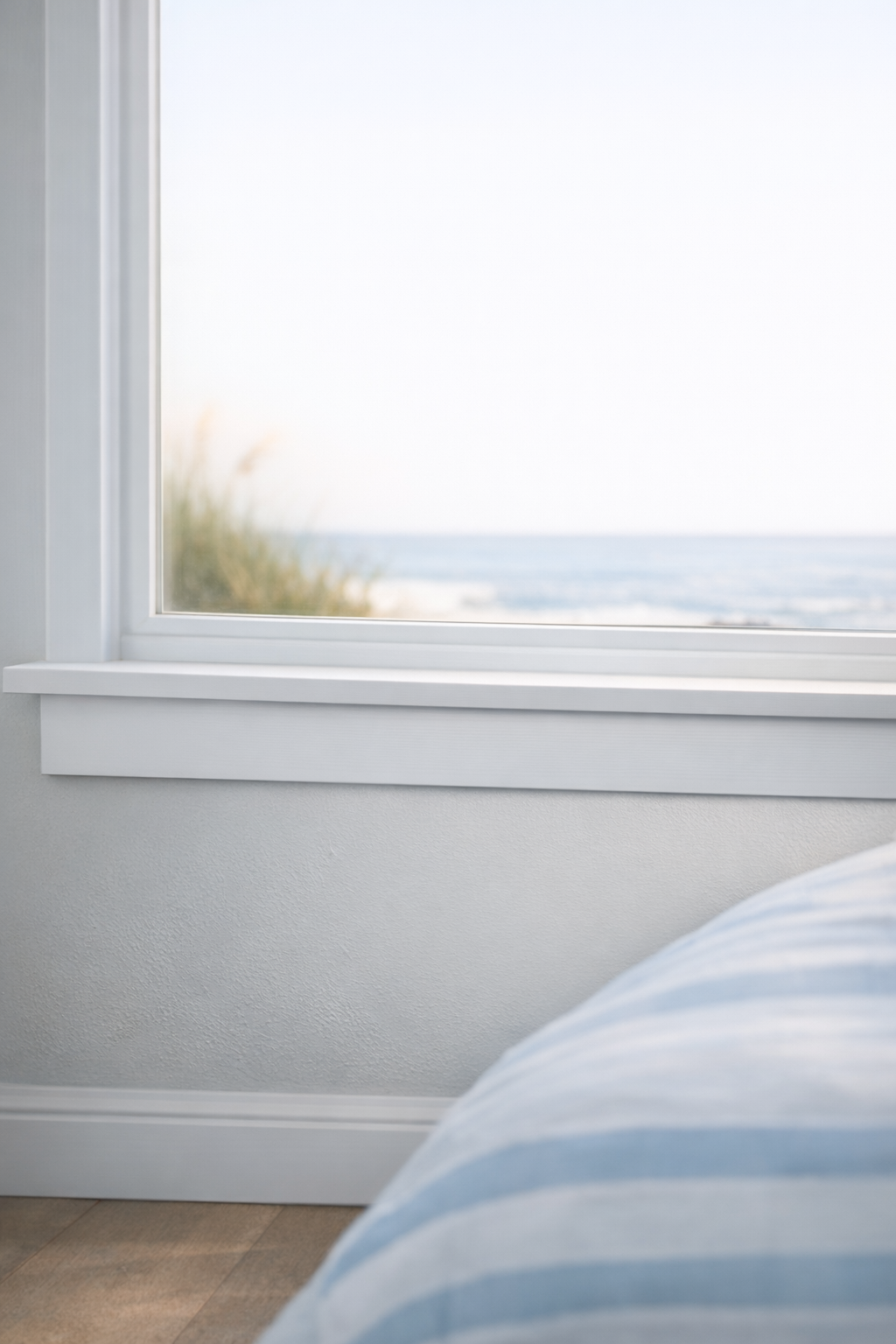
A window apron is most useful when the stool projects past the wall or when the room already has noticeable baseboards, door casing, or other painted trim. In that setting, the apron helps the window join the same trim language instead of looking under-detailed. A strong detail might be a flat-stock apron that lines up cleanly under the stool and feels related to the casing width. A weak one is too short, too skinny, or randomly profiled, making the bottom of the opening look patched together.
That does not mean every window needs an apron. Some cleaner interiors use a stool-only detail, or even drywall returns with very restrained trim, for a more modern look. The tradeoff is visual weight: apron-free windows can feel lighter and simpler, while an apron adds a more framed, traditional, or finished base. In bright Florida rooms with simple painted trim, a plain flat apron often gives enough definition without making the window feel ornate.
Proportion is the checkpoint for window apron installation. The apron should feel wide enough to support the stool visually, but not so tall that it competes with the window opening. Its profile should also relate to the stool and casing: square flat stock reads casual and clean, a small eased edge feels softer, and a more decorative profile only works when the surrounding window trim details share that same character.
Casing and Returns: Choosing Between Clean Drywall and a Framed Opening
The side and top edges of the opening decide whether the window blends into the wall or reads as a framed architectural feature. Drywall returns wrap the inside of the opening with finished drywall instead of wood casing, so the window feels cleaner, flatter, and more modern. That can be a good choice in a minimal room, but it can also look plain when the doors, baseboards, and nearby built-ins have stronger trim.
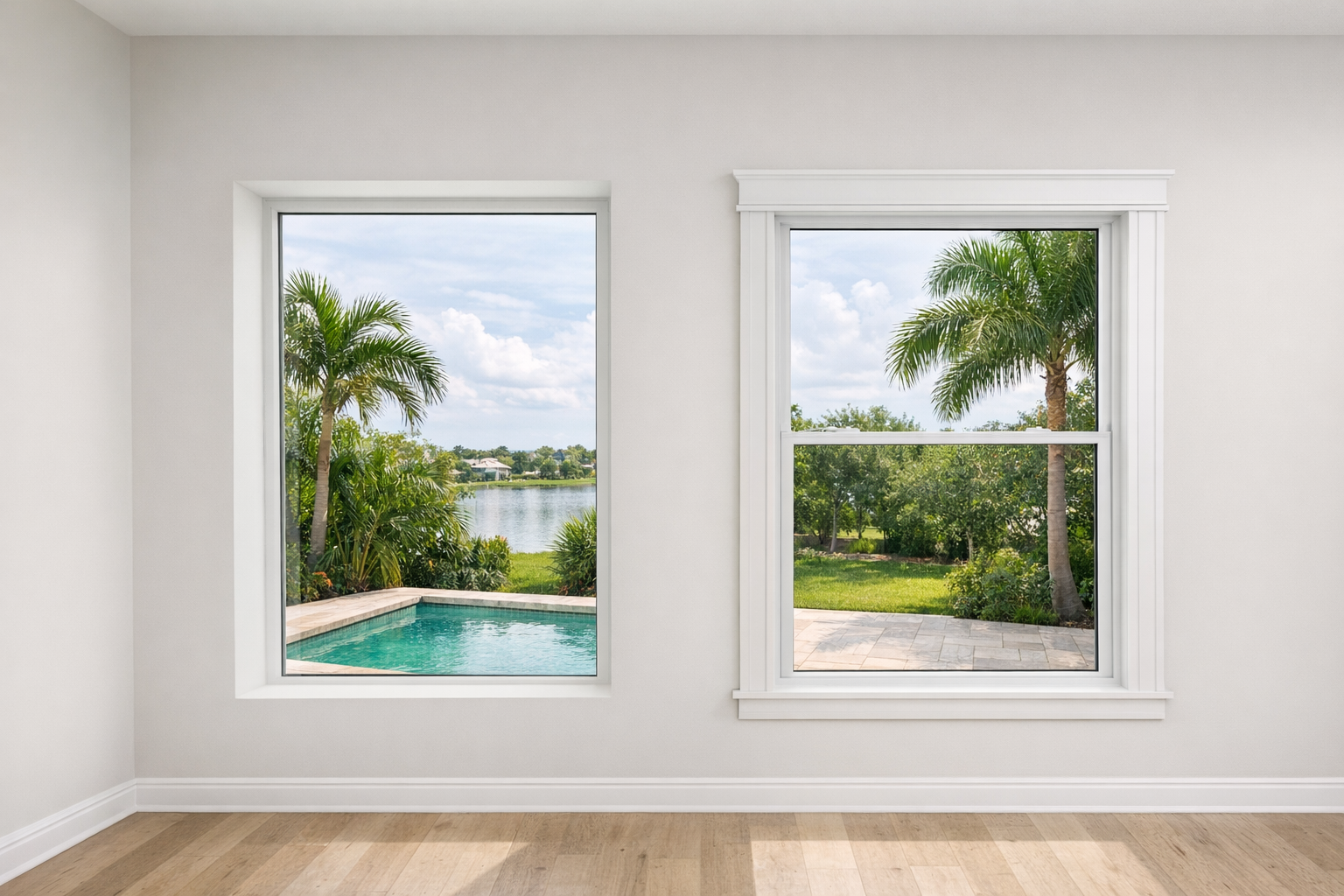
Picture-frame casing does the opposite: it creates a visible border around all four sides of the window opening, adding depth, shadow, and a more deliberate edge. The practical takeaway is simple: returns make the window recede; casing makes it participate in the room. If a dining room has substantial door casing and taller baseboards, a bare drywall-wrapped window may feel underdressed beside them.
Interior window casing also changes proportion. Wider casing gives the opening more visual weight, while narrow casing keeps it lighter. A crisp reveal, the small, even step between the window jamb and the casing, makes the trim look intentional. Uneven reveals, skinny side pieces, or casing that dies awkwardly into a stool are weak signals that make the whole opening feel less resolved.
The profile matters as much as the width. Colonial casing usually has curves or molded edges and often uses mitered corners, where the top and side pieces meet at angled cuts. Craftsman-style trim is usually more squared off, often with butt joints, where flat pieces meet directly instead of forming angled picture-frame corners. Simple flat stock is the quietest option: square-edged boards that suit coastal, transitional, and modern painted interiors without adding much ornament.
Adding casing to windows that currently have drywall returns is less about making the window "fancier" and more about making it relate to the rest of the room. A good window casing replacement choice picks up cues from nearby door trim and baseboards: similar thickness, compatible edges, and a scale that does not overpower the glass. A weak choice introduces a random profile that matches nothing else, making the window stand out for the wrong reason.
Repainting may be enough when the existing casing is well-proportioned and the joints are clean. Replacement makes more sense when the profile is damaged, the corners are poorly joined, the style clashes with newer trim, or the casing looks too small for the room. The best result is not necessarily the most decorative one; it is the one where the window, stool, apron, doors, and baseboards look like they were planned together.
Florida-Friendly Trim Choices: Simple Profiles, Light Paint, and Moisture-Aware Materials
In bright coastal rooms, the safest trim choice is often the one that looks calm up close and consistent from across the room. Simple flat stock, a small eased edge, or a restrained Craftsman-style profile can give the stool, apron, casing, and returns enough definition without making the window feel heavy. That is the big takeaway for Florida home trim details: "finished" does not have to mean ornate, oversized, or formal.
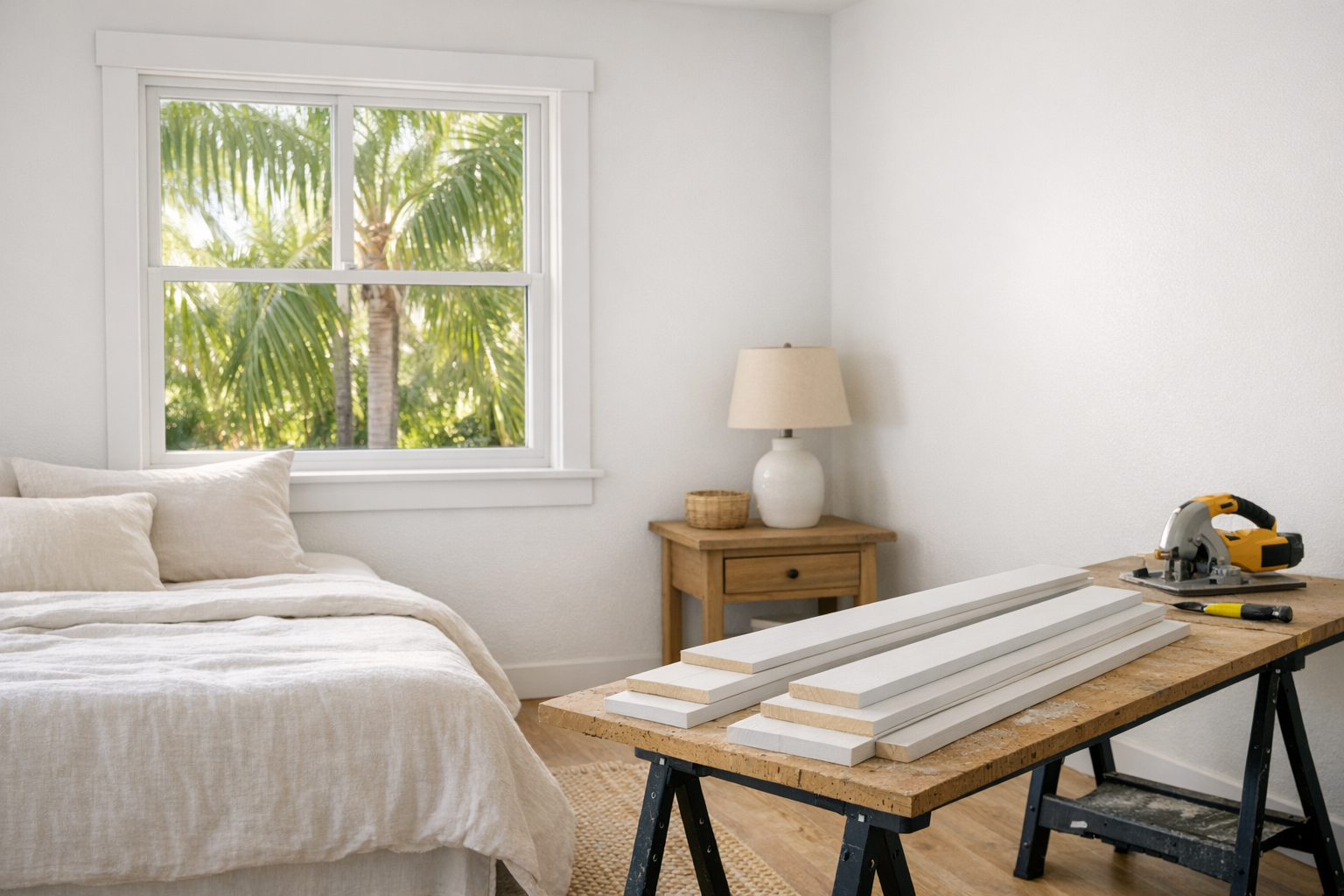
Color changes the effect just as much as profile. White painted window trim sharpens the outline of the opening, which works well in light-filled living rooms, dining rooms, and bedrooms where the trim is meant to look crisp against soft wall colors. Wall-matched trim does the opposite: it quiets the contrast and lets the window blend into a more modern, relaxed room. Neither choice is automatically better; the right one depends on whether the window should stand out as a frame or settle into the wall plane.
For paint-grade work, MDF, finger-jointed pine, and PVC are common material conversations because each gives a different balance of surface, edge, and moisture awareness. MDF is a smooth engineered board that can look very clean under paint in dry interior settings. Finger-jointed pine is real wood made from shorter joined pieces, so it is also used for painted trim when a wood substrate is preferred. PVC is a synthetic trim material that may be considered in interior spots where dampness, splashing, or repeated condensation are part of the room's reality.
The practical comparison is not "best material" versus "bad material." It is matching the trim to the opening. A high, dry bedroom window may be a good candidate for smooth painted interior window trim with a simple profile. A bathroom-adjacent or frequently damp opening may deserve a more moisture-aware discussion before choosing the stool or casing material. A strong result looks intentional: the profile suits the room, the painted finish reads as one continuous detail, and the window relates to the baseboards and doors instead of looking like a leftover decision.
Paint-Ready Details: Caulk Lines, Nail Holes, Seams, and Crisp Edges
The last few feet of work around a window can change the whole read of the trim. A paint-ready finish means the stool, apron, casing, and returns are not just installed, but prepared so paint can make them look like one clean assembly: joints are tight, fasteners disappear, seams are smoothed, and edges meet the wall without visual noise.
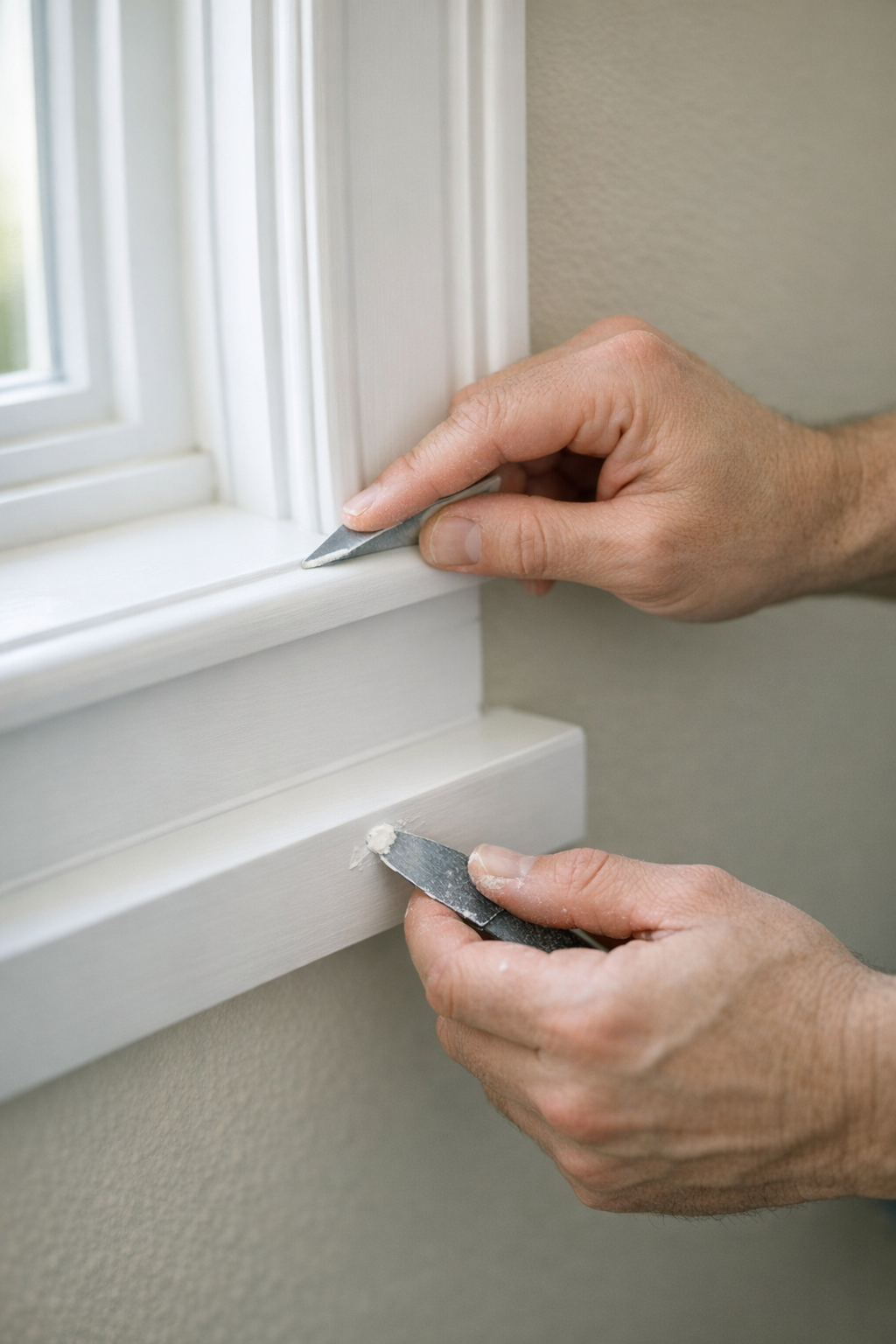
Caulk lines are the flexible painted seams where trim meets drywall or where small gaps need to be softened. A good caulk line is narrow and even, so it quietly bridges the transition. A weak one looks wavy, thick, or smeared onto the wall, which can make brand-new trim look rushed. The same idea applies to nail holes: once filled, sanded, and painted, they should not read as dots marching down the casing.
Joints deserve the same attention. Tight miters on profiled casing, clean square joints on flat stock, and consistent reveals around the window all help the trim feel deliberate. Rough seams, raised filler, paint ridges, or lumpy corners do the opposite; they catch the eye before the profile or color has a chance to work.
This is why simple painted window trim can look more expensive than ornate trim that was finished poorly. In light, coastal-style rooms, clean prep matters because pale paint and bright walls leave fewer places for flaws to hide. The practical checkpoint is easy: stand back first, then look close. If the edges are crisp, the fasteners are gone, and the paint transitions feel calm, the window will usually read as finished.
Where Window Trim Upgrades Create the Most Visual Payoff
Start with the windows that are hardest to ignore: the one centered over the sofa, the pair flanking a dining room wall, or the bedroom window you face from the doorway. A focal-point window is one you see immediately when entering a room, when sitting down, or when looking across a main furniture grouping. Those openings usually reward trim upgrades more than a small side window tucked behind furniture, because the edges and painted finish stay in the main sightline.
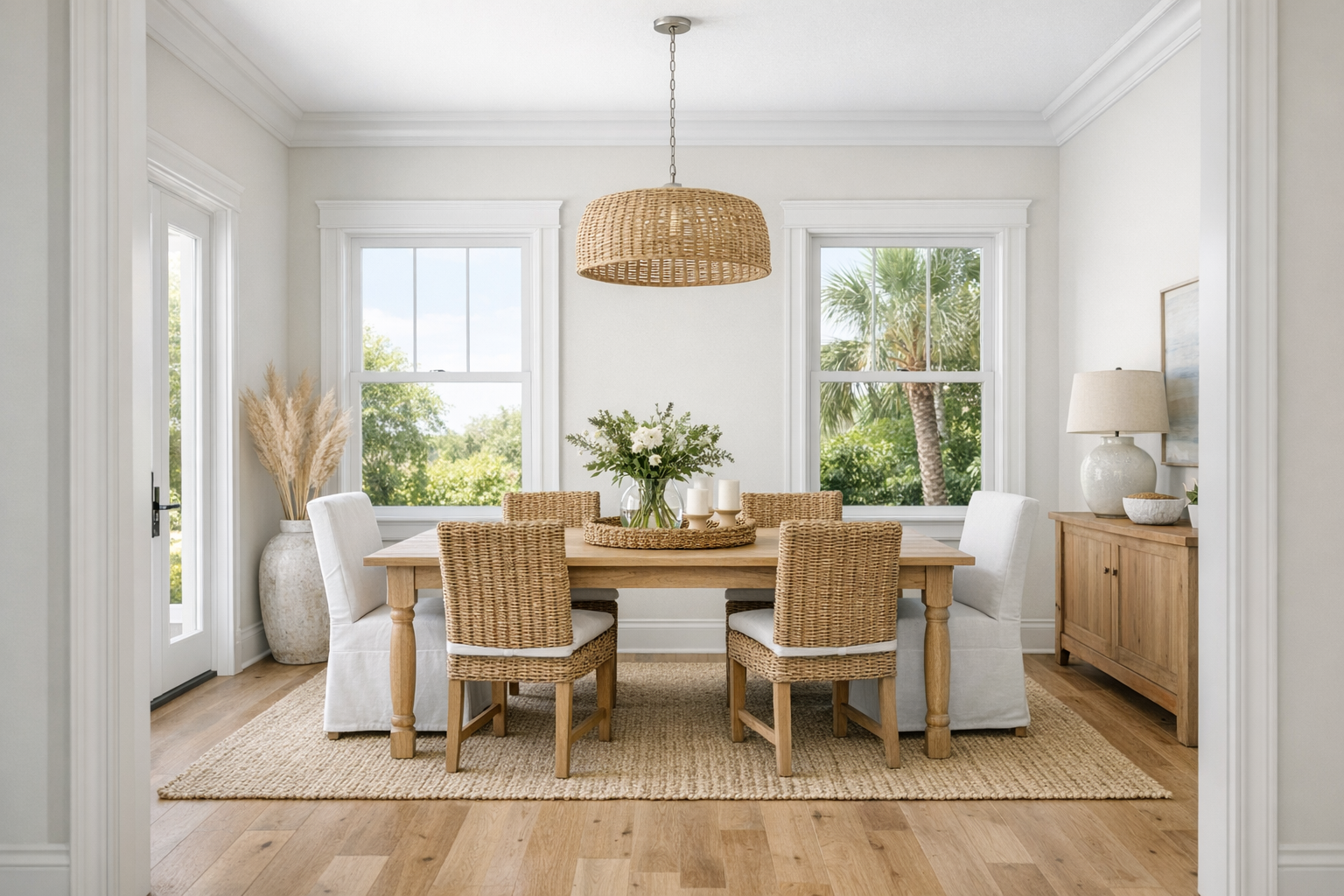
Living rooms, dining rooms, primary bedrooms, and front-facing rooms are good places to start because the window trim details help set the room's finish level. A strong signal is a window that lines up visually with the room's other painted trim: the casing feels related to the door casing, the apron has enough presence below the stool, and the returns look clean instead of patched or uneven.
Pay special attention to windows near upgraded doors, taller baseboards, built-ins, or fresh wall paint. That contrast is where weak trim stands out: a thin old casing beside a newer door profile, a stubby ledge above substantial baseboards, or a plain drywall return in a room where every other opening is framed. In those cases, window casing replacement may do more for the room than changing every window at once.
Phasing the work by room can still look intentional if the profiles stay consistent. Flat stock gives a simple square-edged look, eased edges soften that line slightly, Craftsman-style proportions feel wider and more structured, and traditional casing adds more shaped detail and shadow. Choose the basic language first, then repeat it as you move from one space to the next. Repainting may be enough where the existing trim is proportional and the seams are clean; replacement makes more sense where the shape, scale, or fit is what makes the opening feel unfinished.
Small Window Details Can Make the Whole Room Feel More Intentional
Before you move on to bigger projects, give each window one honest look from across the room and one closer look at the edges. A strong opening has a stool that feels proportional, an apron that supports it instead of looking stubby, casing or returns that match the room's style, and a painted finish where caulk lines, nail holes, and seams do not pull attention.
That is the quiet power of interior window trim: it turns a plain cutout in the wall into a finished part of the room. The best Florida home trim details are not always elaborate. Sometimes the win is simply cleaner profiles, steadier reveals, smoother paint, and fewer mismatched pieces, enough to make the whole space feel more intentional without making the windows feel overdone.